 Free shipping on orders over £29,85
  Shipping Tracking!


 Google
 Facebook
How much hardener should be used with penetrating resin?
Mixing ratios explained across popular resin systems and uses


Understanding the correct hardener ratio for penetrating resin is crucial for achieving a reliable cure, maximum structural strength, and the best finish on wood, flooring, and composite projects. This page walks you through the essential mixing ratios and application details for leading penetrating resin systems, helping both DIYers and professionals make informed choices for their projects.
Hardener Ratios for Penetrating Epoxy Resin Types
Penetrating resins use different mixing ratios depending on their formulation, base resin, and end use. Getting the right ratio of base resin to hardener is essential to achieve optimal curing, deep penetration, waterproofing, and adhesion. Below, key mixing ratios are compared across popular systems, including EpoxyWood for timber, Epoxyprimer for floors, Trasparente for aggregates, and Carbon Resin for fibre coatings.
- Always measure components by weight for accuracy.
- Mixing ratios vary by product: common examples include 100:40 and 100:55 (resin:hardener by weight).
- Under- or over-hardening can result in incomplete cure, tackiness, or reduced strength.
Mixing Ratios in Practice
For every type of penetrating resin, strict adherence to the specified resin:hardener ratio ensures optimal curing and performance. For example, floor primers may require 100:40, while composite coatings often use 100:55. Always measure by weight and consult the manufacturer’s instructions included with your product for the precise ratio.
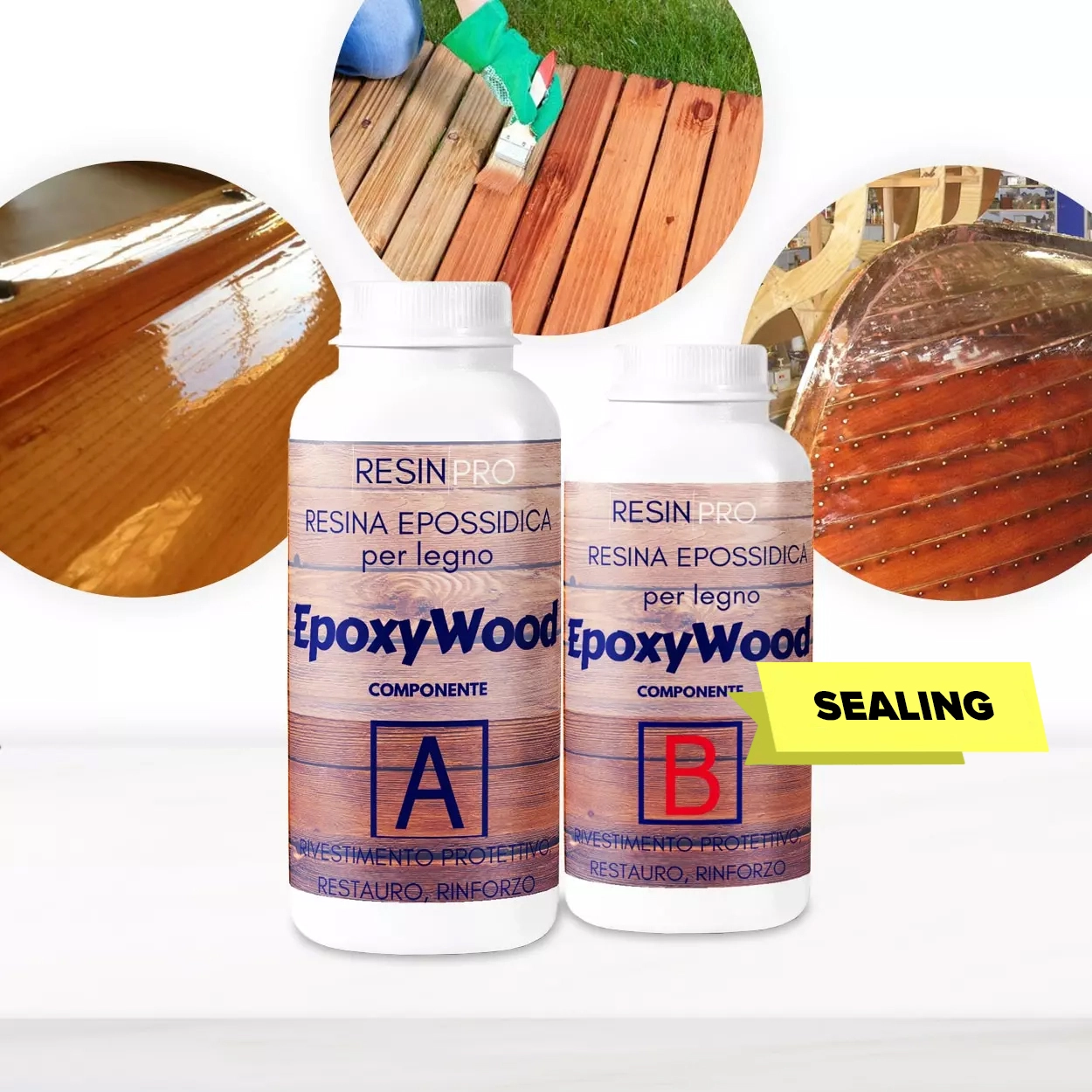
“EpoxyWood” – Wood Restoration Epoxy Resin for Deep Penetration and Waterproofing
EpoxyWood is formulated for deep penetration into wooden structures, waterproofing, and reinforcement. This system’s ultra-low viscosity ensures it fills the smallest pores and cracks. To ensure full curing and maximum moisture resistance:
- Check the specific instructions included with the resin kit for the recommended resin-to-hardener ratio by weight (usually listed on the packaging or technical sheet).
- Ultra-low viscosity for deep penetration into wood pores
- Transforms wood into a moisture-resistant surface
- Warm straw-yellow tint enhances natural wood grain
- Eco-friendly formula that is solvent-free, cruelty-free, and vegan
This product is not intended for thick casting or applications outside wood restoration. For best results, always work on dry, sanded surfaces and mix thoroughly until fully homogenous.
“Epoxyprimer” – Universal Water-Based Two-Component Epoxy Floor Primer
The Epoxyprimer system has a precise hardener ratio of 100:40 by weight (resin:hardener). This floor primer is ideal for preparing concrete, wood, tile, and screed before installing resin finishes. Correct mixing achieves a stable base and reliable adhesion between layers.
- Two-component water-based epoxy primer mixed at 100:40 by weight
- Designed for superior adhesion to epoxy resin coatings on multiple substrates
- Odourless and safe for indoor use with eco-friendly formulation
Allow 24–48 hours curing at room temperature. Insufficient hardener or over-addition can compromise adhesion and longevity.
“Trasparente” – Epoxy Binder for Coloured Pebbles and Grits
For permeable and decorative pebble floors, Trasparente uses a two-part epoxy system. Though the exact resin-to-hardener ratio should be confirmed from the product’s technical sheet, typical application methods involve thoroughly blending the two components until clear and uniform. This guarantees rapid and deep impregnation of aggregates, along with a bubble-free and glossy finish.
- Crystal-clear epoxy resin offering bubble-free, glossy finish
- UV-resistant and non-yellowing for prolonged colour stability
- Low viscosity enabling rapid and deep aggregate impregnation
Always mix with aggregates before laying, and avoid applying over loose gravel without mixing. Regularly check the pack guidelines for the up-to-date mixing ratio.
“Carbon Resin” – Epoxy Resin for Carbon Fibre & Fibreglass Coating
Precision is essential with Carbon Resin. The correct ratio is 100:55 by weight (resin:hardener). This ensures complete impregnation, maximum impact resistance, and a professional finish on technical fabrics.
- Robust impact resistance designed to maintain strength under mechanical stress
- Exceptional impregnation ensuring even wetting and reduced bubble formation
- Glossy finish providing a smooth, professional appearance
Mix by weight, not volume, and stir methodically for a smooth application. Inaccuracy in measuring hardener can result in sticky or brittle surfaces.
Tips for Accurate Mixing and Application
When working with two-part epoxies, ensure you use precision kitchen or laboratory scales—eyeballing quantities can cause major curing issues. Stick to the product’s specified mixing ratio, mix for at least two minutes, and apply within the resin’s working time. Temperature and humidity can influence curing, so always check conditions before starting. Only ever combine resin and hardener designed to work together from the same product system.
Common Mixing Pitfalls
Inaccurate hardener addition can lead to tacky, soft, or brittle results. Avoid mixing by eye; use digital scales for precision. When in doubt, refer to the technical data sheet provided by ResinPro or contact support for guidance on your specific resin system.
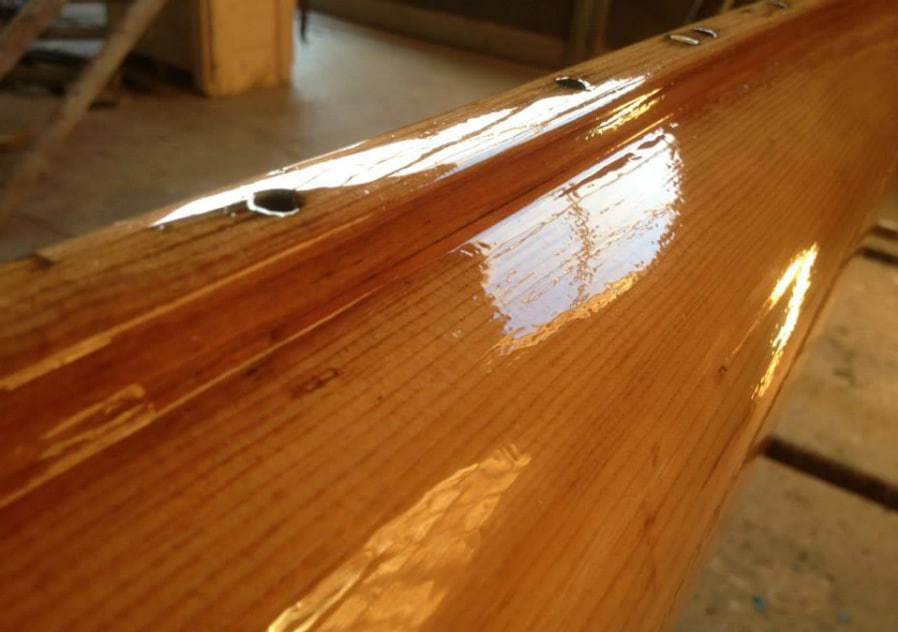
- "EpoxyWood" – Wood Restoration Epoxy Resin for Deep Penetration and WaterproofingOriginal price was: £64.00.£39.85Current price is: £39.85."EpoxyWood" is an epoxy resin designed for wood restoration and deep penetration with a waterproof finish suitable for woodworking use.
 "Epoxyprimer" – Universal Water-Based Two-Component Epoxy Floor PrimerPrice range: £148.84 through £272.45"Epoxyprimer" is a water-based two-component epoxy floor primer designed for reliable adhesion on concrete, wood, tiles and screed surfaces.
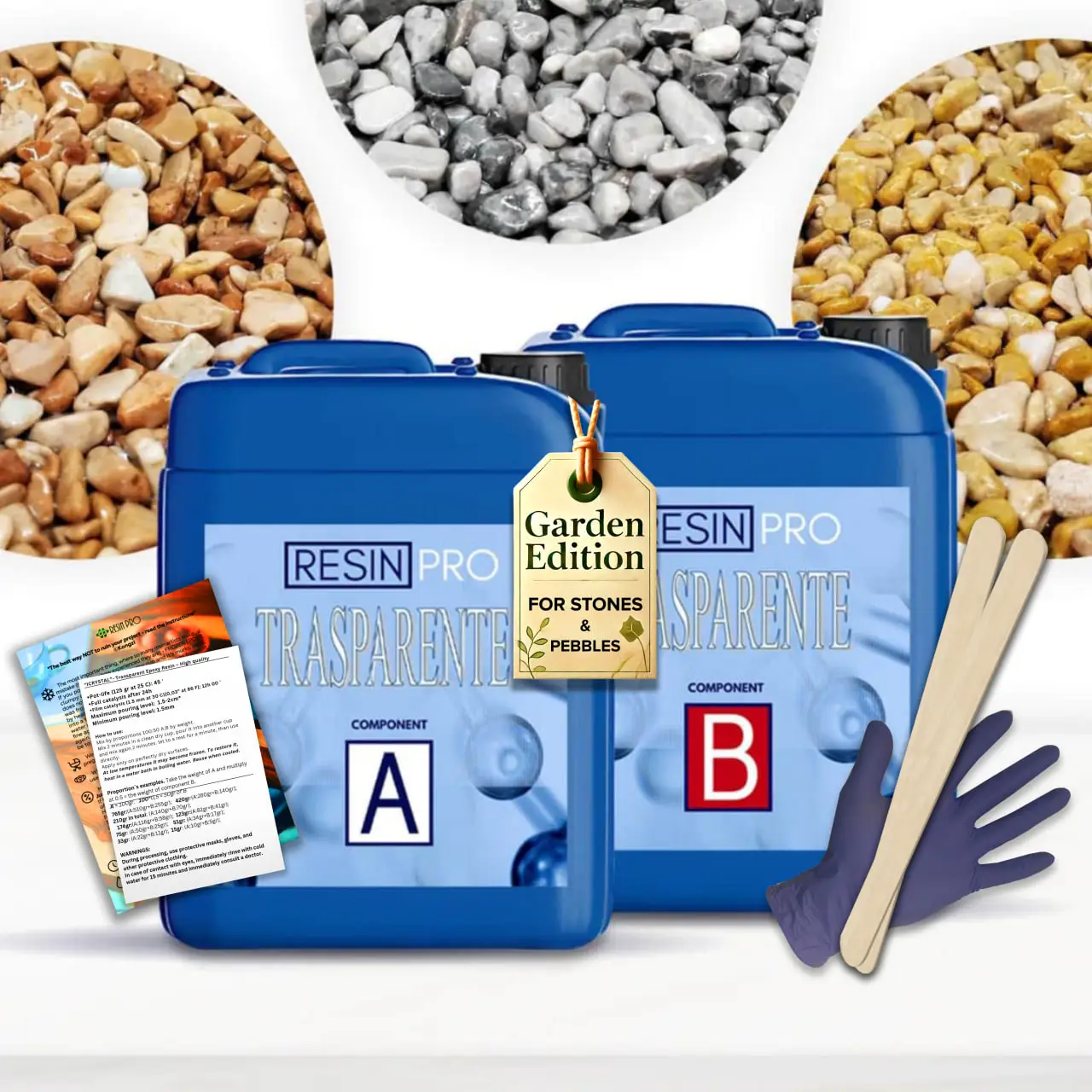 "Trasparente" – Epoxy Binder for Coloured Pebbles and GritsPrice range: £31.85 through £948.85"Trasparente" provides a clear, UV-stable epoxy binder for coloured pebbles and grits, suitable for flooring projects within the theme 'How much…
- "Carbon Resin" – Epoxy Resin for Carbon Fiber & Fiberglass CoatingPrice range: £18.85 through £35.85Epoxy resin designed for carbon fibre and fibreglass, suitable for composites and technical fabrics with focus on impregnation and durability.
Frequently Asked Questions
What is the correct hardener amount for EpoxyWood?
Check the EpoxyWood instructions or packaging for the exact ratio. Measuring by weight ensures full penetration and curing.
What is the Epoxyprimer mixing ratio?
Epoxyprimer requires a mixing ratio of 100 resin to 40 hardener by weight for stable and durable bonding.
What is the mixing ratio for Trasparente epoxy binder?
Always use the ratio stated on the product packaging or technical sheet. Mix both parts thoroughly for best aggregate impregnation.
What is Carbon Resin's mixing ratio?
Mix 100 parts resin to 55 parts hardener by weight for proper cure and strength in composite projects.
Why should I mix resin and hardener by weight rather than volume?
Epoxy resin and hardener have different densities. Mixing by weight gives a precise chemical balance for full cure.
Why is my cured resin soft or sticky?
This often occurs due to incorrect hardener ratio or insufficient mixing. Double-check measurements and use digital scales.
Can I use a different hardener with penetrating resin?
Always use the hardener supplied with your resin system to ensure compatibility and cure performance.