 Free shipping on orders over £29,85
 Shipping Tracking!



 Google
 Facebook
How to Maintain Decorative Vertical Textures
← Back to Transparent sauna guard
Quick answer
Decorative vertical textures are preserved by choosing a non-self-levelling resin coating that stays where it is applied instead of flowing into a flat film. A thick epoxy wall coating such as Vertical Glass sits over trowelled patterns, lines and relief detail without smoothing them, while still forming a water-resistant protective layer. Once cured, it can be tinted, sanded or left glossy to keep the original decorative effect intact.
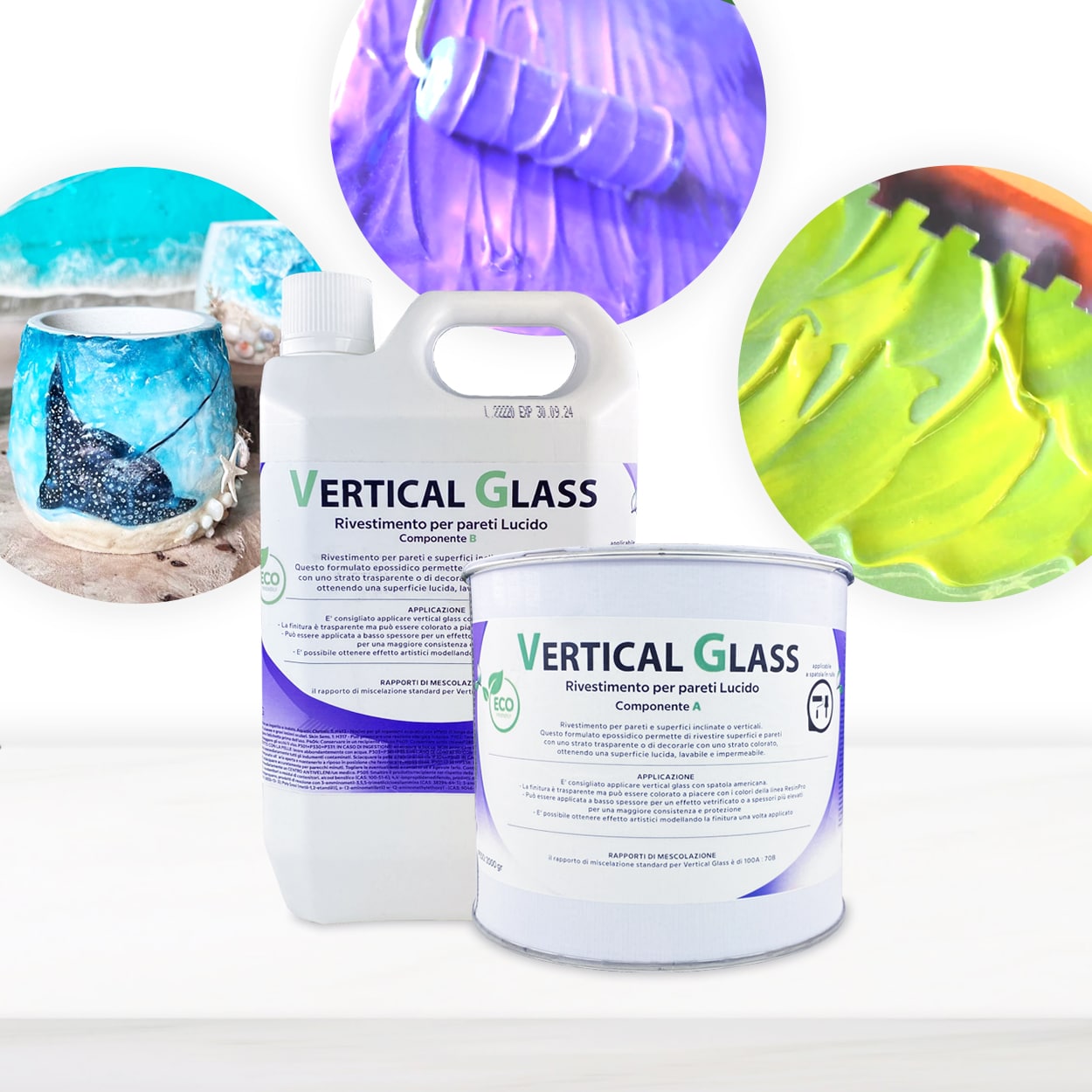

If you have worked hard to create a textured wall finish, the last thing you want is a runny top coat that wipes it out. The right vertical coating actually locks the effect in, making it easier to clean and more durable in damp or busy rooms.
Why ordinary resin flattens texture
Most casting and art resins are formulated to self-level, which is exactly what you do not want on a vertical feature. On a wall or sloping surface, a low-viscosity resin runs, pools and smooths over ridges before curing, reducing carved or spatula-applied detail to a much flatter appearance.
A textured coating needs enough body to hold a ridge or tool mark. A non-self-levelling system is thicker at application, so it can be worked into peaks, stippling or directional strokes and remain there through the curing window.


How to keep vertical detail intact
Look for a resin described as non-self-levelling or high viscosity, and apply it with a spatula in controlled passes. This lets you maintain the direction and depth of the existing texture rather than burying it under a uniform layer.
- Work in thin, even coats on vertical surfaces to avoid slumping.
- Tint or pigment the coating before application if you want to preserve or adjust colour while keeping the relief visible.
- On damp or humid interior walls, choose a product with moisture resistance for kitchens and bathrooms.
For example, Vertical Glass wall coating is non-self-levelling, so it can seal tiles, wood, cement or brick without eliminating the surface profile.
When this matters
This matters most when the decorative effect is part of the surface itself, not just a colour underneath. Deep combed plaster, relief patterns, rough brick or sponge-applied textures all lose character under a runny finish.
It is also useful in sauna or spa-style rooms where vertical timber and panelling may need a clear, protective coat that respects the existing grain and profile rather than filling it.

Related products
Related guides
For transparent sauna guard applications and other vertical surfaces where you want protection without losing the tactile quality, selecting the right non-levelling resin keeps the finish looking intentional. Choose a coating that works with the texture, not against it.