 Free shipping on orders over £29,85
 Shipping Tracking!



 Google
 Facebook
Ultra-Low Viscosity Epoxy for Deep Wood Penetration
← Back to RV roof waterproofing
Quick answer
Ultra-low viscosity epoxy resin is a wood restoration material engineered to flow into porous timber, filling fibres and capillary voids rather than sitting on the surface. The thin, low-viscosity formulation allows the resin to travel deep into dry wood, where it cures to reinforce weakened structure and form a waterproof barrier. This makes it useful for external joinery, boat hulls and other timber exposed to moisture, provided the surface is dry and sanded before application.
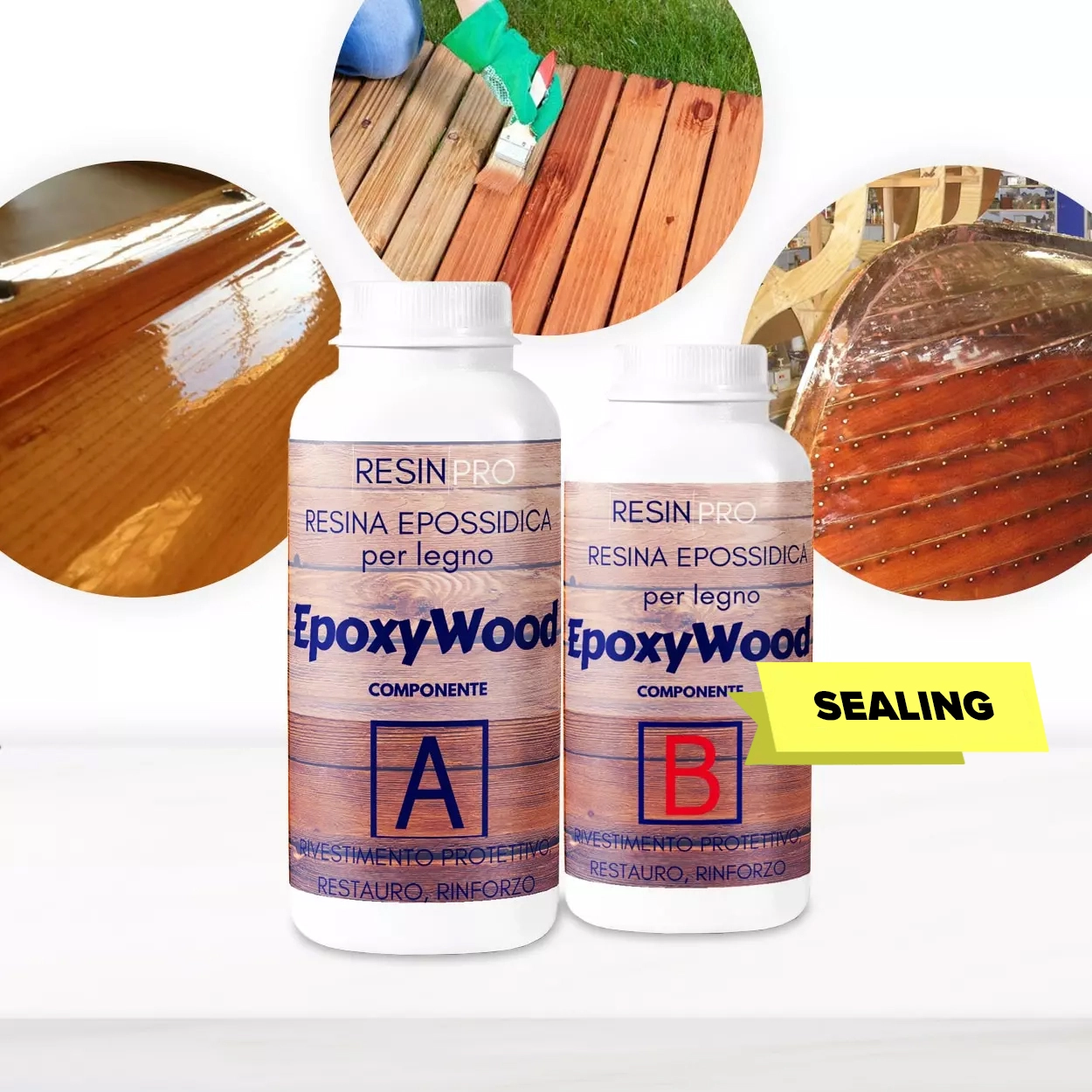

The practical benefit is that the protection sits inside the timber, not on top of it. For RV roof repairs that involve wooden battens, roof panels or trim, this type of penetration can support a longer-lasting waterproof system before a top coating is applied.
How low viscosity improves wood repairs
Wood is naturally porous, with open fibres and microscopic voids that allow moisture to enter. A standard thick resin may sit on the surface, but an ultra-low viscosity product such as EpoxyWood wood restoration resin is thin enough to move into those spaces before curing. The result is a repair that reinforces the timber from within rather than relying only on a surface film.
This is particularly important for older or weathered wood, where the surface may be soft and poorly bonded. Penetrating resin can consolidate loose fibres and help restore useful strength to the area.
Surface preparation for deep penetration
Even a low-viscosity resin cannot penetrate properly if the surface is sealed, damp or dirty. The wood should be dry and sanded so the pores are open enough to accept the resin. Remove sanding dust with a vacuum or tack cloth before mixing.
- Check the timber is fully dry before starting; trapped moisture can prevent adhesion.
- Sand the surface to remove old coatings and open the grain.
- Clean away dust, grease and loose fibres.
- Apply in thin, controlled coats rather than one thick layer.
When deep penetration matters
Deep penetration is most useful when wood cannot be easily replaced or when it forms part of a larger waterproof structure. Examples include roof deck panels, timber battens under an RV roof covering, boat hull sections, window frames and exterior joinery. In these situations, treating the wood below the surface can help reduce water ingress and improve the bond for subsequent coatings.
It is less suitable for timber that is already saturated, heavily rotted, or structurally unsound. In those cases, damaged material should be removed and replaced before resin is used.
Related products
Related guides
When timber forms part of an RV roof repair, deep-penetrating wood epoxy can be one part of a wider waterproofing strategy rather than a standalone fix. For more on protecting the whole roof system, see our RV roof waterproofing guide.