 Free shipping on orders over £29,85
  Shipping Tracking!


 Google
 Facebook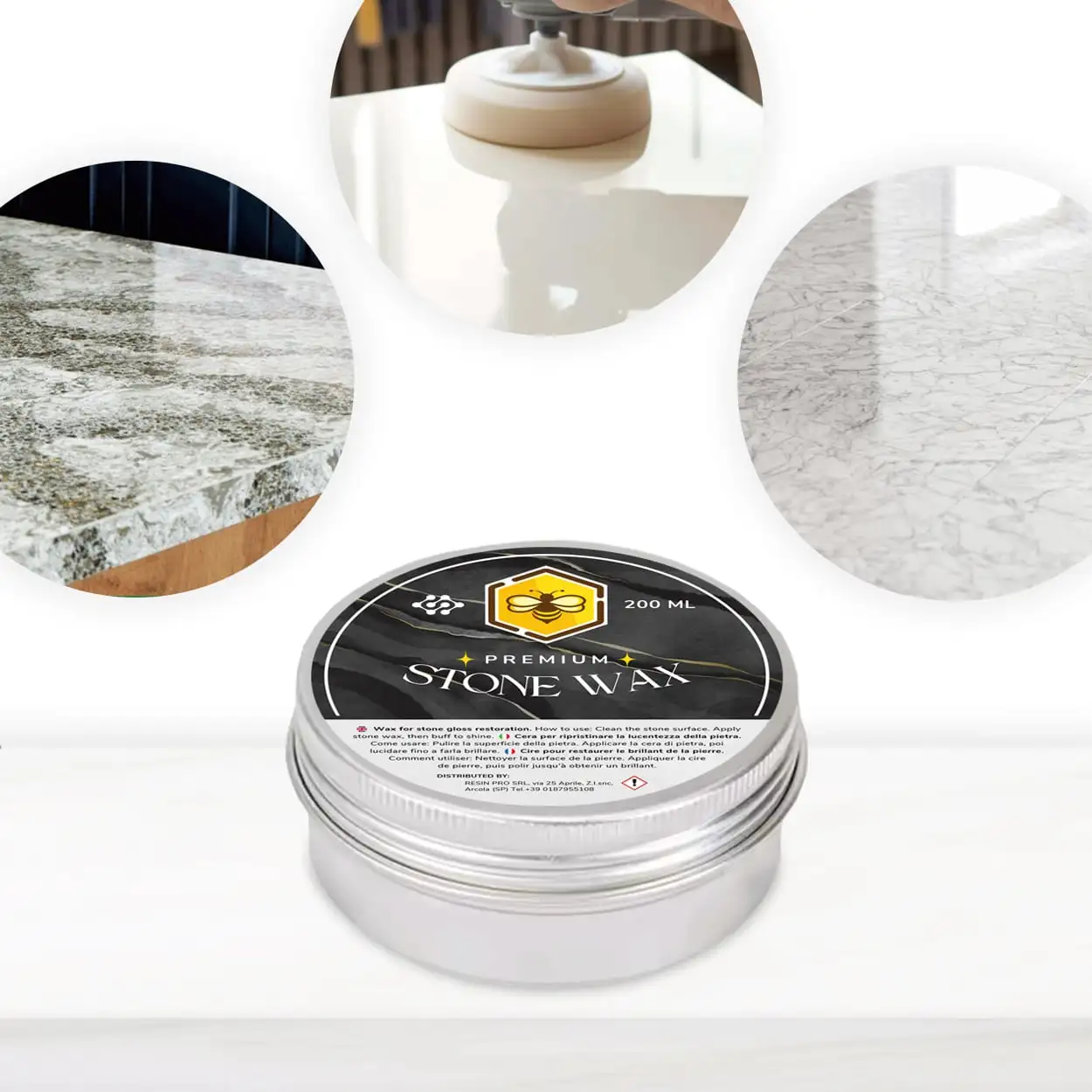
Beeswax Stone Polish 80ml – Natural Formula
 Available, ready for shipping
 Order now to receive your product between Tuesday 23 June and Wednesday 24 June.
 Shipping from £1.97 - Free for orders over £29.85
£6.45
3 in stock
Sun, 21. Jun
Ordered
Sun, 21. Jun - Mon, 22. Jun
Order Shipped
Mon, 22. Jun - Tue, 23. Jun
Estimated delivery
Beeswax Stone Polish 80ml is a natural beeswax formula that protects and restores stone surfaces with a durable, long‑lasting barrier against scratches, UV fading and weathering. The compact 80ml pot is formulated for spot restoration and routine maintenance, giving even coverage and a subtle sheen that preserves stone colour and surface texture.
- 🛡️ Durable protection shields stone from scratches and surface erosion
- 🌞 UV defence helps preserve original colour and texture
- 🧽 Easy application smooth, even coverage for quick spot maintenance
Description
Description
Superior Barrier: Forms an extremely durable protective layer that effectively helps prevent scratches, cracks, and erosion.
Anti-Fading Protection: Maintains the stone’s original colour and texture, helping protect it from the damaging effects of UV rays and weather exposure.
Easy Maintenance: Reduces the need for frequent cleaning and restoration work thanks to its robust formula.
Precise Application: Its consistency allows for accurate control during application, ensuring each area is properly protected.
Stone wax consumption depends on several factors, such as the type of stone, the surface porosity, the application method, and the level of maintenance required.
Average Consumption: Solid wax is generally used in smaller amounts than semi-liquid wax, at around 30 to 60 grams per m². Solid wax forms a more concentrated and dense protective layer, which reduces the amount needed to cover the surface effectively.
Difference Between Semi-Liquid Wax and Solid Wax:
Semi-Liquid Wax: Ideal for regular treatments and routine maintenance, offering versatile protection and a refreshed aesthetic effect with ease of use.
Solid Wax: Provides a long-lasting solution for surfaces that require maximum defence against heavy wear, with a focus on durability and resistance to harsher elements.
General Considerations
Surface Preparation: Before application, the surface must be clean and dry. Residue, dust, or moisture can affect wax absorption and performance, increasing consumption.
Application Method: Using suitable tools such as sponges, soft cloths, or dedicated applicators can affect wax consumption. A good application technique helps distribute the wax evenly and economically.
To achieve the best efficiency and minimise waste, it is advisable to test the product on a small area before applying it to the entire surface. This can help determine the exact amount of wax needed to achieve the desired result, ensuring an efficient and cost-effective application.
Reviews
Reviews
COD:
STONEWAX