 Free shipping on orders over £29,85
  Shipping Tracking!


 Google
 Facebook
Why does the resin stick to my silicone mould and how can I prevent it?
Discover effective strategies for trouble-free resin demoulding


Understanding Resin Sticking Issues
Epoxy resin art and casting can be immensely satisfying, but one common frustration is the resin sticking to your silicone moulds. While high-quality silicone should offer easy release, several factors—improper curing, worn moulds, or insufficient mould preparation—can lead to sticking or tearing. This guide explores the main causes of resin adhesion and offers expert solutions you can rely on for consistent, professional results every time.
Prevention is the key to smooth resin release
Prevention is the key to smooth resin release. Knowing the correct steps and using suitable products ensures minimal frustration and extends the life of your silicone moulds. Let’s cover the practical solutions and compare options from the ResinPro range to solve resin sticking, whether you are a beginner or a seasoned resin artist.
Comparison Overview: Which Solution Suits Your Project?
- Choose the right silicone mould: Pick moulds designed specifically for epoxy resin, like the “Silicone Hexagons Mould” – For Creating with Epoxy Resin – 24x21cm. Its professional-grade, non-stick silicone makes the demoulding process much easier.
- Try a specialist release agent: Applying Silicone Oil for Mould Protection and Easy Release – 15ml before pouring resin creates a protective barrier and protects your moulds’ flexibility.
- Opt for non-toxic mould making solutions: If you craft your own moulds, “I–Gum” – Non-Toxic Silicone Putty for Mould Making offers an odourless, glove-free mould making experience with integrated non-stick properties.

Visual Guide: Identifying and Solving Sticking Issues
See the difference between well-maintained, non-stick silicone moulds and those with worn-out or contaminated surfaces. Notice how a high-quality, clean mould paired with the right release agent or putty results in effortless demoulding and preserves fine detail in every resin project.
Why Resin Sticks to Silicone Moulds
Silicone moulds are a popular choice because they are flexible and, by nature, non-stick. However, resin sticking can occur if:
- The resin mixture remains uncured or sticky due to incorrect ratios or temperature issues.
- The mould surface is scratched, worn out, or retains residue from past projects.
- Poor quality silicone has been used, or the mould is not formulated to handle epoxy resin chemicals.
Using “Silicone Hexagons Mould” – For Creating with Epoxy Resin – 24x21cm can immediately improve results thanks to its flexibility, durability, and high resistance to deformation and heat. For those who enjoy custom shapes, “I–Gum” – Non-Toxic Silicone Putty for Mould Making ensures your self-made moulds retain non-stick performance and are safe and easy to use.
Practical Steps for Easy Demoulding
Follow these guidelines to demould your resin projects with minimal effort:
- Check for proper resin curing every time: Demould only when resin is fully hardened. If uncertain, let your project cure for additional hours to guarantee optimal results.
- Clean and care for your moulds: Remove any residual resin, dust, or oils gently to prevent micro-scratches and extend mould life.
- Consider a release agent such as Silicone Oil for Mould Protection and Easy Release – 15ml to create a barrier on the mould surface and keep it soft and flexible over time.
- For bespoke moulds, mixing “I–Gum” – Non-Toxic Silicone Putty for Mould Making in a 1:1 ratio, then shaping and letting it set, provides a stress-free demoulding experience for a range of cast materials.
Investing in high-quality, reusable options—like the “Silicone Hexagons Mould” – For Creating with Epoxy Resin – 24x21cm—ensures repeatable success for every project.
Step-by-Step Mould Care and Release Techniques
Keeping your silicone moulds fresh and non-stick is simple: ensure thorough cleaning, apply a thin layer of a specialty release agent if needed, and always allow resin to reach full cure before removal. These practices, paired with products tested for resin compatibility, mean you can focus on creativity without setbacks.

Your Resin Sticking Questions Answered
Many artists ask about the different roles specialist products play in preventing resin sticking. Silicone Oil for Mould Protection and Easy Release – 15ml is ideal for frequent demoulding or intricate projects, as it prolongs life and maintains the flexibility of your silicone. For those crafting their own custom forms, “I–Gum” – Non-Toxic Silicone Putty for Mould Making is an all-rounder developed to provide fuss-free removal for resin, polyurethane, wax, and more, without added release agents.
Choosing a purpose-built mould, such as the “Silicone Hexagons Mould” – For Creating with Epoxy Resin – 24x21cm, guarantees a non-stick, easy clean, and non-deformable option for a variety of decor and keepsake projects.
- Silicone Oil for Mould Protection and Easy Release – 15ml£5.15Silicone Oil for Mould Protection and Easy Release provides a barrier against adhesion and helps maintain mould flexibility.
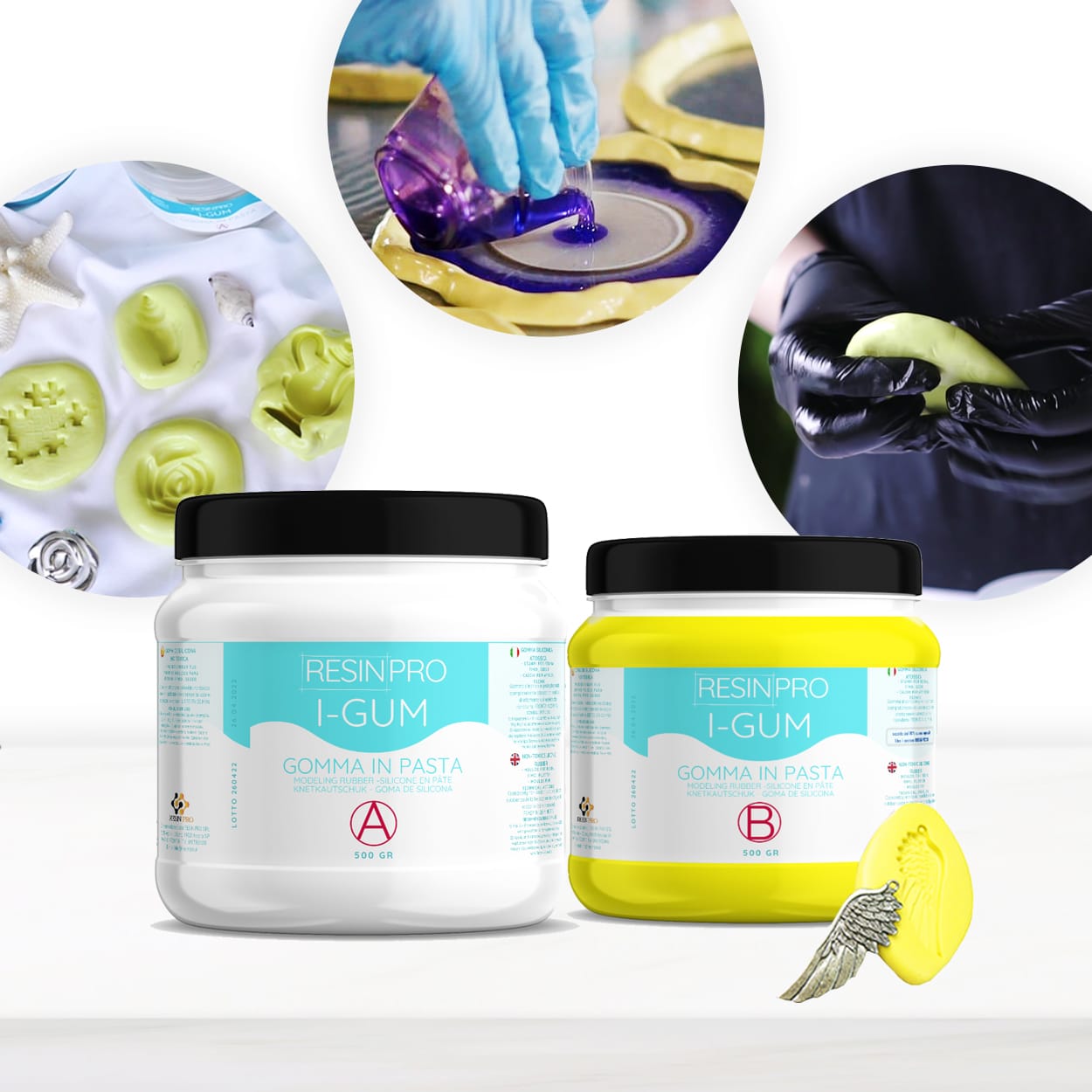 "I–Gum" – Non-Toxic Silicone Putty for Mould MakingPrice range: £22.85 through £99.85"I–Gum" is a non-toxic silicone putty designed for making moulds with an easy 1:1 mix ratio and a long working time.
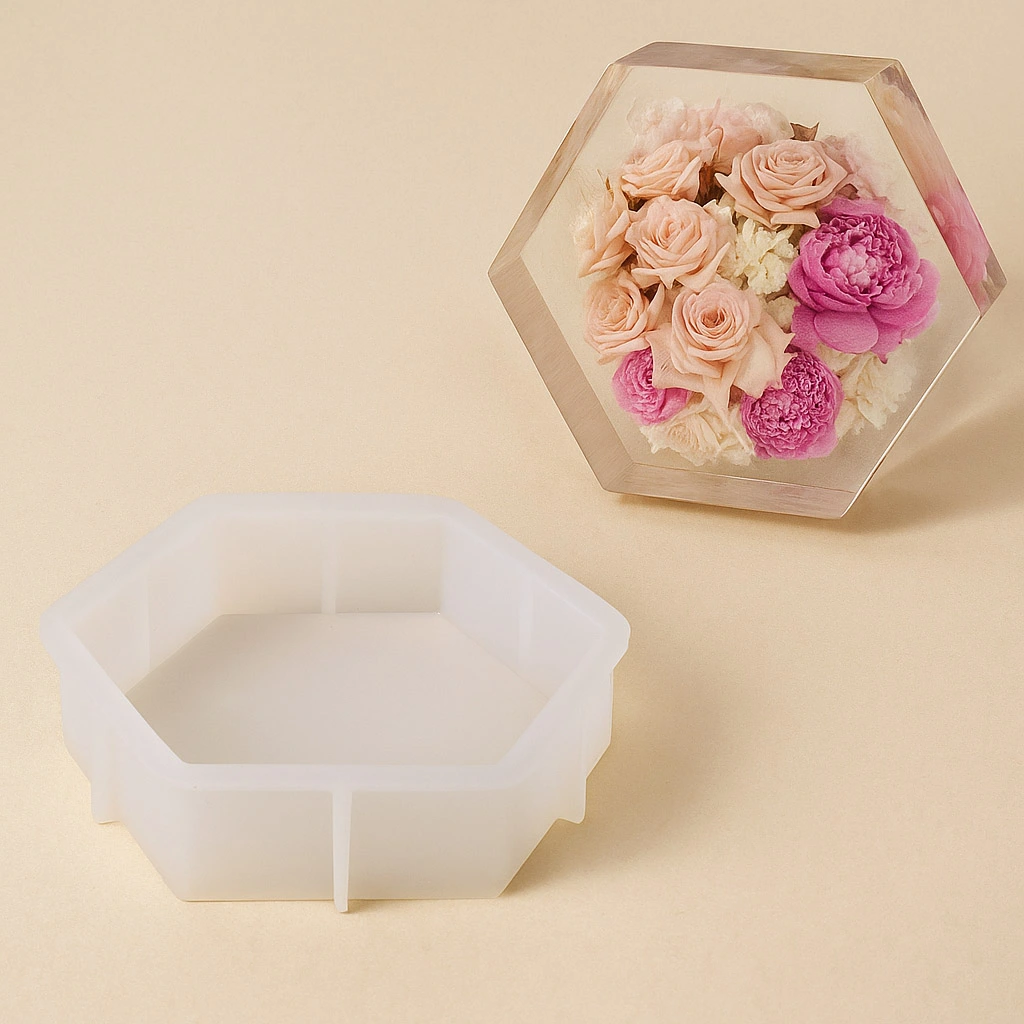 "Silicone Hexagons Mould" – For Creating with Epoxy Resin – 24x21cm£12.85Flexible mould suitable for creating coasters and decorative objects using epoxy resin, supporting artistic pieces.
Frequently Asked Questions
How can I reduce resin sticking to silicone moulds?
Applying a few drops of Silicone Oil for Mould Protection and Easy Release – 15ml onto the mould surface creates a barrier, reducing adhesion and making demoulding easier, especially for intricate items.
What is the advised method for creating silicone moulds with this product?
With "I–Gum" – Non-Toxic Silicone Putty for Mould Making, mix the two components in equal measure, apply directly to your desired shape or frame, and allow to set for about 20 to 40 minutes depending on type.
Why does epoxy resin sometimes stick to silicone moulds?
Epoxy resin may stick if it is not fully cured, or if the mould is scratched, damaged, or made from poor-quality silicone. Using a dependable, non-stick mould can greatly reduce the risk of resin sticking.
How can I prevent resin from sticking to my silicone mould?
Choosing professional-grade silicone moulds, ensuring the resin cures fully, and optionally using a release agent like Silicone Oil for Mould Protection and Easy Release – 15ml are all proven methods for reducing adhesion and prolonging mould life.
What are the main advantages of the "Silicone Hexagons Mould" for resin projects?
This mould is made from high-quality, non-deformable silicone. Its reusable, flexible nature ensures easy demoulding of coasters and art pieces without sticking, plus straightforward cleaning for repeat use.
Do I need to use gloves with "I–Gum" silicone putty?
No, "I–Gum" – Non-Toxic Silicone Putty for Mould Making is non-toxic and odourless, so you can work safely without gloves for most home and hobby projects.