 Free shipping on orders over £29,85
  Shipping Tracking!


 Google
 Facebook
← Back to What resin can be used on polystyrene?
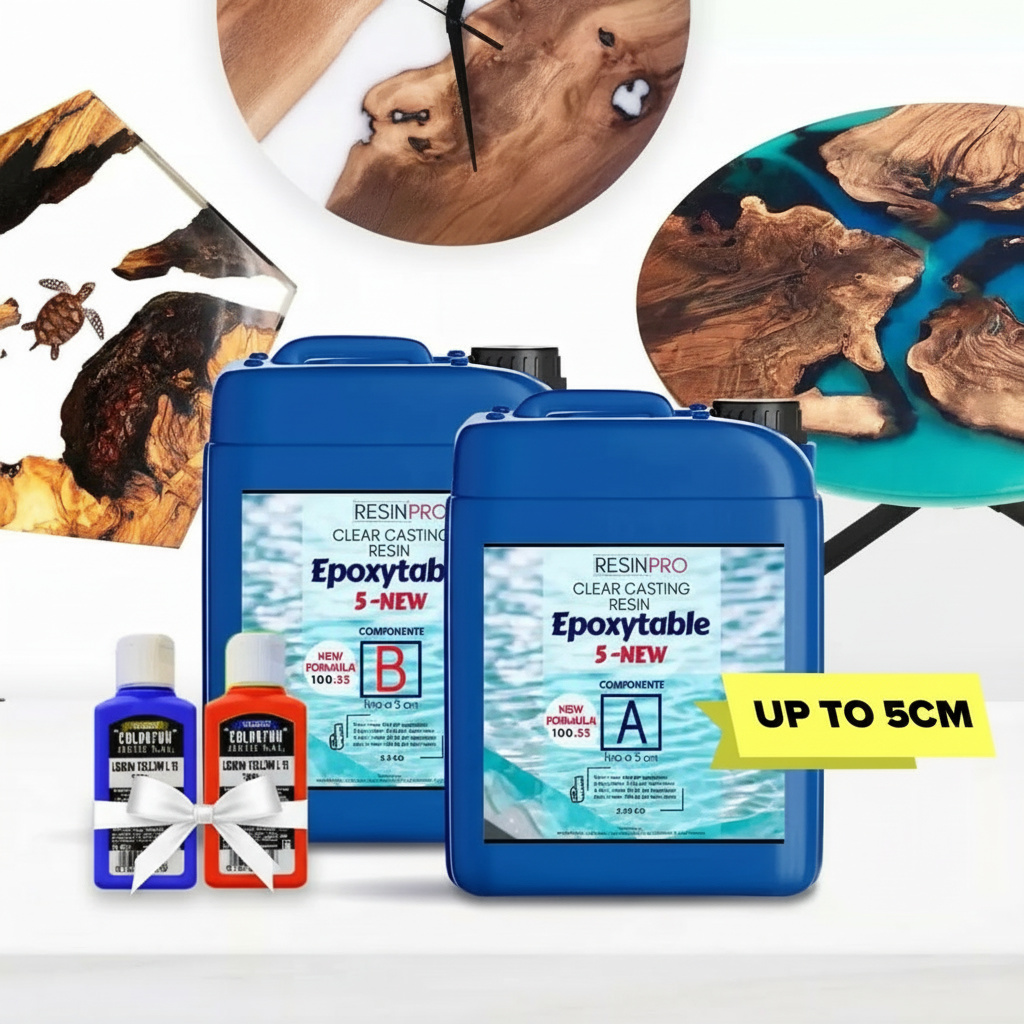
If you’re planning a resin casting project with significant thickness, understanding deep pour requirements is crucial for achieving a safe and flawless result. The right approach ensures clarity, stability and prevents overheating or curing issues.
What Constitutes a Deep Pour in Epoxy Resin?
In resin casting, a ‘deep pour’ generally refers to pouring resin in layers that exceed standard thickness—commonly anything over 2cm in a single pour. Attempting pours beyond this limit with an unsuitable resin can lead to excessive heat build-up, bubbles, and compromised finishes. Deep pour resins are specially formulated with a lower exothermic reaction, allowing larger volumes to cure evenly without overheating.
Best Practice: Pour Thickness and Layering
For most deep casting jobs, observe the manufacturer’s single layer limit—some resins like EpoxyTable 5-Five are engineered for up to 5cm, while others such as “Epoxytable 10-Ten” permit pours up to 10cm thick in one go. Always adhere strictly to these thresholds. For layers thicker than the recommended maximum, cast in multiple stages, allowing adequate cure time (usually 6–8 hours) between pours for best results and safety.
Choosing the Right Deep Pour Resin
The choice of resin depends on your specific depth and project size. Use premium deep pour epoxies formulated to resist overheating, yellowing, and bubble formation. For moderate depths and large objects such as tables or countertops, products like “EpoxyTable 5-Five” or “Epoxytable 10-Ten” are ideal. For smaller castings or thin coats, opt for a standard casting resin such as “Trasparente” for thicknesses up to 2cm.
When Deep Pour Requirements Matter Most
- Large volume projects: Creating river tables, thick encasements, or any object requiring a visually clear deep layer.
- Preventing resin failure: Avoiding warping, overheating, or insufficient curing in thicker moulds.
Related products
Related guides
By respecting deep pour requirements—both the technical limitations of your chosen resin and layering technique—you help ensure fantastic results for any substantial casting project. For more on resin compatibility and creative possibilities, see our guide on what resin can be used on polystyrene.