 Free shipping on orders over £29,85
  Shipping Tracking!


 Google
 Facebook
← Back to How do I mix resins from different suppliers?
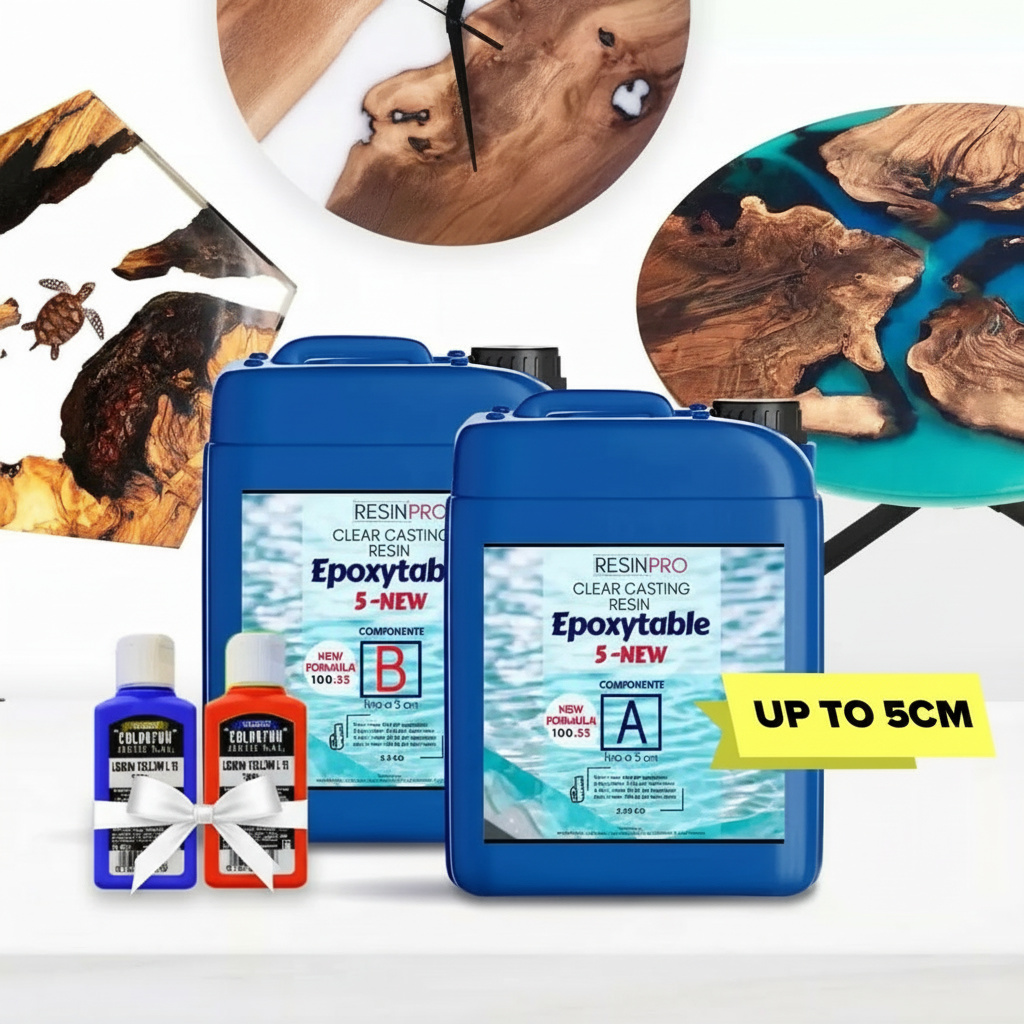
When working on large projects like river tables or thick castings, choosing the right epoxy resin for deep pours is essential. Not every resin is suited for layers up to 5cm—here’s what to look for and how to ensure great results.
Why You Need Specialised Deep Pour Resins
Standard epoxy resins are best suited for thin layers, typically up to 2cm, as thicker applications may result in excessive heat build-up. For castings up to 5cm thick, a deep pour epoxy like EpoxyTable 5-Five is designed to reduce the risk of overheating and unwanted deformation. Its formulation provides a long working time and a low exothermic reaction, minimising the appearance of bubbles and cracks in larger volumes.
Practical Tips for Deep Pour Projects
- Layering is key: Always respect the maximum recommended thickness of the product. For EpoxyTable 5-Five, this is 5cm per layer. If your piece needs to be thicker, pour in stages, allowing 6–8 hours between layers for optimal bonding.
- Monitor temperature: Pour in a stable, cool environment to slow curing if needed—resins cure faster in warmer conditions, increasing risk of overheating.
- Choose low viscosity: Deep pour resins are formulated for easy mixing and better flow, helping bubbles escape before curing.
When This Matters
Deep pour resins become crucial for river tables, large cast artworks, and projects where a solid, bubble-free finish in a single thick pour is wanted. Using regular surface resins in thick layers can cause cloudiness, yellowing, or even cracking due to excessive heat.
Related products
Related guides
Using a true deep pour resin like EpoxyTable 5-Five ensures the clarity and stability your thick castings require. For more advanced tips and to explore other resin options, return to our main guidance on mixing resins from different suppliers.