 Free shipping on orders over £29,85
  Shipping Tracking!


 Google
 Facebook
← Back to What is the catalyst in resin used for?
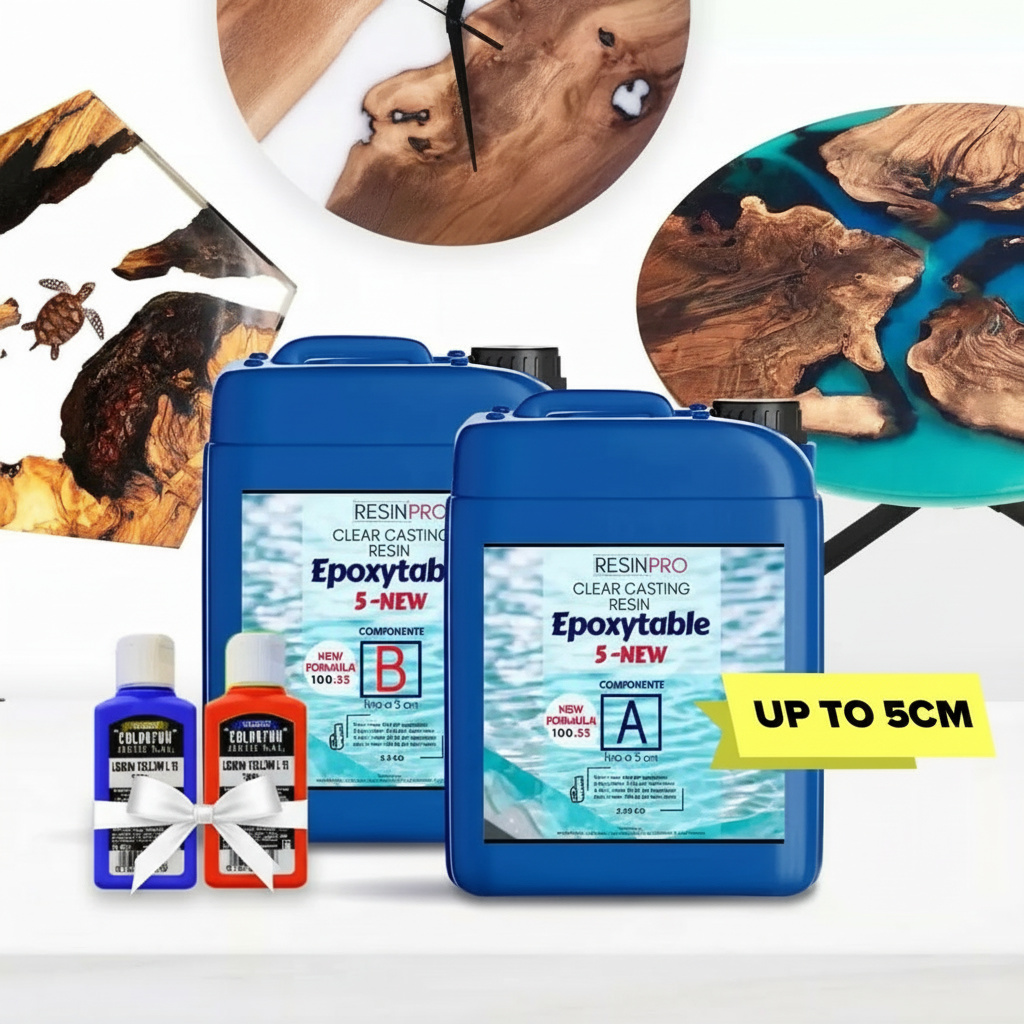
If you’re planning a table or a large resin project, choosing the right product and technique for thicker pours is crucial. Here’s what you should know before using EpoxyTable 5-Five for layers beyond 5 cm.
Understanding the Recommended Thickness
EpoxyTable 5-Five is specifically formulated for deep pours up to 5 cm thick in a single application. Exceeding this limit in one pour can lead to excessive heat build-up (exothermic reaction), risking cracks, cloudiness, or compromised strength. For best results and safety, it’s advised not to pour layers thicker than 5 cm at once.
Techniques for Thicker Resin Projects
If your project requires more than 5 cm in depth, the recommended method is to build up the thickness in stages. Pour one layer (up to 5 cm), allow it to cure, then pour the next. Each layer should have a waiting period to partially or fully set, reducing the risk of overheating and ensuring good bonding between layers.
- Plan your project in advance, allowing for multiple pour sessions.
- Lightly sand or score the cured surface between layers to improve adhesion if the previous layer is fully cured.
- Follow all manufacturer instructions regarding timing between pours.
When This Matters Most
This approach is especially important for large furniture, river tables, or projects where both clarity and structural integrity are needed. Attempting one thick pour may save time, but layering produces safer, more reliable results.
Related products
Related guides
While EpoxyTable 5-Five delivers excellent clarity and durability for deep pours up to 5 cm, thicker projects require a layered approach or a switch to products like “Epoxytable 10-Ten”. For more advice on catalysts and resin systems, visit our parent FAQ page.