 Free shipping on orders over £29,85
  Shipping Tracking!


 Google
 Facebook
← Back to How to calculate epoxy resin quantity?
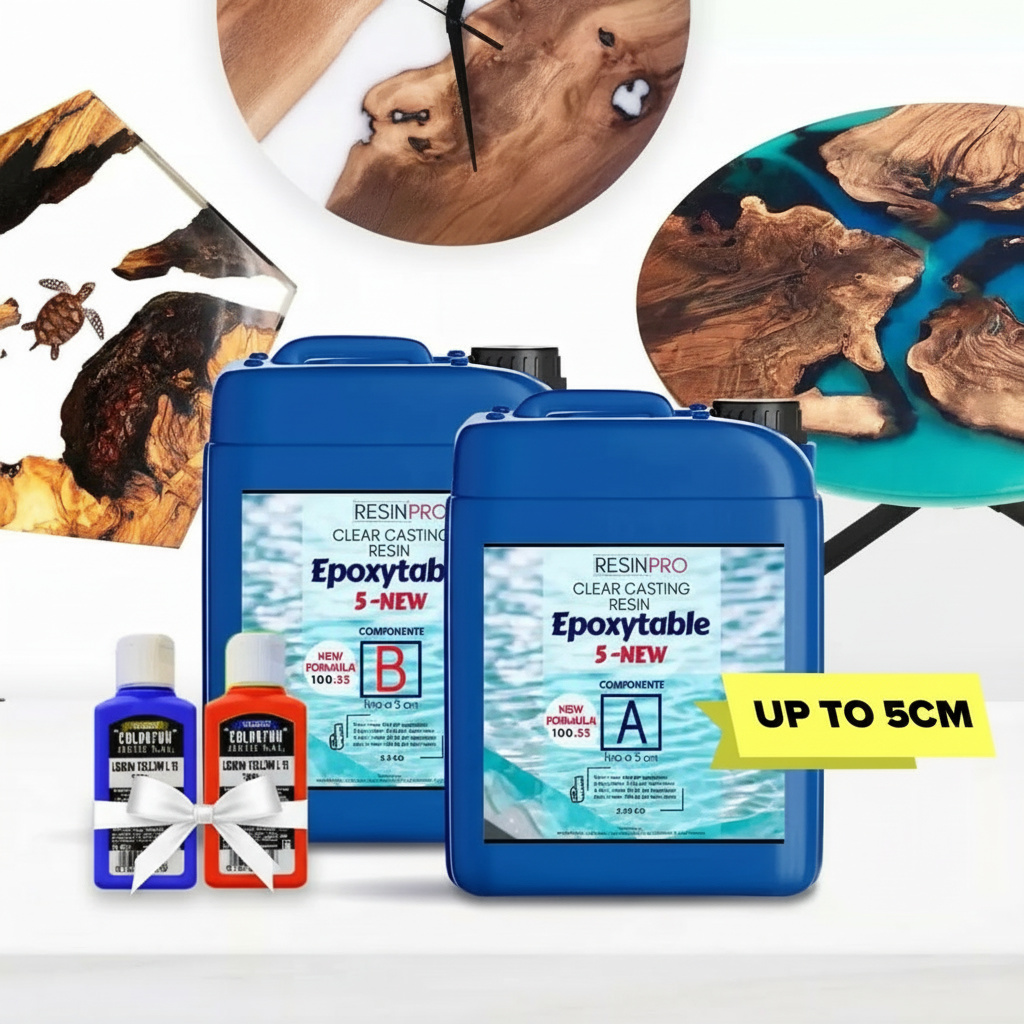
If you’re planning a resin project using epoxy on wood, you might wonder whether it’s necessary to seal the bare surface first. Properly sealing wood before your main epoxy pour can make a significant difference in the final quality.
Why Sealing Bare Wood Is Important
Wood is naturally porous, and when epoxy is poured directly onto an unsealed surface, the resin tends to soak into the grain. This absorption not only wastes material but also often forms bubbles that can mar the clarity and smoothness of your finish. Sealing the wood with a thin layer of epoxy helps prevent these issues, locking the pores and creating a stable base for subsequent pours.
How to Properly Seal Your Wood Surface
- Preparation: Begin by sanding your wood and thoroughly removing dust.
- Mix a small batch: Use your chosen resin, such as EpoxyTable 5-Five, mixed according to instructions.
- Apply a thin coat: Spread a light layer of resin over the wood, working it into any visible pores or knots.
- Bubble control: Use a heat gun or torch lightly to pop surface bubbles as the seal coat settles.
- Cure: Allow the seal coat to cure as recommended before starting your primary deep pour.
When This Matters Most
Sealing is especially vital when working with softwoods, reclaimed timber, wood with prominent grain, or projects using a deep pour. The risk of trapped air and irregular absorption is highest in these scenarios, making sealing a crucial step to achieving professional clarity and finish.
Related products
Related guides
Taking the extra step to seal wood ensures your epoxy pour remains clear and defect-free. For guidance on working out how much resin you’ll need, see our main page on calculating epoxy resin quantity.