 Free shipping on orders over £29,85
  Shipping Tracking!


 Google
 Facebook
How to correct the slopes of an outdoor floor with transparent resin?
Guide to levelling uneven surfaces using clear epoxy resin outdoors

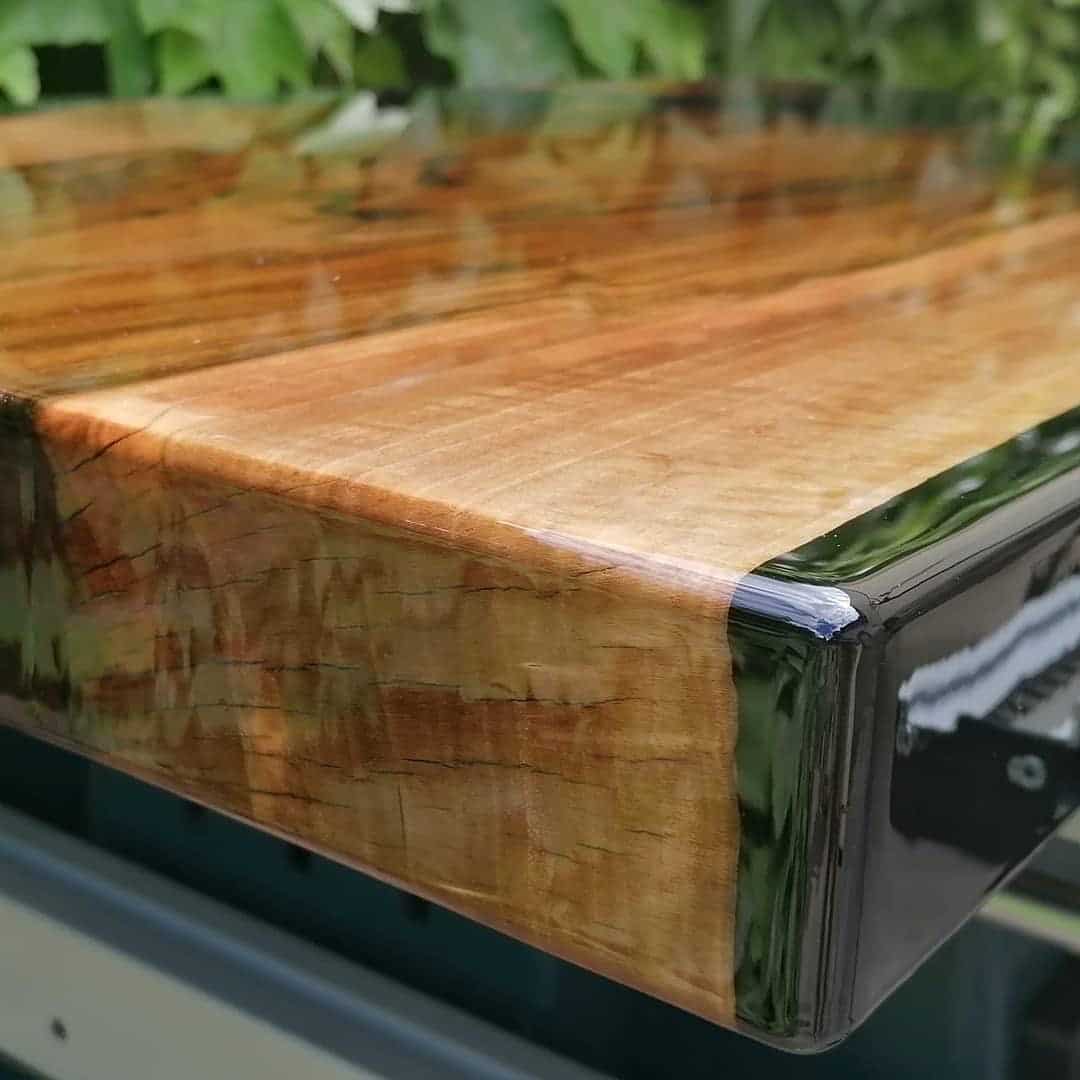
If your outdoor floor suffers from annoying slopes or uneven surfaces, applying transparent resin offers a modern, durable way to correct these issues. This guide explains how to level outdoor floors with a clear epoxy finish, giving you both a functional and appealing result while ensuring long-term stability in outdoor conditions.
What You’ll Need
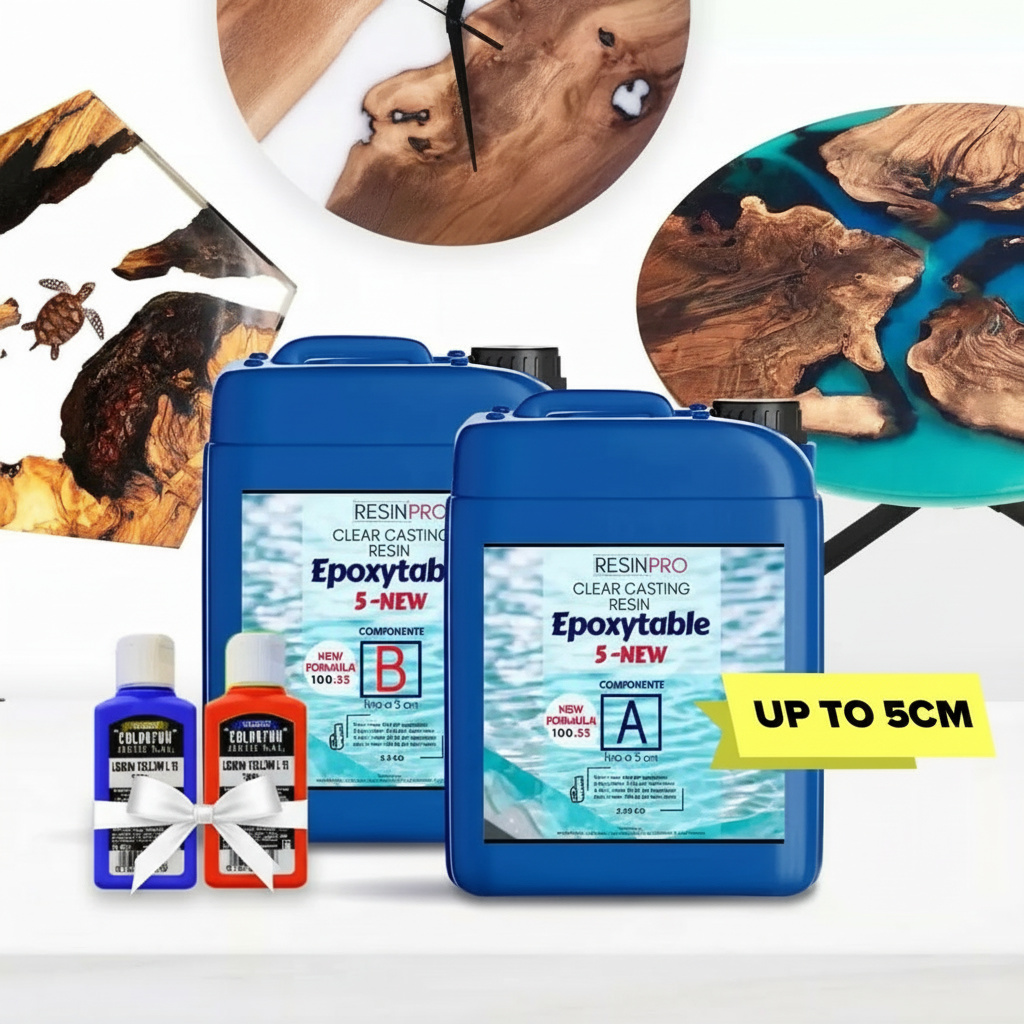
- “Epoxytable 10-Ten” – Deep Pour Epoxy Resin for Tables, Up to 10cm Casting: Ideal for correcting significant slopes with thicker pours.
- “EpoxyTable 5-Five” – Deep Pour Epoxy Resin for Tables and Large Projects – Up to 5cm: Suitable for moderate surface adjustments and medium-thickness coats.
- “Trasparente” – Multipurpose Clear Epoxy Resin for Casting – Up to 2cm: Use for minor surface correction or thin self-levelling coats.
- “Icrystal” – Clear Epoxy Resin – Odourless Formula – Up to 1.5cm: Best for ultra-thin levelling coats and fine-tuning surface gloss.
- Protective gloves, mixing containers, stirring sticks, spirit level, masking tape, and a notched trowel or squeegee.

Visualise Resin Application on Outdoor Slopes
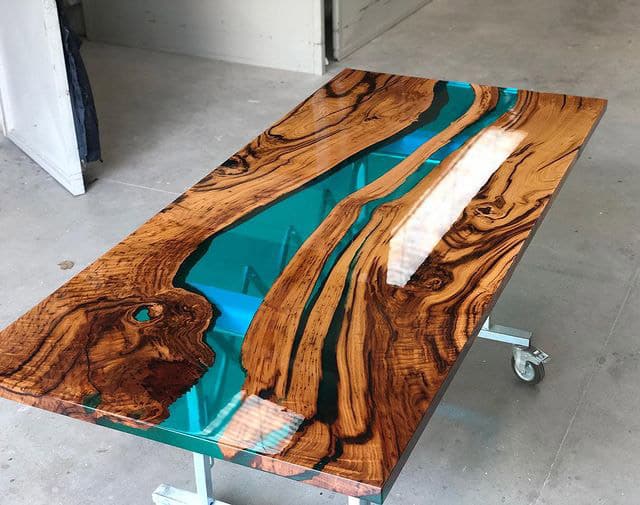
See examples of clear resin being poured and levelled on various outdoor surfaces, highlighting how the product flows to create perfectly flat finishes even on visibly uneven floors.
Step 1: Prepare and Clean the Floor
Begin by thoroughly sweeping the outdoor floor to remove all dust, debris, loose materials, and dirt. Pressure-wash the area if required, ensuring any grease or organic contaminants are fully eliminated. A clean, dry, and stable substrate allows proper resin adhesion and prevents imperfections from appearing later.
Examine the substrate for cracks or significant damage; repair these with an appropriate filler and allow it to cure fully before progressing. Mask off areas you do not want coated and ensure all perimeter drainage remains accessible and protected from resin flow.
Step 2: Assess Slope and Plan the Pour
Use a spirit level to identify the highest and lowest points of the surface. Determine the approximate thickness of resin you will need to achieve a level finish. For deep corrections, consider if the job requires one thick pour or multiple thinner layers, depending on resin type and manufacturer guidance.
“Epoxytable 10-Ten” is suited for deep pours up to 10cm, making it appropriate for correcting severe slopes in a single application, whereas “EpoxyTable 5-Five” is best for moderate levelling needs up to 5cm. For small adjustments, “Trasparente” or “Icrystal” provide excellent clarity and self-levelling properties in thin coats.
Step 3: Mix and Pour Transparent Resin
Measure and mix your chosen resin according to the product instructions, paying close attention to the mixing ratio and duration for best results. Gently stir to minimise air entrapment. Pour the resin onto the lowest area, allowing it to flow and self-level towards higher zones. Use a notched trowel or squeegee to help spread the resin evenly, ensuring complete coverage and targeted levelling over the sloped area.
Work methodically and avoid excessive agitation, which may introduce air bubbles. Keep the working environment free from dust while the resin cures. For deep corrections on outdoor surfaces, “Epoxytable 10-Ten” or “EpoxyTable 5-Five” provide the depth and clarity needed for large slopes, while thinner layers can be handled with “Trasparente” or “Icrystal”.
Step 4: Allow to Cure and Inspect Results
Let the applied resin cure according to the manufacturer’s specified time before subjecting the surface to light foot traffic, weather, or additional treatments. Humidity and temperature can affect curing times, so check the technical sheet for accurate timing. Avoid disturbing the area during this phase, as movement can create waves or imperfections.
After curing, inspect the level and clarity of the floor. If small dips or irregularities remain, a second thin coat with a product such as “Trasparente” can be applied to achieve perfect results.
Tips and Common Mistakes
- Cleanliness is Crucial: Dust, debris, or oil will prevent strong bonding and can show through clear resin.
- Don’t Rush the Levelling: Allow the resin to self-level and give it time to flow naturally towards low spots.
- Avoid Exceeding Recommended Pour Thickness: Over-pouring can cause yellowing or curing problems, especially in warm weather.
- Protect Edges and Drains: Use masking tape and barriers to keep resin only where it is required.
Close-ups of Levelled Outdoor Resin Floors
Explore detailed views of outdoor areas after transparent resin application. Notice the smooth reflection and how uneven slopes have been expertly corrected with a clear, hard-wearing coating.

- “Epoxytable 10-Ten” – Deep Pour Epoxy Resin for Tables, Up to 10cm CastingPrice range: £33.85 through £334.85“Epoxytable 10-Ten” is designed for deep pours up to 10cm, with low exothermic reaction and UV filters suited to outdoor slope corrections.
- "EpoxyTable 5-Five" – Deep Pour Epoxy Resin for Tables and Large Projects – Up to 5cmPrice range: £16.85 through £1,099.85EpoxyTable 5-Five resin is designed for deep pours up to 5cm, suitable for tables and large projects with good UV resistance and mechanical strength.
 "Trasparente" – Multipurpose Clear Epoxy Resin for Casting – Up to 2cmPrice range: £8.45 through £948.85"Trasparente" is an ultra-clear, multipurpose epoxy resin for castings up to 2 cm thick, suited to detailed DIY and woodworking projects.
 "Icrystal" – Clear Epoxy Resin – Odourless Formula – Up to 1.5cmPrice range: £11.65 through £954.85"Icrystal" is a transparent epoxy resin designed for clear, scratch-resistant surfaces with a 1.5cm layer depth per application.
Frequently Asked Questions
Can transparent resin correct large outdoor floor slopes?
Yes, with deep-pour epoxy resins such as “Epoxytable 10-Ten”, significant slopes can be levelled effectively in a single or multi-layer pour.
Is UV resistance important for outdoor epoxy floors?
Absolutely. Outdoor resin floors require UV filters to prevent yellowing and maintain clarity over time.
How thick can I pour transparent epoxy outdoors?
Depending on the product, single pours range from 1.5cm to 10cm. Always check the specification for your resin.
Can I use multiple resin layers for slope correction?
Yes, but allow correct curing between layers and never exceed the recommended thickness per pour to avoid defects.
Will transparent epoxy withstand outdoor weathering?
Modern clear epoxies with integrated UV filters and high scratch resistance are designed to perform well outdoors.
How soon can I walk on the floor after resin cure?
Wait for the full curing time per product instructions—typically 24–72 hours—before exposing the surface to traffic.