 Free shipping on orders over £29,85
  Shipping Tracking!


 Google
 Facebook
How to build a resin coffee table?
Step-by-step guide for your first stunning resin and wood table
Building a resin coffee table is a rewarding project that combines woodworking and epoxy artistry. This guide walks you through every stage, from design and preparation to casting, finishing and troubleshooting, so you can confidently create a custom centrepiece for your home or studio. Whether you want a classic river table effect or a bold artistic design, these steps will help you achieve professional results.
What You’ll Need
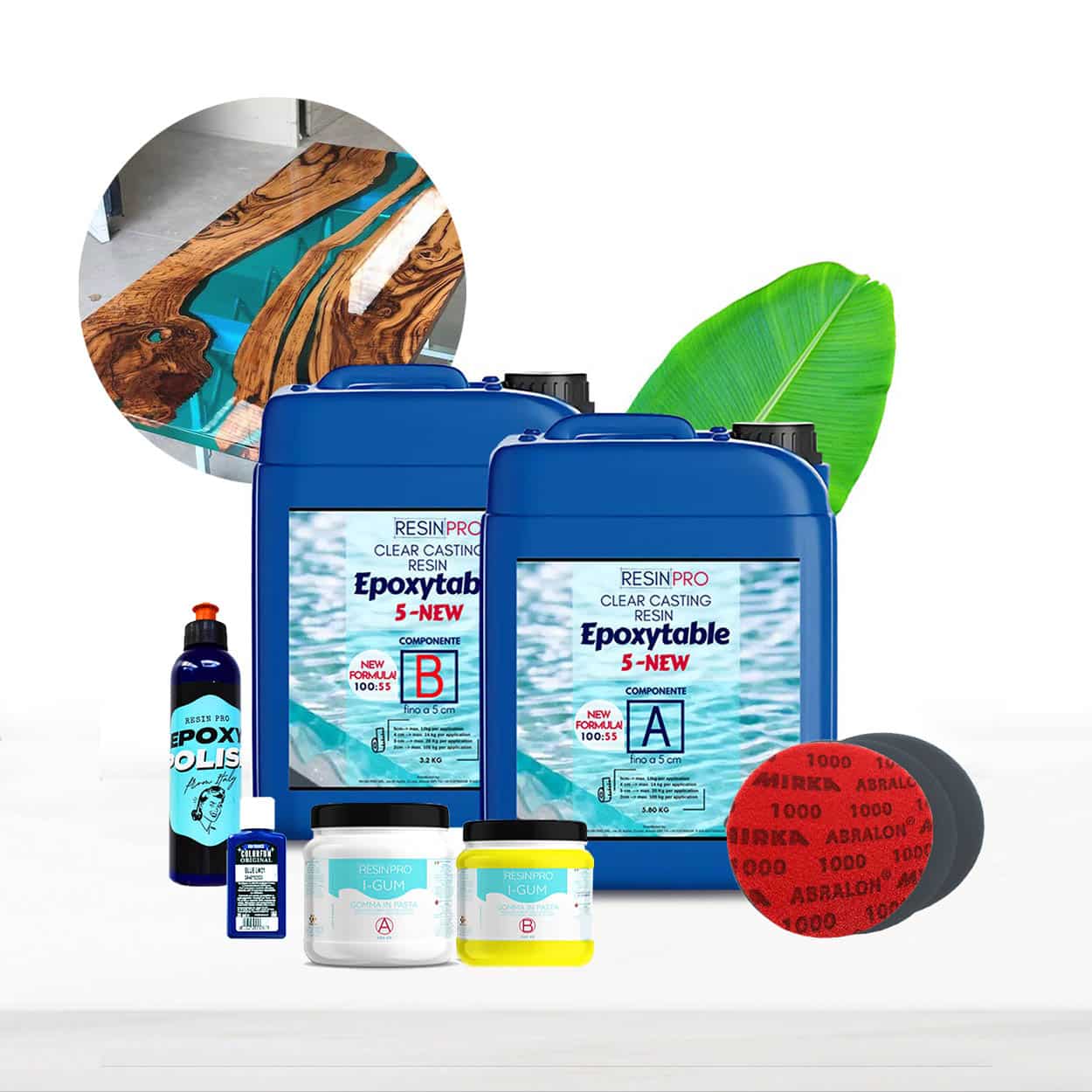
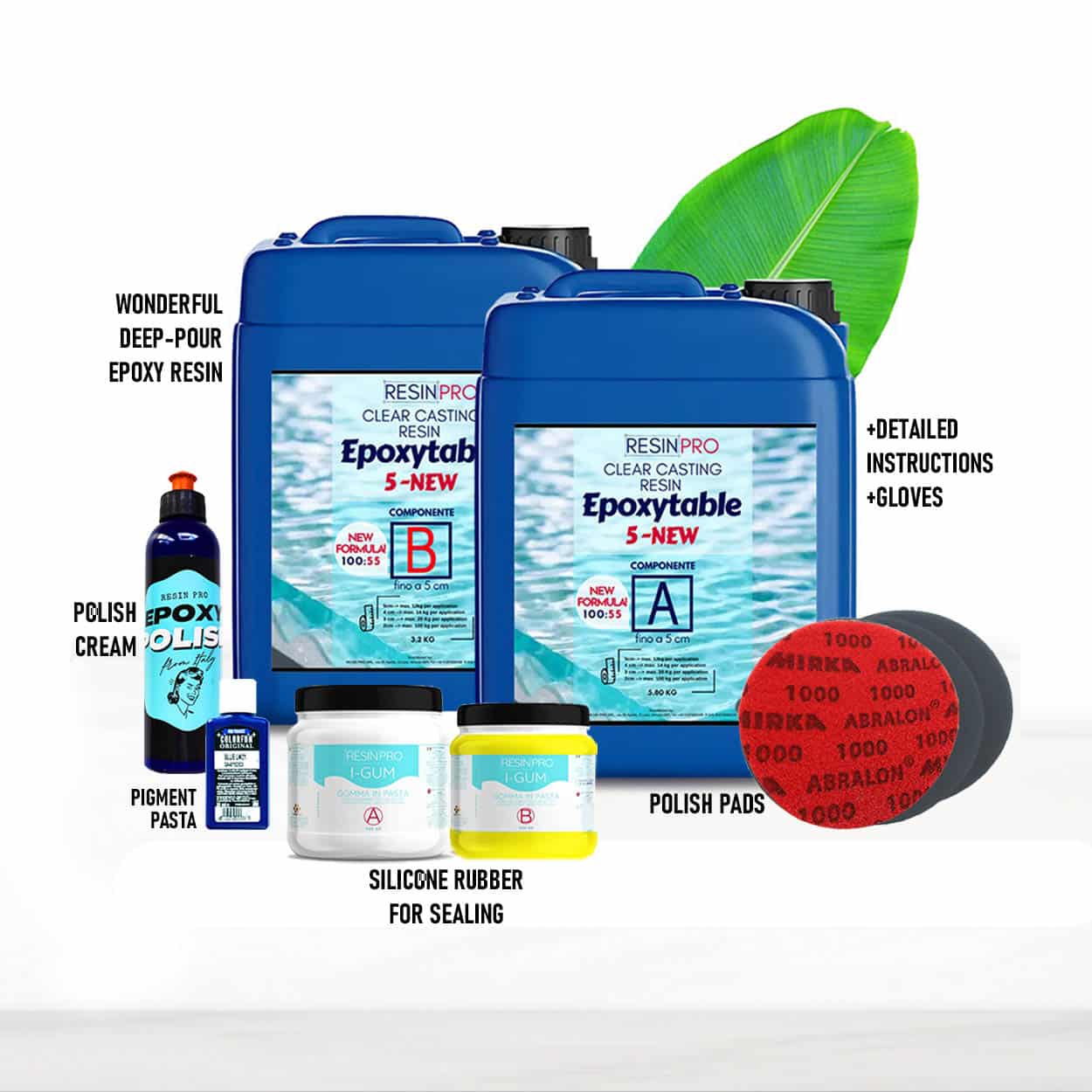
- “River-Table” – Complete Kit for Creating Your First Epoxy Resin Table: A full kit with epoxy, hardener, pigments and polishing materials, ideal for first timers.
- “EpoxyTable 5-Five” – Deep Pour Epoxy Resin for Tables and Large Projects – Up to 5cm: For projects requiring deeper pouring or larger surfaces.
- “Epoxytable 10-Ten” – Deep Pour Epoxy Resin for Tables, Up to 10cm Casting: For super-deep river effects or extra thick castings.
- “Geode O” – Table Base for Epoxy Resin Art – Wood Support for Resin Projects: Provides a sturdy and compatible base for your resin project.
- Protective gloves and mask
- Mixing tools, containers and a spirit level
- Wood boards (e.g. live edge for river tables), clamps and sandpaper

Essential Tools and Safety for Resin Tables
Gathering the right equipment helps make your build smoother and safer. Wear gloves and a mask to protect against fumes and sticky resin. Prepare mixing containers, accurate scales, and a sturdy, level surface to set up your moulds and table base. Ensure you have a ventilated working area for all steps, especially sanding and polishing.
Step 1: Plan and Prepare Your Design
Start by deciding on the size, style and theme of your table. Sketch your design, including dimensions and where the resin will be featured – whether as a central ‘river’, inlays, geometric sections or an entirely resin top. Choose wood with interesting grain or live edges for maximum effect and carefully measure and cut it to size. Sand both the timber and, if using a pre-made base like the “Geode O” – Table Base for Epoxy Resin Art – Wood Support for Resin Projects, ensure it fits your dimensions.
Use clamps to secure your wood, and place all elements on a protected, level workspace. A clean, dust-free area prevents contamination and ensures a flat cure. Remember, precise planning saves material and produces cleaner results.
Step 2: Create and Seal the Mould
Build a mould or formwork for your table to contain the resin. Use melamine boards, sealed MDF, or heavy-duty plastic sheeting as the base and walls. All joints should be tightly fit and thoroughly sealed with silicone or a dedicated sealing tape to prevent leaks during pouring. Spray on a mould release or use a release film for easier demoulding after the resin sets.
Always use a level work surface – uneven forms will cause the resin to pool or cure at an angle, affecting both appearance and functionality.
Step 3: Prepare and Seal Your Wood
The key to a flawless resin pour is properly treating your wood. Dry, sand, and thoroughly clean all pieces. To prevent air bubbles from escaping into the resin, apply a thin seal coat of epoxy to the wood surfaces and allow it to cure. This simple step dramatically reduces trapped air, which can mar the final finish.
Test-fit all elements in your mould before proceeding. Make sure parts are fixed in place with weights or clamps to prevent shifting during the pour.

Step 4: Mix and Pour the Epoxy Resin
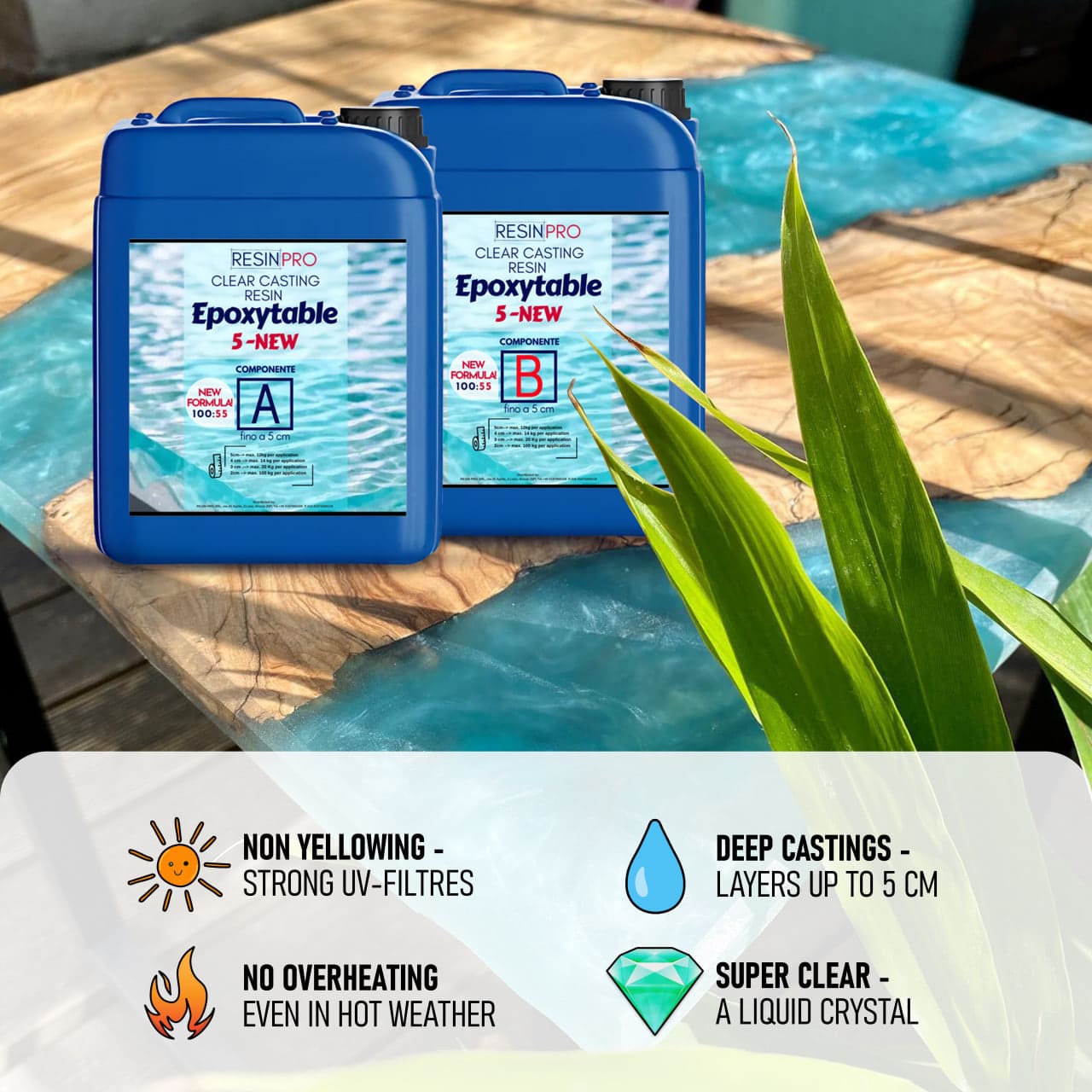
Choose your resin based on the desired pour thickness. For most coffee tables, both “EpoxyTable 5-Five” – Deep Pour Epoxy Resin for Tables and Large Projects – Up to 5cm and “Epoxytable 10-Ten” – Deep Pour Epoxy Resin for Tables, Up to 10cm Casting can achieve thick, clear layers without overheating. Measure and mix the resin and hardener exactly as specified in the instructions to avoid tackiness or improper curing.
Stir slowly to minimise bubbles, and add pigment if you wish to create a coloured or opaque effect. Pour resin steadily, filling the mould in one pass if possible; for very thick tables, you may need to pour in stages.
Allow resin to cure fully between layers if multiple pours are required. Use a heat gun gently across the surface to help remove trapped bubbles before the resin sets.
Step 5: Demould, Finish and Polish
Let your table cure completely – this may take up to several days depending on depth and room temperature. Carefully remove the formwork or release film. Any rough edges can be trimmed and sanded smooth, starting with a coarse grit and moving to finer grades for a glassy finish.
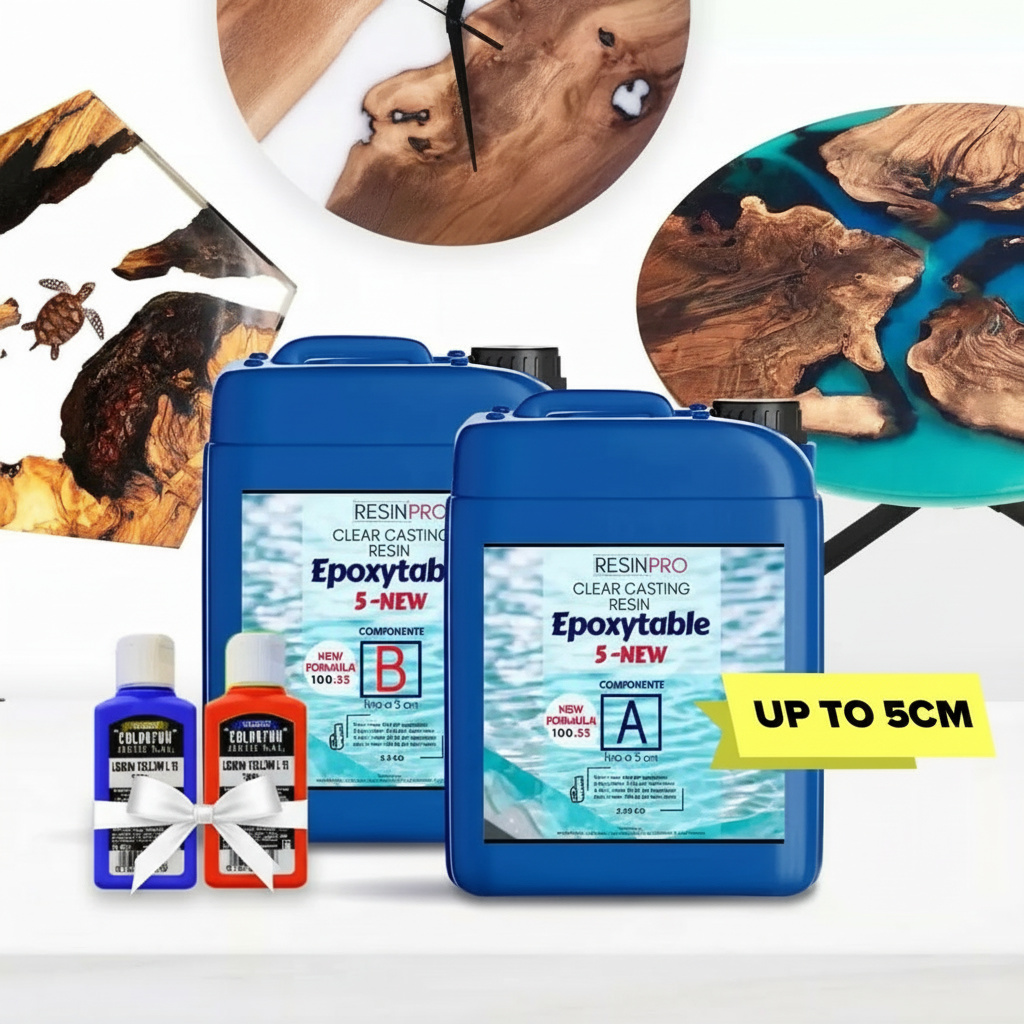
If you opted for the “River-Table” – Complete Kit for Creating Your First Epoxy Resin Table, use the included polishing kit to buff out minor scratches and bring out crystal clarity in the resin. Ensure good ventilation when working with fine dust or polish, and fit the finished tabletop to your base securely.
Tips, Common Mistakes, and Troubleshooting
Choose resin depth to match your project: Thick pours need a deep cast resin like EpoxyTable 5-Five or Epoxytable 10-Ten, while thin layers may not cure properly in these.
Seal wood properly to prevent bubbles: Skipping the seal coat can lead to air release and unsightly bubbles after your main pour.
Avoid pouring all the resin at once if working with very large volumes; staggered layers with cure intervals can keep heat under control and prevent distortion. Always measure and mix components by weight unless otherwise stated. Finally, patience is key—don’t rush demoulding or finishing, as hardened resin can be fragile until fully cured.
Visual Inspiration and Advanced Projects
Explore different resin coffee table designs for ideas beyond the classic river table. Integrate metal flakes, embedded objects, or layered pigments for unique appearances. Browse our project gallery or share your results on our ResinPro community channels to inspire others and solve creative challenges.

- "River-Table" – Complete Kit for Creating Your First Epoxy Resin TablePrice range: £188.85 through £444.85"River-Table" provides materials and instructions to create a wood and resin table suitable for beginners and hobbyists.
- "EpoxyTable 5-Five" – Deep Pour Epoxy Resin for Tables and Large Projects – Up to 5cmPrice range: £16.85 through £1,099.85"EpoxyTable 5-Five" is a deep pour epoxy resin designed for tables and large projects up to 5cm thick, suitable for resin coffee tables.
 “Epoxytable 10-Ten” – Deep Pour Epoxy Resin for Tables, Up to 10cm CastingPrice range: £33.85 through £334.85“Epoxytable 10-Ten” is an epoxy resin suitable for deep pour applications including tables and artistic projects up to 10cm thick.
 "Geode O" – Table Base for Epoxy Resin Art – Wood Support for Resin ProjectsPrice range: £17.15 through £22.15The Geode O table base provides robust wooden support for epoxy resin projects, suitable for various resin crafting techniques.
Frequently Asked Questions
What resin depth is suitable for a coffee table project?
For most tables, 2 to 5 cm pours are suitable; for dramatic designs, up to 10 cm using a deep pour epoxy is recommended.
How can I avoid bubbles in my resin coffee table?
Seal wood with a thin epoxy coat and use a heat gun or torch on the surface right after pouring to help bubbles escape.
How long does a resin table take to cure?
Depending on resin and depth, allow 24–72 hours for handling and up to a week for full curing before heavy use.
Is resin table building beginner-friendly?
Yes, especially with full kits and clear instructions. Planning allows first-timers to achieve professional-looking results.
What wood is best for resin coffee tables?
Stable, seasoned hardwoods like oak, walnut, or ash are excellent choices. Ensure the wood is fully dry before starting.
What is the heat resistance of epoxy resin table tops?
Most deep pour epoxies used for tables resist heat up to 70°C, suitable for common household use but not hot pans.
How should I prepare wood for resin pouring?
Sand the surfaces smooth and clean thoroughly, then seal with a thin layer of epoxy before the main pour.