 Free shipping on orders over £29,85
  Shipping Tracking!


 Google
 Facebook
← Back to How do you make a resin kitchen worktop?
Trapped air bubbles in resin can spoil the clarity and smoothness of your kitchen worktop finish. Taking quick action before the resin cures is essential for achieving a professional result.
Why Do Air Bubbles Form in Resin?
Air bubbles often develop during mixing, pouring, or spreading the resin, especially if the mixture is stirred too vigorously or poured from a height. Bubbles can also become trapped around edges or in textured surfaces. Identifying how and when they form helps you select the most effective removal technique for your project.
Techniques for Bubble Removal
- Gentle Heat: Wave a heat gun or kitchen torch lightly over the resin surface—keep it moving to avoid burning. This method pops small bubbles rising to the top.
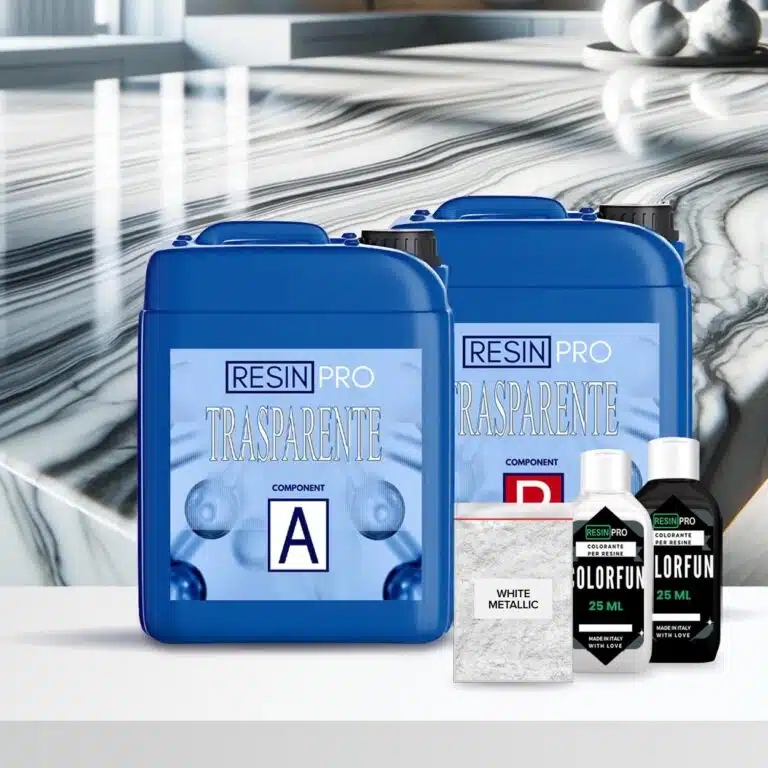
- Isopropyl Alcohol: Lightly mist the surface with isopropyl alcohol using a spray bottle. This breaks the surface tension, allowing bubbles to escape. Many complete kits, such as the Stone Effect Collection – Marble Epoxy Resin Countertop Kit, include isopropyl alcohol for this purpose.
- Slow Pouring & Stirring: Stir resin slowly and pour close to the surface to limit the introduction of air from the start.
When This Matters Most
Quick bubble removal is especially important for clear or high-gloss finishes, where imperfections are easily spotted once cured. If you’re making a feature kitchen worktop or using transparent or food-safe resins, such as EpoxyFood, ensuring a flawless finish enhances both aesthetics and hygiene.
Related products
Related guides
By following these bubble-busting techniques, you can create a smooth, durable resin kitchen worktop. For more expert tips and the right products for every stage, see our main guide on how to make a resin kitchen worktop.