 Free shipping on orders over £29,85
  Shipping Tracking!


 Google
 Facebook
← Back to With 1 kg of resin, how much can I make?
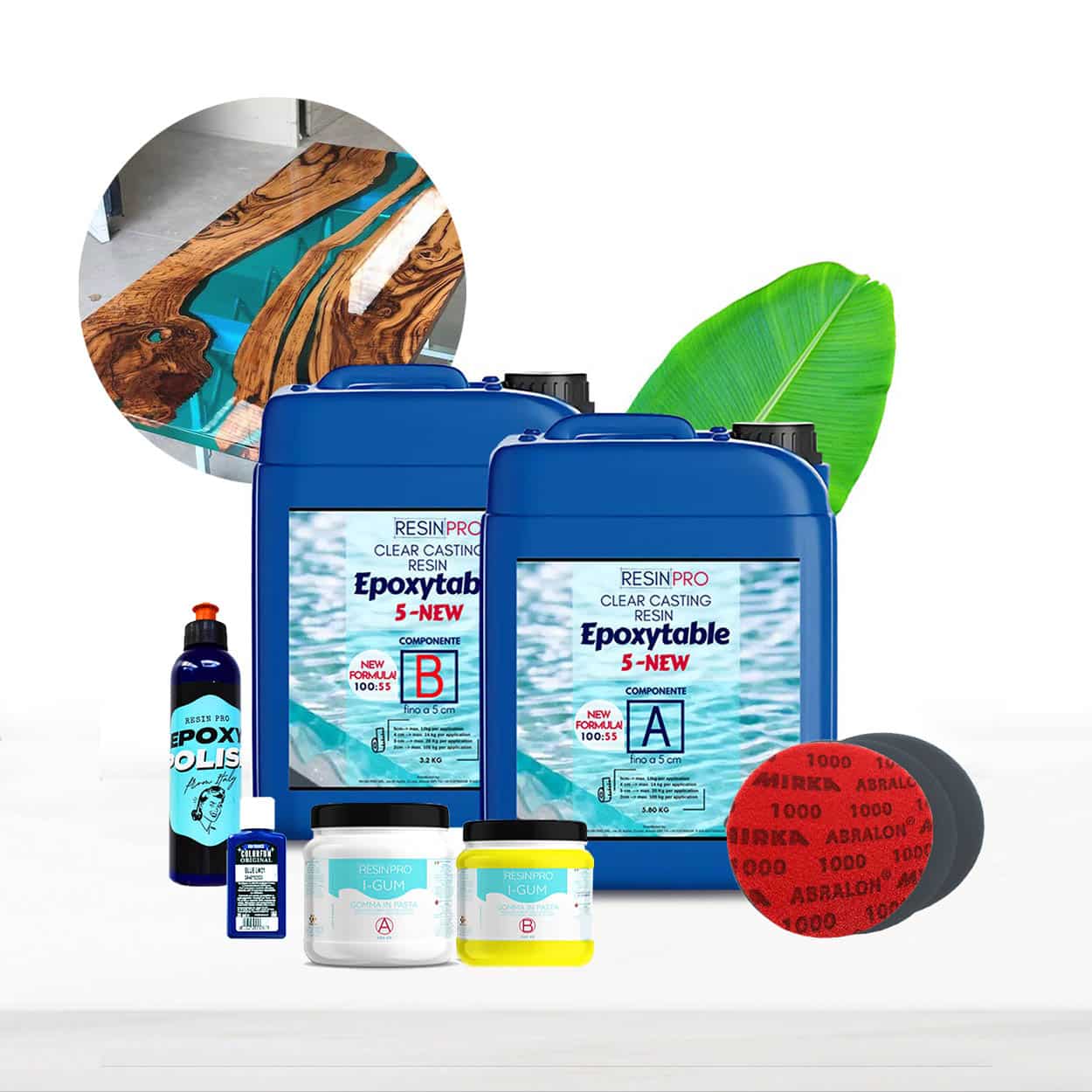
If you’re beginning a river table project, it’s vital to estimate how much resin you’ll actually need. 1 kg may seem like a lot, but the area it can cover depends on how thickly you pour.
Resin Coverage at Typical River Table Thickness
For a classic river table, resin is usually poured at a thickness of around 2 cm to fill the gap between wood slabs. At this thickness, 1 kg of resin will cover approximately 0.06 m². This is only suitable for accent strips or small features — for a full table, you’ll need significantly more. For instance, covering a 0.5 m² area at 2 cm thickness typically requires about 8 kg of resin.
Planning Your Resin Quantity
When planning a river table, measure the length, width, and average depth of the resin section you intend to fill. Multiply these to get the volume (in cubic metres), then convert to kilograms using your resin’s density (approx. 1 kg ≈ 1 L, but check your specific product’s specs for accuracy). Don’t forget to factor in epoxy absorbed by wood edges and minor leaks.
If you are new to river table projects, consider all-in-one solutions like the “River-Table” – Complete Kit for Creating Your First Epoxy Resin Table. These kits provide enough resin for standard table dimensions plus essential accessories and guidance.
When Coverage Estimation Matters Most
- Designing to a tight budget or timeframe – underestimating resin leads to project delays.
- Working with thick or wide river sections, where resin use increases quickly.
- Planning layered pours, especially for depths over 2 cm per application.
Related products
Related guides
Careful resin calculation helps avoid unexpected costs and ensures a flawless result. For more advice on resin quantities for diverse project sizes, see our main guide on how much you can make with 1 kg of resin.