 Free shipping on orders over £29,85
  Shipping Tracking!


 Google
 Facebook
← Back to How to use resin body filler?
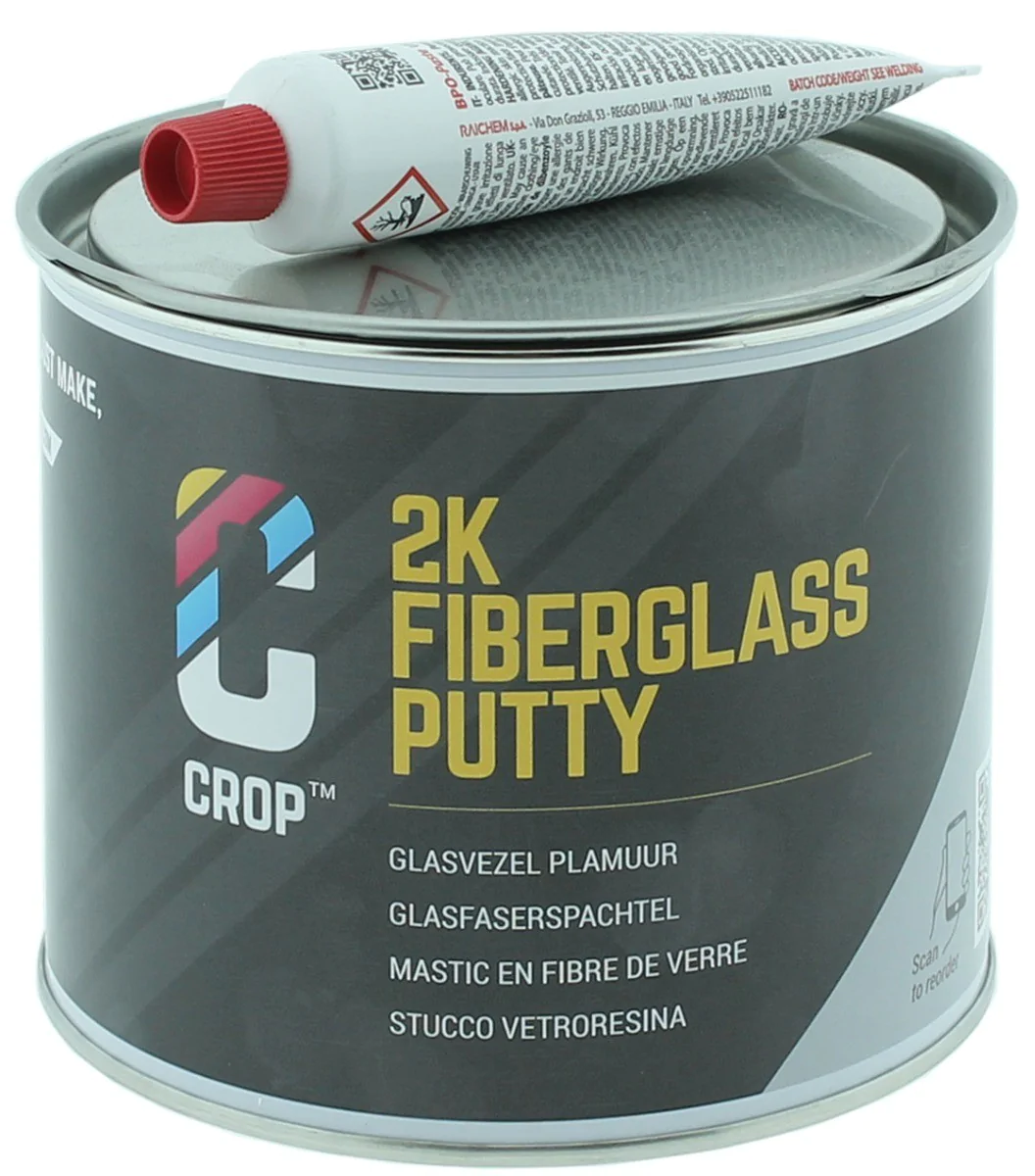
When tackling car body repairs or structural fixes, it’s helpful to know whether to choose a standard resin body filler or a fibreglass-reinforced filler. Each has unique strengths tailored to different repair needs.
Core Differences Between Standard and Fibreglass-Reinforced Fillers
Standard resin body fillers are formulated for general cosmetic repairs such as smoothing shallow dents, minor scratches, or small holes. They are easy to apply and sand, delivering a fine finish ready for painting. However, their strength is limited compared to reinforced products.
Fibreglass-reinforced fillers, like CROP 2K Fiberglass Putty, contain durable fibreglass strands. This reinforcement significantly boosts strength and resistance to cracking, making them ideal for filling deeper holes, bridging gaps, or repairing areas exposed to greater mechanical stress or vibration.
Choosing the Right Filler for Your Repair
- Standard resin fillers are best for surface-level imperfections where flexibility isn’t critical and structural support isn’t required.
- Fibreglass-reinforced fillers excel in repairs needing extra rigidity, such as corroded panels, deep dents, or corners prone to impact. Their improved bonding makes them reliable for metal, aluminium, plastics, carbon fibre, and even galvanised steel.
If you’re addressing a large cavity or repairing a high-stress area—especially on bodywork subject to vibration—opting for a fibreglass-reinforced option will provide lasting results.
When This Matters
Use fibreglass-reinforced fillers when working on parts frequently stressed, such as wheel arches, sills, or structural patches. For quick fixes or minor, smooth repairs, a standard filler often speeds up finishing work.
Related products
Related guides
By selecting the right filler for your project, you’ll ensure a stronger and longer-lasting repair. To explore more tips and products for flawless results, see our full guide on how to use resin body filler.