 Free shipping on orders over £29,85
  Shipping Tracking!


 Google
 Facebook
How to apply resin to a table?
Step-by-step guide for flawless table resin finishing.
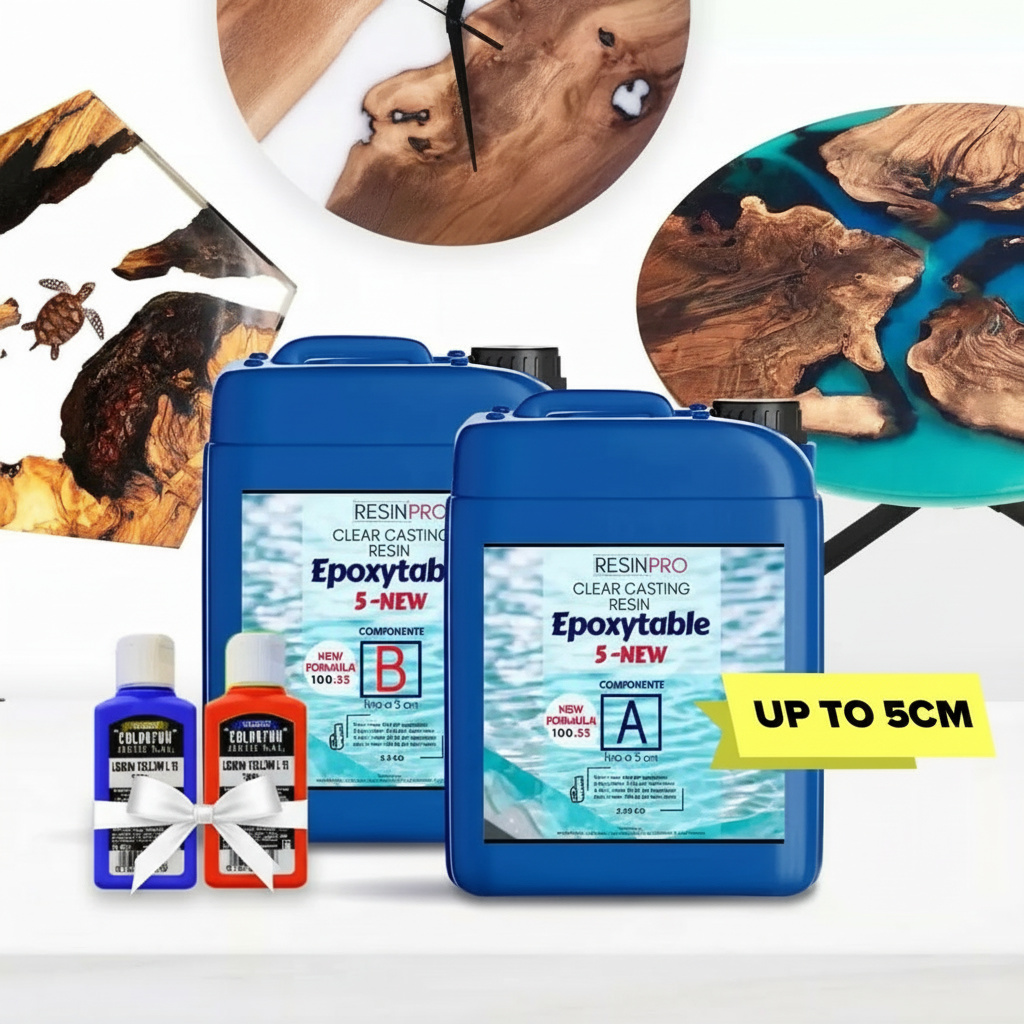

If you want to achieve a crystal-clear, highly durable finish on a wooden or existing table, applying epoxy resin is a proven technique that can transform your project. This guide shows you, step by step, how to apply resin to a table for either a stunning clear finish or eye-catching designs. Whether you’re updating a dining table, creating a ‘river table’, or reviving a countertop, this process ensures lasting results with professional appeal.
What You’ll Need
- “EpoxyTable 5-Five” – Deep Pour Epoxy Resin for Tables and Large Projects – Up to 5cm – For deep, clear pour up to 5cm thickness, ideal for river tables and thick coatings
- “Epoxytable 10-Ten” – Deep Pour Epoxy Resin for Tables, Up to 10cm Casting – Suitable for very thick or large single pour projects
- “River-Table” – Complete Kit for Creating Your First Epoxy Resin Table – For beginners needing everything in one convenient set
- “Stone Effect Collection” – Marble Epoxy Resin Countertop Kit – For marble or stone-effect table projects
- Mixing containers, stirring sticks, spirit level, masking tape
- Sandpaper (various grits), gloves, protective gear
- Optional: pigments, dyes, or finishing kits

Essential tools and workspace setup
Lay out all tools and protective gear before you mix resin. Ensure your workspace is well-ventilated, flat, and protected with plastic sheeting or paper. Keep all materials—mixing buckets, spreaders, and heat tools—within arm’s reach to avoid contaminating wet resin during the process.

Step 1: Prepare the Table Surface
Preparation is critical to achieve a smooth, long-lasting resin finish. Start by cleaning the table thoroughly to remove any dust, oil or old coatings. Sand the entire surface with medium to fine-grit sandpaper until it is smooth and slightly textured — this helps the resin bond strongly to the wood or substrate. Remove any dust with a vacuum or tack cloth.
Check that your table is level using a spirit level. Uneven surfaces can cause the resin to pool or drip during application. Finally, use masking tape to shield the table edges or underside from accidental drips.
Clean, sand, and level your table surface before pouring.
Step 2: Mix the Epoxy Resin Properly
Accurate mixing of resin and hardener is essential. Follow the manufacturer’s recommended ratio by weight, not by volume, as even small deviations can affect the curing process and clarity. Use a clean mixing container and stir slowly for several minutes, scraping the sides and bottom to ensure thorough blending. If adding pigments or dyes for colour effects, incorporate them after initially mixing the resin and hardener.
For deep pours, like those needed in river tables, “EpoxyTable 5-Five” is well-suited for up to 5cm layers, while “Epoxytable 10-Ten” allows for even thicker pours up to 10cm.
Mix resin and hardener precisely by weight.
Step 3: Pour the Resin onto the Table
Pour the mixed resin slowly and evenly across the centre of the table, allowing it to self-level and flow towards the edges. Spread it gently with a notched trowel or a plastic spreader, keeping an eye out for trapped air bubbles. For intricate effects or marble finishes, the “Stone Effect Collection” – Marble Epoxy Resin Countertop Kit provides everything required for swirling colours and veins.
For first-time users, the “River-Table” Complete Kit offers clear instructions and all necessary supplies for straightforward application.
Pour resin steadily to avoid trapped bubbles and uneven layers.

Step 4: Remove Bubbles and Allow to Cure
After pouring, inspect the surface for bubbles caused by mixing or air in wood pores. Use a heat gun or a butane torch, moved quickly above the surface, to pop bubbles without overheating the resin. Avoid staying in one spot too long to prevent damaging the finish. Cover the table to protect it from dust while curing.
Curing times can vary depending on the resin type and temperature, typically taking from 24 to 72 hours. Do not disturb or move the table during this period to ensure the surface remains flawless.
Allow sufficient curing time before handling your finished table.

Tips, Common Mistakes, and Troubleshooting
Pour resin in moderate room temperatures (18–24°C) to prevent issues with flow or curing. Measure carefully and never guess ratios, as improper mixing can result in soft spots or cloudiness. Always sand between layers if pouring in stages. Avoid touching the surface until fully cured to prevent fingerprints or marks.
If working with especially porous wood, consider sealing with a thin layer of resin first to reduce bubble formation. Check packaging or instructions for pot life and working times, especially if working with deep pour resins.
Professional finishing details
Use a polishing kit once fully cured for a glass-like shine. Optional finishing steps can include sanding with finer grits and applying a specialist polishing compound provided in complete resin kits to achieve an ultra-smooth feel and look.
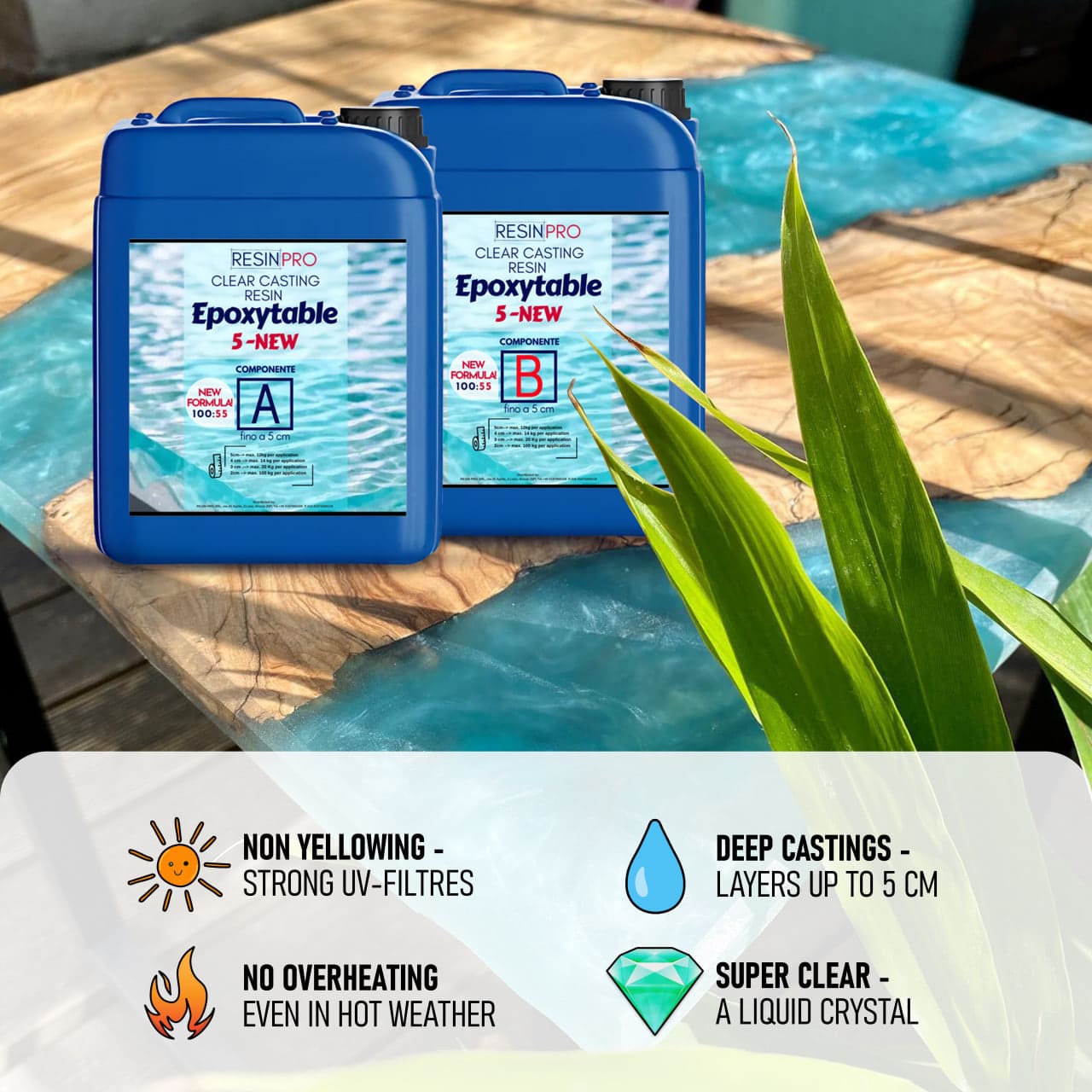
- "EpoxyTable 5-Five" – Deep Pour Epoxy Resin for Tables and Large Projects – Up to 5cmPrice range: £17.95 through £1,154.95"EpoxyTable 5-Five" is a deep pour epoxy resin suitable for tables, offering low exothermic reaction and strong UV resistance.
- “Epoxytable 10-Ten” – Deep Pour Epoxy Resin for Tables, Up to 10cm CastingPrice range: £35.95 through £351.95“Epoxytable 10-Ten” epoxy resin is designed for deep casting up to 10cm, commonly used for tables with a smooth, clear finish.
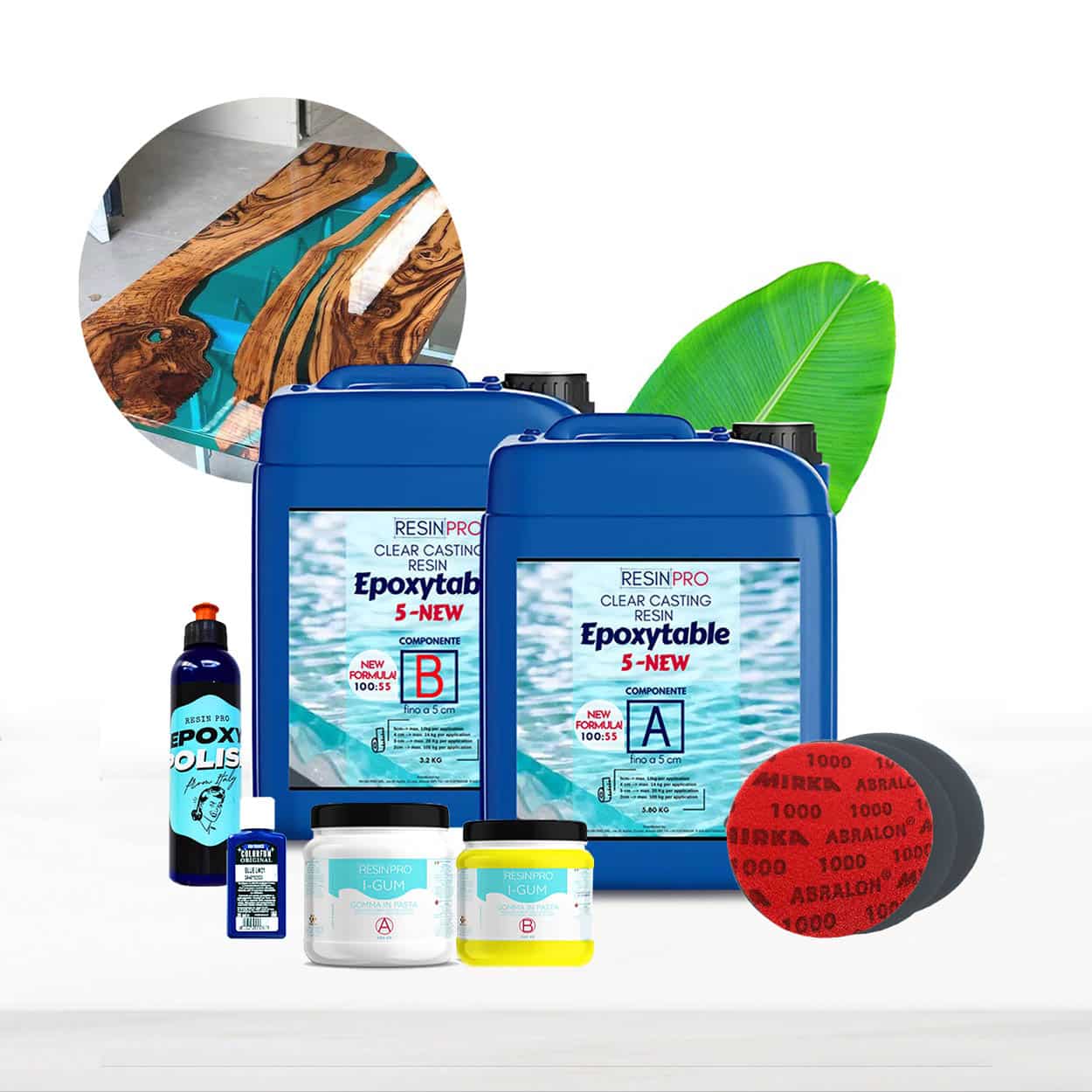 "River-Table" – Complete Kit for Creating Your First Epoxy Resin TablePrice range: £198.45 through £467.45Complete beginner kit including epoxy resin, sealant, polishing accessories and pigments for crafting wood and resin tables.
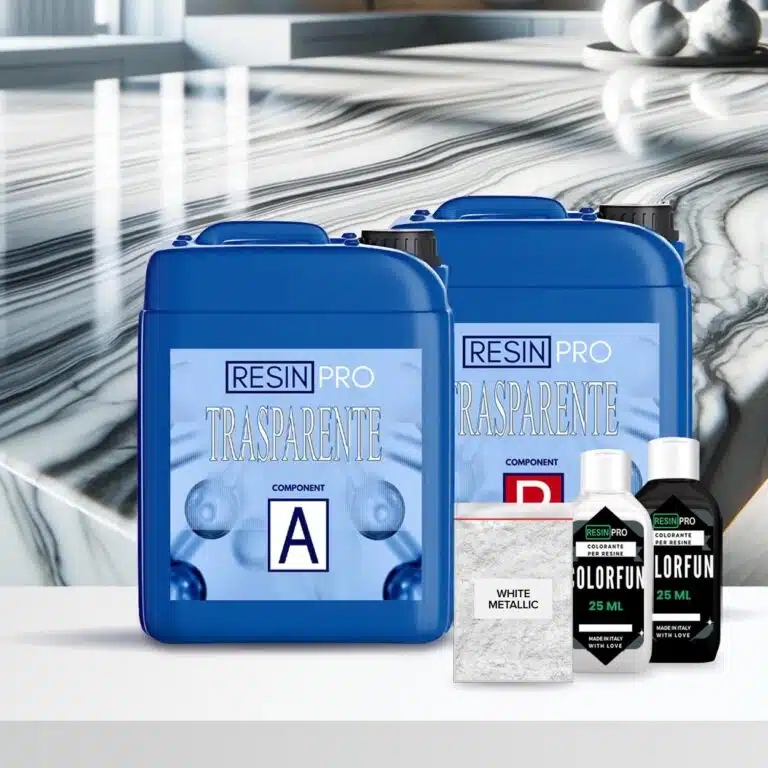 "Stone Effect Collection" – Marble Epoxy Resin Countertop KitPrice range: £57.95 through £272.95"Stone Effect Collection" offers an epoxy resin countertop kit with durable, scratch-resistant marble and stone effects for table surfaces.
Frequently Asked Questions
Can I pour epoxy resin directly onto a wood table?
Yes, as long as the wood is thoroughly sanded, clean, and dry. Always seal pourous woods with a thin resin layer first to avoid excessive bubbling.
How do I stop air bubbles in my epoxy table resin?
Use a heat gun or torch gently over the surface after pouring to release bubbles. Work slowly and avoid overheating any area.
How thick can I pour epoxy on a tabletop?
Thickness depends on the resin type. Typical deep-pour resins allow up to 5–10cm per application. Always check product instructions for maximum safe pour depth.
How long must I wait for epoxy resin to cure on a table?
Most table epoxy resins cure in 24–72 hours depending on conditions. Do not move or use the table until fully cured to avoid damage.
Do I need to seal wood before pouring epoxy resin?
It's best to seal with a thin resin layer to prevent air bubbles from porous wood before the final deep pour.
Can I use marble effect epoxy resin on a table?
Absolutely—marble effect kits are ideal for decorative tables, adding professional stone-like finishes to any flat surface.
What tools are needed to apply epoxy to a table?
Mixing containers, stir sticks, a spreader or notched trowel, masking tape, sandpaper, and a heat source for bubbles are all helpful.
Can I apply epoxy resin to a table outdoors?
It’s best done indoors or in a sheltered area as dust, moisture and fluctuating temperatures outdoors can spoil the finish.