 Free shipping on orders over £29,85
  Shipping Tracking!


 Google
 Facebook
How to spread resin?
Achieve smooth, uniform resin layers with smart technique


Achieving a perfectly smooth, glass-like finish with epoxy resin depends on spreading it correctly across your chosen surface. Whether you’re an artist, a furniture maker, or just starting in resin crafts, mastering this essential step prevents costly errors like uneven coverage, trapped bubbles, and surface imperfections. Follow this expert guide to ensure every project—from coasters to tables—results in a flawless, professional look.

What You’ll Need
- Tooth Shaped Spatula for Epoxy Resin Application – for precision application and even resin layers
- Resin & Paint Application Rollers – Short-Pile, Large, and Sponge Types – suited for both fine details and broad surfaces
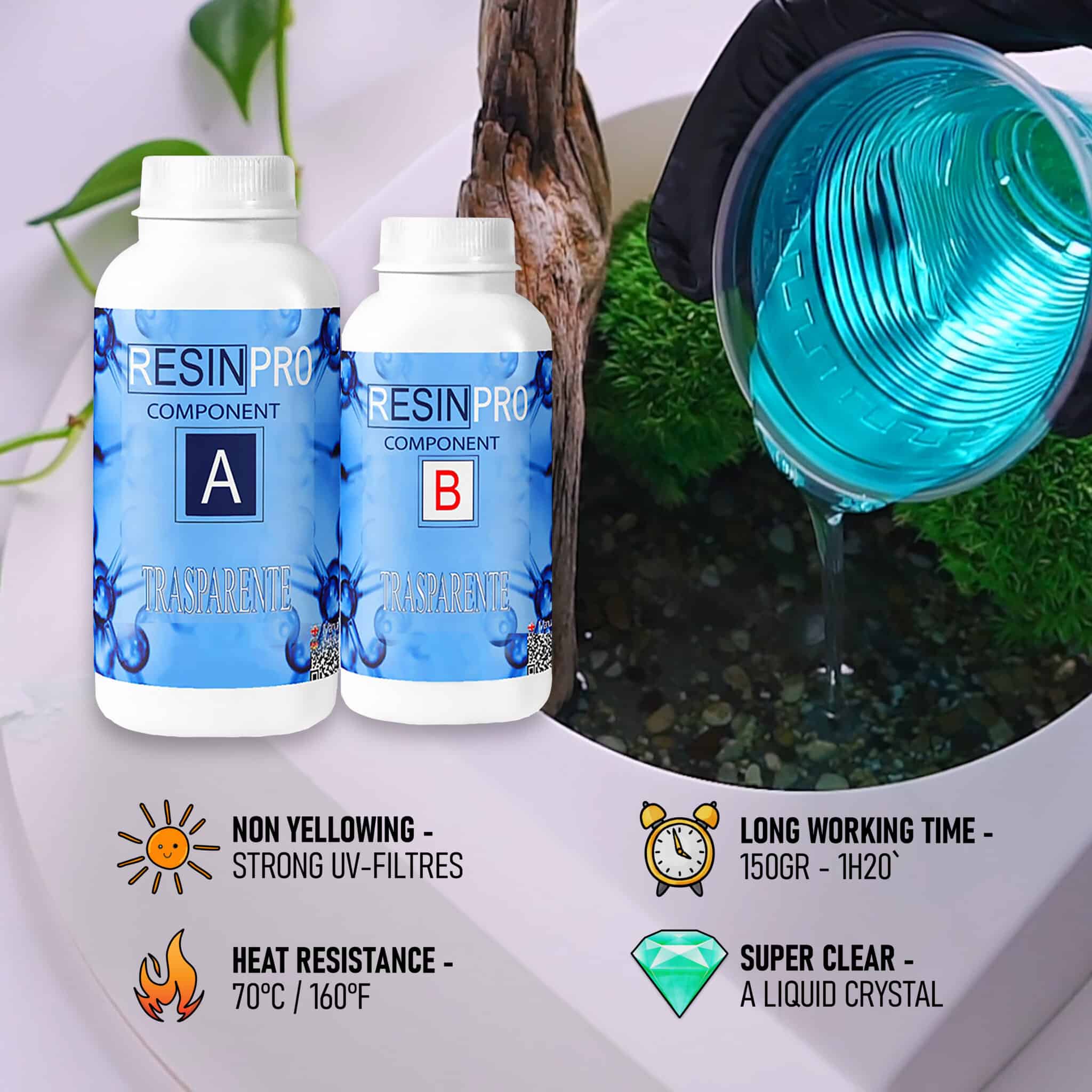
- “Trasparente” – Multipurpose Clear Epoxy Resin for Casting – Up to 2cm – a self-levelling, easy-to-use clear epoxy
- “Art Pro” – Clear Epoxy Resin for Artists and Surface Coating – ideal for glossy, durable finishes on artwork
- Mixing sticks, gloves, and protective equipment (included with some resin kits)

Essential Tools for Even Resin Spreading
Specialist spatulas and high-quality rollers help distribute resin consistently for professional results. Choose the tool that matches your project’s scale and surface for greater control and a flawless finish. Tooth Shaped Spatula for Epoxy Resin Application and Resin & Paint Application Rollers are go-to choices for most resin artists.
Step 1: Prepare the Surface
Start by ensuring your work area is dust-free, level, and at a stable temperature (ideally between 20–24°C). Clean the surface thoroughly, removing any oils, dust, or debris. For porous materials like wood, consider sealing or priming to prevent air bubbles from releasing into the resin during the curing process.
Ensure proper surface preparation before spreading resin—this is the foundation for a professional result and prevents unwanted imperfections.


Step 2: Mix and Pour the Resin
Follow the specific mixing instructions for your chosen resin type, ensuring the correct ratios and thorough blending for a homogeneous mixture. Once mixed, slowly pour the resin onto the centre of your surface, allowing it to spread naturally outward.
Pour resin slowly and evenly for best control, reducing the risk of air bubbles and giving the material time to self-level.
Step 3: Spread the Resin with the Right Tool
Next, use an appropriate tool for your project’s scale: for detailed or smaller surfaces, the Tooth Shaped Spatula for Epoxy Resin Application offers precision and helps achieve an even thickness thanks to its notched design. For larger surfaces, opt for Resin & Paint Application Rollers – Short-Pile, Large, and Sponge Types to swiftly and evenly coat wide areas, while minimising lines or streaks.
Work gently from the centre towards the edges, keeping a steady hand to avoid overworking the resin. Aim for a uniform layer, using overlapping strokes and allowing the resin’s self-levelling properties to work in your favour.
Use tools suited to your project scale for improved control and reduce material waste.

Step 4: Let the Resin Self-Level and Monitor the Cure
Once spread, let the resin settle and self-level. Check for trapped air bubbles—use a heat gun or torch at a safe distance to coax out bubbles if needed. Minimise airflow and dust through the curing period to achieve a pristine finish and avoid surface defects.
Let the resin self-level and monitor for bubbles—these finishing touches make all the difference in achieving a flawless result.
Tips for Success & Common Pitfalls
- Maintain a clean workspace and protect from dust contamination.
- Measure resin and hardener accurately to prevent tacky or soft finishes.
- Avoid working in very cold or humid conditions, as poor curing and cloudiness may result.
- Work with suitable temperatures and humidity to optimise flow and curing time.
- Do not rush—allow each layer to cure fully before handling or applying additional coats.

Troubleshooting Streaks, Bubbles, and Uneven Resin
Streaks are often caused by rushing or using the wrong tool, while bubbles may result from poor surface prep or rapid mixing. Allow the resin to flow naturally and use dedicated spreading tools to minimise these issues. If bubbles persist, gentle heat application helps achieve a flawless, glass-like surface.

- Tooth Shaped Spatula for Epoxy Resin Application£3.45The Tooth Shaped Spatula offers precise application for smooth, even spreading suitable for various resin surfaces.
- Resin & Paint Application Rollers – Short-Pile, Large, and Sponge TypesPrice range: £3.62 through £5.09Rollers designed for applying epoxy resin, suited to precision and uniform coverage for various resin surfaces.
- "Trasparente" – Multipurpose Clear Epoxy Resin for Casting – Up to 2cmPrice range: £8.95 through £397.95Crystal-clear casting epoxy resin with a self-levelling finish, suitable for detailed layers up to 2cm, commonly used in woodworking and art projects.
 "Art Pro" – Clear Epoxy Resin for Artists and Surface CoatingPrice range: £19.95 through £267.95"Art Pro" clear epoxy resin provides durable, transparent finishes suitable for artists and crafters seeking medium viscosity surface coatings.
Frequently Asked Questions
What is the best tool for spreading resin evenly?
A notched spatula or quality short-pile roller ensures a uniform, controlled spread across most surfaces.
How do I avoid bubbles when spreading resin?
Mix resin slowly, pour gently, prep your surface, and use a heat gun to eliminate trapped bubbles after spreading.
Can I spread resin on vertical surfaces?
It is difficult due to dripping; use denser resin and work in thin layers, allowing each to cure before recoating.
How do I make sure my resin self-levels correctly?
Pour onto a level surface and spread evenly; most modern resins are formulated to self-level for a glassy finish.
Should I seal wood before spreading resin?
Yes, sealing minimises trapped air bubbles and prevents resin soak-in, improving the clarity and adhesion of the finish.
What is the best temperature for spreading resin?
Ideally, work between 20–24°C with low humidity for best flow and curing of epoxy resin layers.