 Free shipping on orders over £29,85
  Shipping Tracking!


 Google
 Facebook
← Back to How to produce resin slabs?


When working on thick resin slabs or large table projects, pouring in multiple layers is strongly advised. This process ensures better control over curing and keeps your results flawless and safe.
Why Pour in Layers?
Epoxy resins generate heat as they cure. If you attempt to pour a large volume (beyond the recommended maximum per layer), excessive heat builds up, which can lead to overheating, cracks, bubbles, or unwanted deformation. Layering helps manage the exothermic reaction, particularly for slabs exceeding 2–5 cm per pour, depending on your chosen resin system. This staged approach allows each layer to cure safely before adding the next, producing a clear, stable and professional-looking finish.

How to Layer a Resin Slab
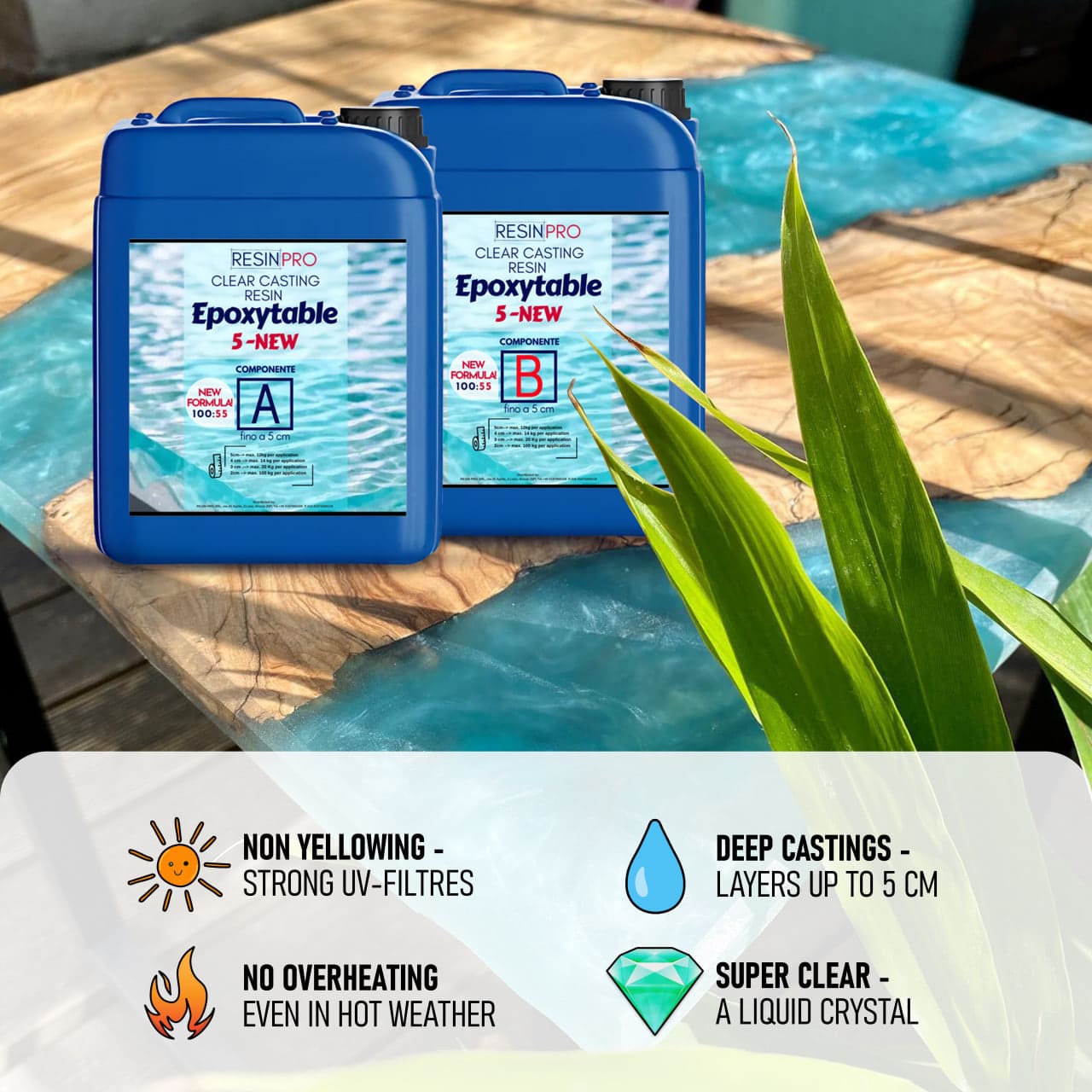
- Determine the maximum pour thickness for your resin—EpoxyTable 5-Five allows up to 5cm, while deeper pours up to 10cm may require Epoxytable 10-Ten.
- After mixing and pouring the first layer, allow it to partially cure (typically 6 to 8 hours, or as specified by the resin guidance) before adding the next layer.
- Repeat until you reach your desired slab thickness, ensuring each layer has cured to the right stage.
This method helps prevent trapping excessive heat and minimises the likelihood of issues such as cloudiness or warping in your finished project.
When Layered Pours Matter Most
Layered pours are essential for projects exceeding your resin’s safe single-pour thickness, or when working on very large tables (especially those with sides over 100 cm or more than 8 kg of epoxy in a single pour). By respecting the recommended curing times, you safeguard both your project and your workspace.

Related products
Related guides
Pouring your resin slab in layers is a key step towards achieving clear, even, and lasting results, especially for substantial tables and feature pieces. For more in-depth advice on slab-making, see our hub: How to produce resin slabs?