 Free shipping on orders over £29,85
  Shipping Tracking!


 Google
 Facebook
← Back to How to produce resin slabs?


Work temperature plays a crucial role in the success of any resin slab project. Understanding how temperature affects curing, clarity, and structural integrity can help you consistently produce high-quality results.
How Temperature Impacts Resin Pours
Epoxy resins are sensitive to ambient temperature during mixing, pouring, and curing. If the workspace is too cold, the resin may become too thick, making it hard to pour and prone to bubbles. On the other hand, high temperatures can accelerate curing, increasing the risk of overheating, warping, or unwanted colour changes. Always aim to work at a stable room temperature—usually between 18°C and 25°C—unless your chosen resin’s datasheet advises otherwise.

Best Practices for Temperature Control
- Acclimatise your resin and hardener to room temperature before starting.
- Avoid pouring in areas exposed to direct sunlight or large temperature swings.
- Use a thermometer to keep tabs on your environment for consistent conditions.
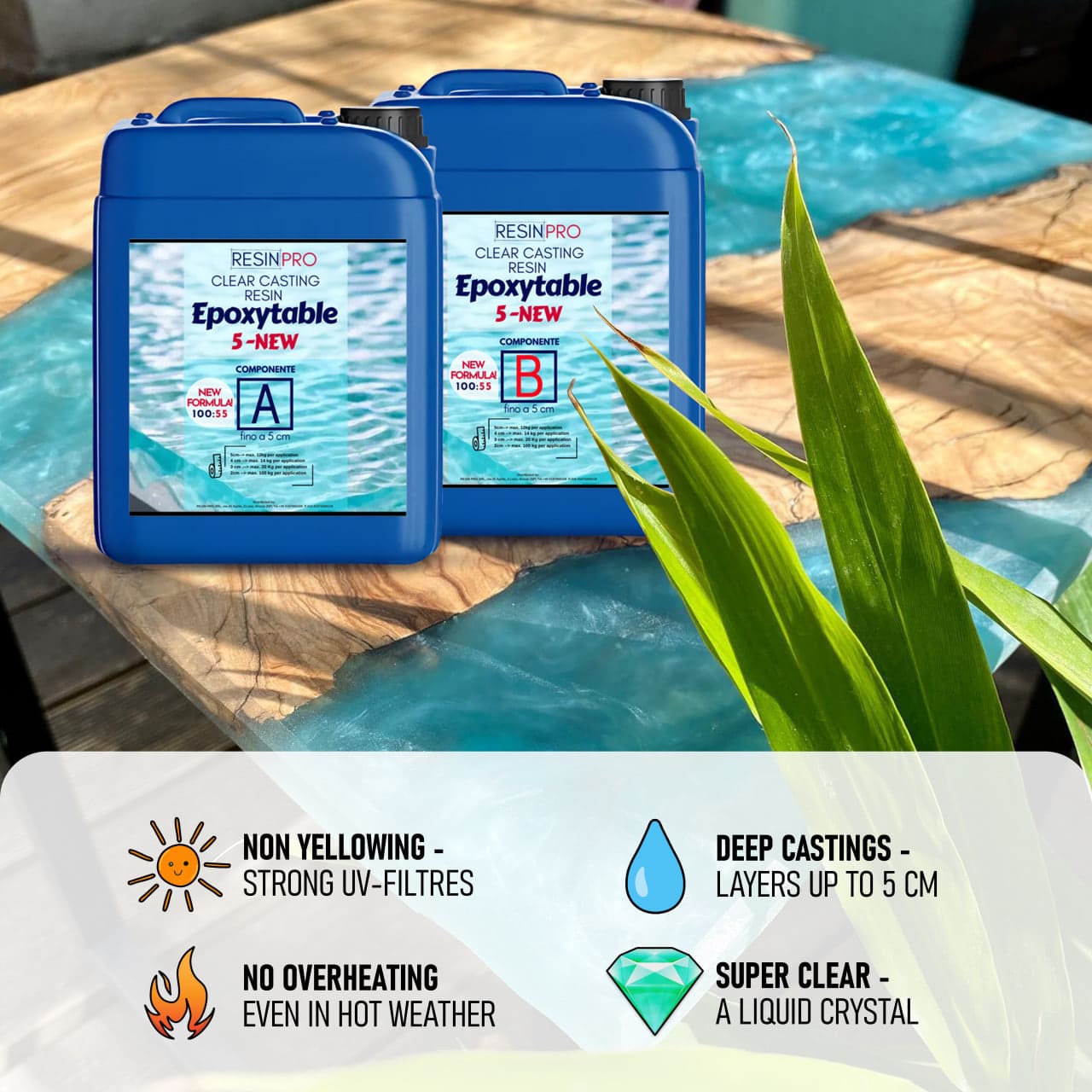
- For deeper pours, such as with the EpoxyTable 5-Five resin, consider pouring in layers if your project is particularly large, as this helps manage both heat build-up and curing time.
When This Matters Most
Precise temperature control is vital when producing thick or large resin slabs, as excessive heat from rapid curing can cause cracks or deformation. It’s also important for beginners using all-in-one kits, as stable conditions prevent common mistakes like cloudiness or tacky surfaces.

Related products
Related guides
By paying careful attention to work temperature, you improve the durability and appearance of your resin slabs. Explore more tips and recommended products on our How to produce resin slabs? guide.