 Free shipping on orders over £29,85
  Shipping Tracking!


 Google
 Facebook
← Back to What are synthetic resins derived from?
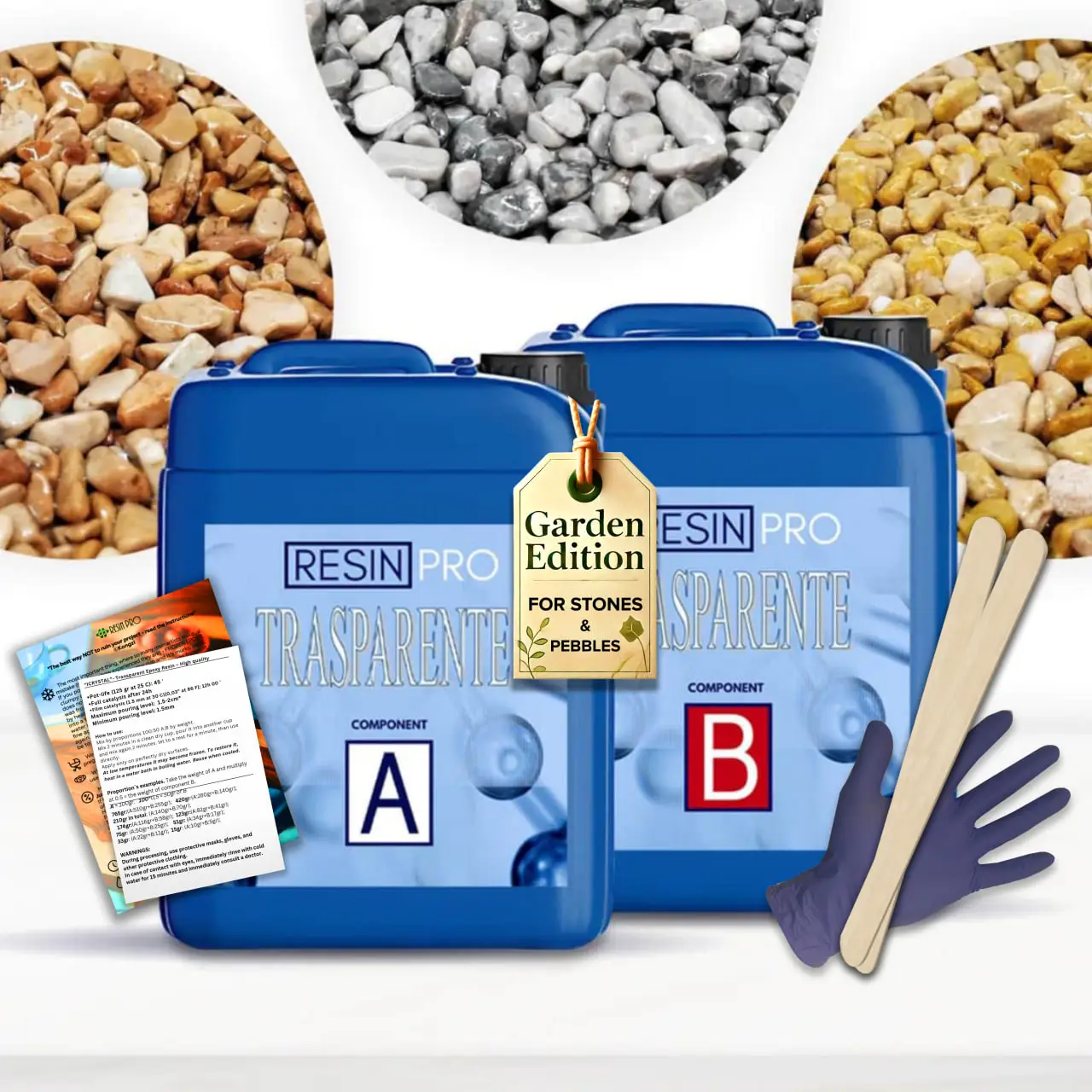

If you’re planning an outdoor project with epoxy resin—like a driveway, path, or permeable pebble surface—UV stability is an important factor. Many traditional epoxies can yellow or degrade outdoors, so it pays to understand what makes a resin suitable for external use.
Understanding UV Stability in Epoxy Resins
UV stability refers to a resin’s ability to maintain its clarity and strength when exposed to sunlight over time. Standard epoxy resins can gradually turn yellow or become brittle outdoors due to UV radiation. However, advanced formulations, such as those used for external pebble or aggregate surfaces, include special additives that improve their resistance to sunlight and help them resist yellowing and visible degradation.


Choosing the Right Epoxy Resin for Outdoors
For exterior surfaces, opt for an epoxy specifically formulated for UV resistance. Products like the “Trasparente” – Epoxy Binder for Coloured Pebbles and Grits are designed with enhanced UV blockers to ensure decorative surfaces remain clear and vibrant, even on sun-exposed driveways and paths. Always read the product details to ensure that UV stability and non-yellowing performance are featured.
- Use a clear, purpose-made binder for coloured aggregates or decorative gravel
- Pay attention to application guidelines for the best results
When UV Stability Matters Most
UV stable epoxy is essential for sites with year-round sun exposure—such as south-facing driveways, patios, and walkways. It’s also particularly important with light-coloured or decorative finishes, where yellowing or dulling would be most noticeable.
Related products
Related guides
Choosing the right UV stable epoxy ensures your outdoor surfaces look their best, combining durability and lasting colour. For more insights into how epoxies are made and their outdoor uses, explore our main guide on what synthetic resins are derived from.