 Free shipping on orders over £29,85
  Shipping Tracking!


 Google
 Facebook
← Back to How much does it cost to make one square metre of resin?
Choosing a resin surface for your kitchen or food preparation area requires careful consideration of its interaction with food. Not all resins are equal when it comes to safety in direct contact with ingredients or meals. Here’s what you need to know to make an informed choice for your home or next project.
Understanding Resin and Food Safety
Resins commonly used for tabletops, worktops, or craft projects are typically formulated for robust, attractive finishes. However, only certain types are manufactured or certified to be food-safe once fully cured. These options are generally accompanied by clear information from the manufacturer about their suitability for direct food contact. Always check for relevant details in product descriptions or technical datasheets before use in kitchens and meal-prep zones.
- Look for products labelled as suitable for food contact or with food-safe certification.
- Several kits, such as the “Stone Effect Collection” – Marble Epoxy Resin Countertop Kit, are specifically designed for countertop applications but may have specific recommendations regarding food contact.
How to Choose a Resin for Kitchen Surfaces
Epoxy resins intended for countertops or table surfaces should be selected based on their intended use and stated properties. Kits labelled as suitable for kitchens might be formulated with wear and scratch resistance for active spaces, but that does not automatically mean they are food-safe. Key steps to safer selection:
- Consult the product’s technical sheet for any mention of food compatibility.
- Consider contacting the supplier for written clarification if you need food contact assurance.
- Plan an appropriate finishing regimen: some resins require a final sealing step for food safety.
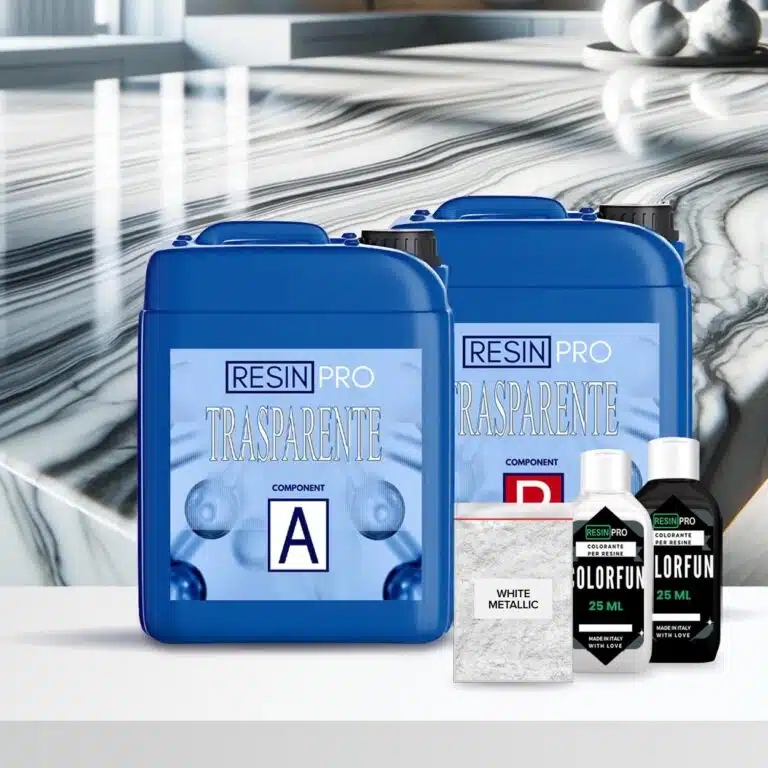
For decorative or protective layers not intended for direct contact with food, general-purpose resins like the “Trasparente” – Multipurpose Clear Epoxy Resin may be suitable for general worktops, craft, or art projects, always following usage guidelines.
When This Matters Most
If you plan to chop, prepare, or serve food directly on a resin-coated surface, food safety must be a priority. For decorative areas away from food contact, standard resins may suffice. Balancing aesthetics, durability, and safety is key for active kitchen zones.
Related products
Related guides
Ensuring your resin surfaces align with food safety standards is essential for peace of mind in the kitchen. For more on project costs, surface types, and comprehensive resin guides, return to our main advice hub.