 Free shipping on orders over £29,85
  Shipping Tracking!


 Google
 Facebook
← Back to What is the yield per square metre of epoxy resin coating?
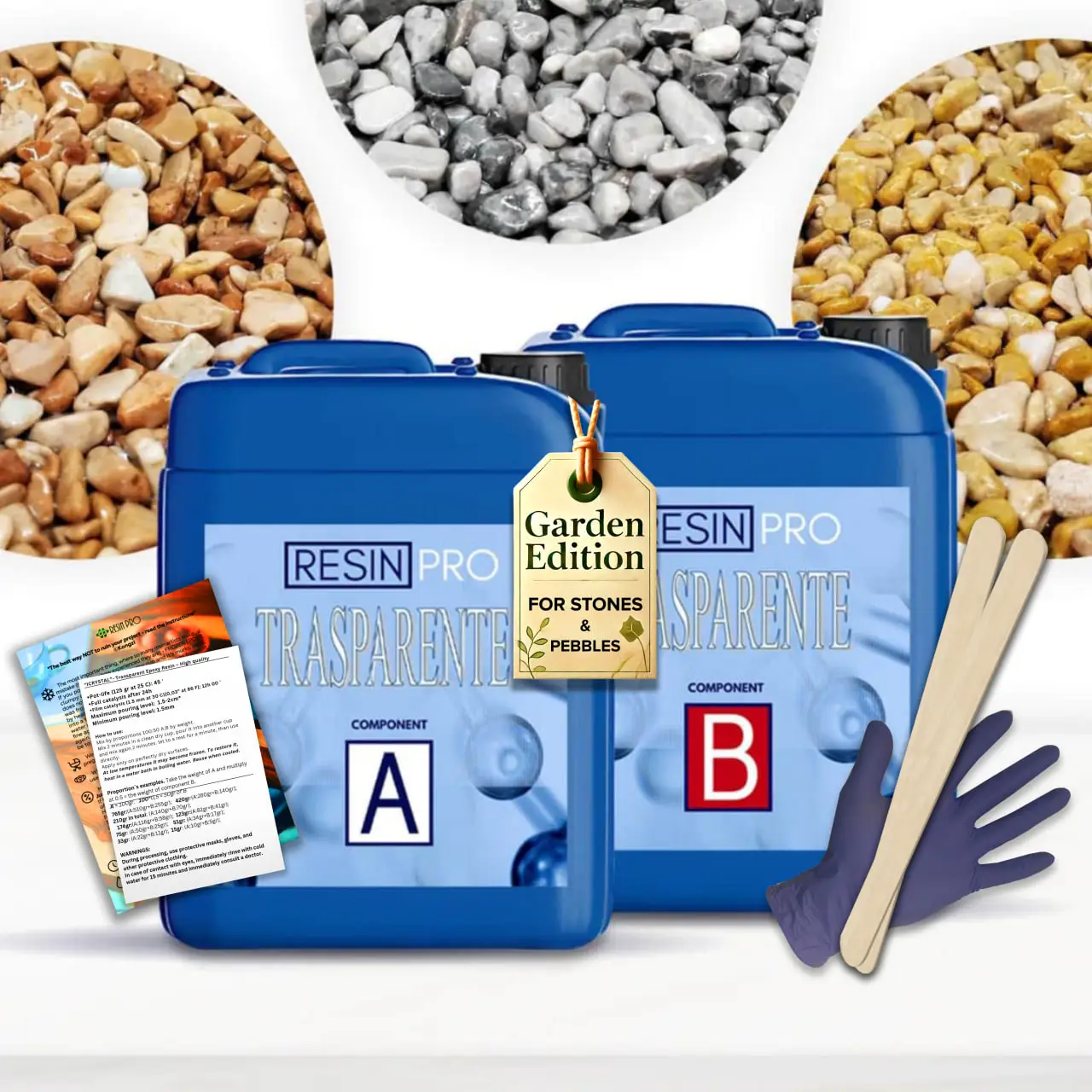

Planning a pebble resin floor? Getting your resin binder and stones ratio right is essential for a sturdy, even finish. Here’s a practical guide to the widely used specification of 9 kg resin binder per 1 m², mixed with 300 kg of stones.
Understanding the 9kg Resin to 300kg Stones Ratio
This ratio is commonly used for resin-bound paving systems, particularly for decorative and permeable floors. It involves mixing 9 kg of epoxy binder with 300 kg of aggregate (such as coloured pebbles or grits) to cover approximately 1 m², often at a standard thickness of around 25–30 mm. The substantial amount of stone ensures strength and stability, while the binder provides a durable, weather-resistant surface.
- Epoxy binder: Binds the aggregate, securing the structure and delivering a smooth finish.
- Aggregates: Pebbles or grits, chosen for size, colour and type, determining surface appearance.

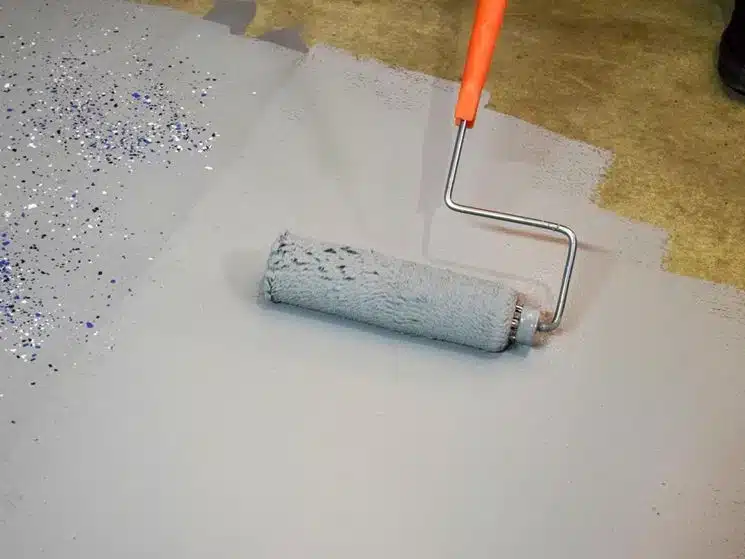
Mixing and Application Tips
For best results, thoroughly mix the epoxy binder with the stones before laying. This ensures every particle is encapsulated, helping to create a consistently bonded, long-lasting surface. Pouring resin directly over loose gravel does not offer the same stability and is not advised.
- Choose a low-viscosity binder such as “Trasparente” – Epoxy Binder for Coloured Pebbles and Grits for easy aggregate impregnation.
- Mix in batches to avoid premature curing of the resin.
- Spread and trowel evenly for a uniform finish.
When Accurate Resin Yield Matters
Precision in calculating resin and stone quantities is vital for large projects, ensuring consistent coverage without waste. This ratio is especially important when planning driveways, paths or garden areas, and helps control both aesthetics and budget.

Related products
Related guides
Using the correct resin to stone mix ratio is key to long-lasting, attractive pebble resin flooring. For more yields, area calculators, and material guidance, explore our main guide on epoxy resin coating yields per square metre.