 Free shipping on orders over £29,85
  Shipping Tracking!


 Google
 Facebook
← Back to How to make resin knife handles
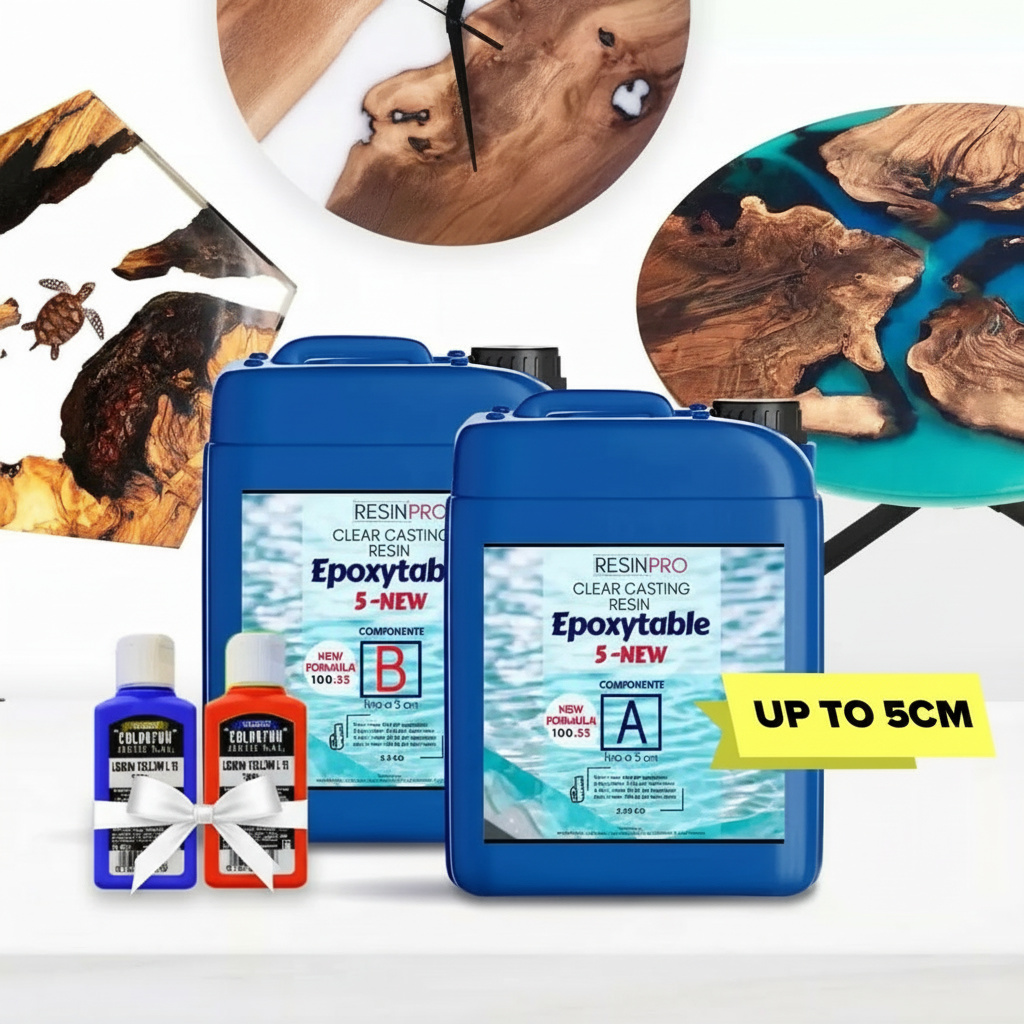
Choosing the right resin for casting knife handles is key if you want a handle that is both durable and striking. The type of resin you select will impact not just the look, but also the strength and longevity of your finished handle.
Selecting Between EpoxyTable 5-Five and Epoxytable 10-Ten
For most resin knife handles up to 5cm thick, EpoxyTable 5-Five is the go-to option. It’s specially formulated for deep pouring, offering a low exothermic reaction to prevent overheating and ensuring a dependable result without bubbles. UV filters help reduce yellowing over time, keeping your handle looking sharp.
If your project calls for handles or blanks exceeding 5cm in thickness, Epoxytable 10-Ten is a better choice. It allows safe casting up to 10cm in a single pour, maintaining clarity and integrity throughout much thicker pieces.
Best Practices for Resin Knife Handle Pouring
- Measure carefully: Follow product mixing ratios precisely to ensure full curing and stability.
- Pour in layers if needed: For very large or complex shapes, pour in multiple layers, letting each set before adding the next.
- Finishing touches: After curing, sanding and polishing with a dedicated tool like a manual polishing pad holder gives your handle a glass-smooth finish.
When Resin Choice Matters Most
If you want a robust, thick handle blank with a crystal clear or vibrant finish, resin selection is crucial. Thicker pours benefit from the right deep-casting resin—using the wrong type may result in surface defects or internal bubbles, especially in pieces exceeding recommended thicknesses.
Related products
Related guides
Choosing the correct resin creates knife handles that impress in both form and function. For more advice on the entire process, explore our main guide on how to make resin knife handles.