 Free shipping on orders over £29,85
  Shipping Tracking!


 Google
 Facebook
← Back to How to create a sea wave effect with epoxy resin?
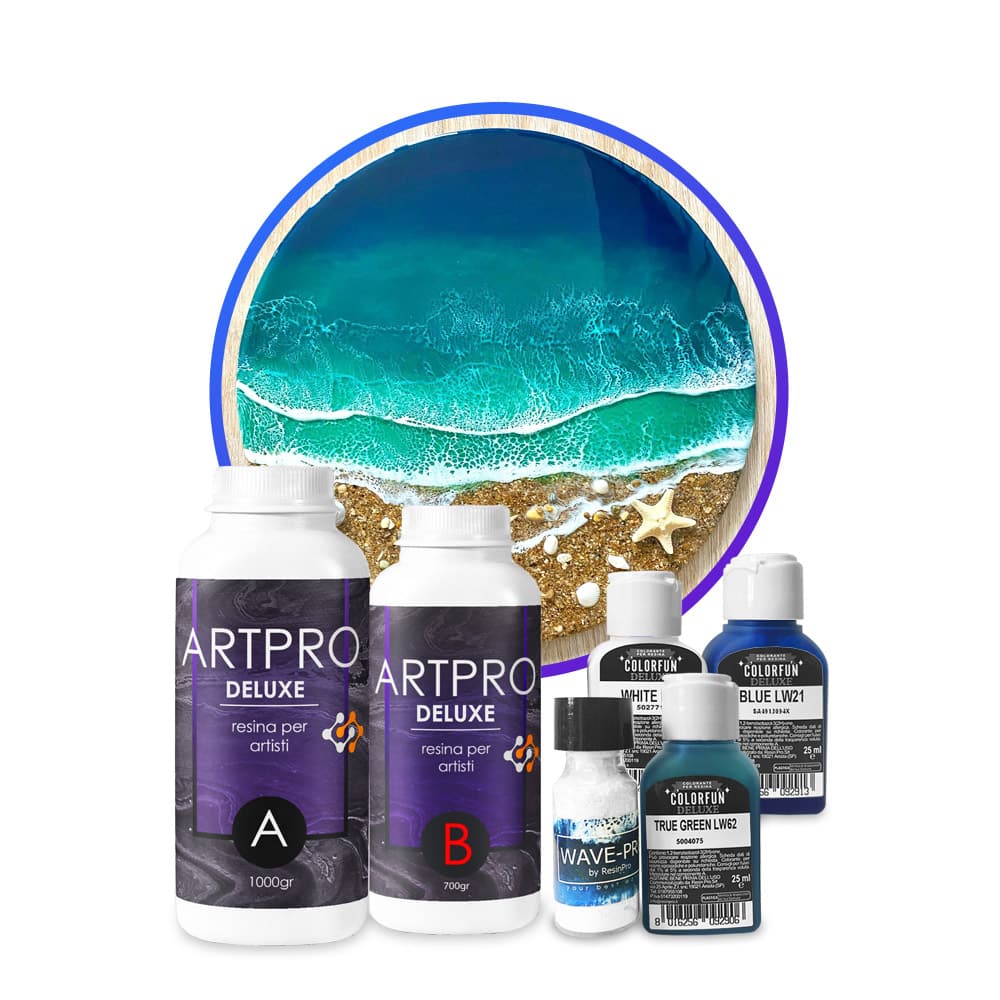
Achieving stunning ocean effects in resin art starts with choosing the right resin. The viscosity and clarity of your epoxy resin play a key role in forming crisp wave patterns and beautifully layered sea art.
Why Viscosity Matters in Resin Ocean Art
The thickness, or viscosity, of your resin controls how colours flow and interact. Medium to thick (high viscosity) art resins, such as Art Pro Deluxe, are especially well suited for ocean effects. Their slow movement keeps coloured lines and wave details distinct rather than allowing them to blend away. This control is crucial for building lacy foam or vibrant layers commonly seen in beach-inspired pieces.
Choosing and Using the Right Resin
For most ocean art, select a resin specifically marketed for art applications, with medium or high viscosity. Products described as pourable or made for layering work well for beach scenes, coasters, and wall art. It’s also essential to layer colours thoughtfully—pour the base shade, then add wave highlights or foam while the resin remains fluid but firm enough to manage.
- Use a thick resin to prevent colours from mixing uncontrollably.
- Try a special pigment additive like Wave-Pro to create lifelike foamy wave effects.
- Consider a complete kit, such as the Sea – Resin Kit, which includes thick resin, marine pigments, and a wave additive for best results.
When Viscosity Makes a Difference
High viscosity resin becomes particularly important when your design relies on sharply defined waves or detailed colour separations. If you wish to avoid over-blended hues and keep the edges of your foamy white lines distinct, choosing a resin like Art Pro Deluxe can make all the difference to the finished look.
Related products
Related guides
Selecting a suitable art resin is a simple yet vital step towards creating mesmerising sea wave effects. For more on building ocean art masterpieces, explore our full guide on how to create a sea wave effect with epoxy resin.