 Free shipping on orders over £29,85
  Shipping Tracking!


 Google
 Facebook
Can I pour a new layer over a layer that hasn’t cured?
Detailed advice for safe, clear, and perfect resin layering


If you’re tackling a resin project, whether art, jewellery, or a deep pour for tables, understanding when and how to pour new layers is essential for a flawless result. A common question is: Can I pour a new layer over a layer that hasn’t cured? The answer depends greatly on the type of resin, its curing time, and your intended finish. On this page, discover the right approach for safe layering plus recommended products so you can achieve crystal-clear results without risk of defects or cloudy seams.
The Importance of Curing Times in Resin Layering
Every type of resin has a different curing profile, which greatly affects when additional layers can be poured. Pouring too soon may cause layer blending, surface defects, or even inhibit a secure bond between layers. Conversely, waiting too long could lead to poor adhesion. At ResinPro, we offer a selection of resins tailored to projects of every scale, each with its own guidance for overlaying new pours safely and successfully.
For those seeking fast results, “ICreation” – Fast Epoxy Resin, 6h Demoulding, Transparent Gloss Finish, provides 6-hour demoulding time – speed up your workflow. Its rapid cure is ideal for layering in a single day for small items such as jewellery, as long as you respect minimum set times before overlaying.
Medium and high viscosity resins like “Art Pro Deluxe” – Ultra-High Viscosity Epoxy Resin for Artists and “Art Pro” – Clear Epoxy Resin for Artists and Surface Coating have different windows for safe layering. Fast curing with first stage in 10–12 hours for quicker project completion applies to “Art Pro Deluxe” – allowing artists to add more intricate elements or glossy finish layers sooner.
For deep pour projects, such as river tables or casting art pieces, specialist formulations are crucial. “EpoxyTable 5-Five” – Deep Pour Epoxy Resin for Tables and Large Projects – Up to 5cm and “Epoxytable 10-Ten” – Deep Pour Epoxy Resin for Tables, Up to 10cm Casting require particular care: pouring a new layer over an uncured one is not recommended unless the previous layer has reached a specific partial cure stage to prevent exothermic issues or deformation.
For castings up to 2cm, “Trasparente” – Multipurpose Clear Epoxy Resin for Casting – Up to 2cm offers ultra-clear formula for a crystal-clear, liquid finish. Its integrated UV filter and precise curing profile mean you can layer effectively as the resin achieves its ‘touch dry’ or partial cure stage.
Product Comparison Overview: When to Layer and Why
Not all resins are created equal—different projects demand different approaches to layering. Here’s a concise overview of the recommended timing and suitability for each product when pouring additional layers:
- Art Pro Deluxe: Pour new layers after initial set (10–12 hours), benefitting from ultra-high viscosity for precise line control and creative freedom.
- Art Pro: Wait 12–24 hours for cure; the dense, non-drip formula supports neat multi-layer work.
- EpoxyTable 5-Five: If pouring in stages (for thick layers or large surfaces over 100cm), wait 6-8 hours between pours to avoid overheating and ensure safe adhesion.
- Epoxytable 10-Ten: Designed for deep casting up to 10cm—multiple pours are sometimes recommended with cooling and partial setting stages.
- ICreation: Demould in 6 hours; best practice is allowing full cure or ‘touch dry’ stage before overlayering.
- Trasparente: For layers up to 2cm, wait for initial hardening (as per product instructions) before subsequent layers.

Visual Guide: Cured vs. Uncured Resin Surfaces
Understanding the appearance and feel of cured versus uncured resin is crucial for safe layering. A cured surface is dry to the touch, no longer tacky, and firm. An uncured surface remains soft or sticky, so pouring over it can risk poor adhesion or resin mixing. Always check your chosen product’s guidelines for the correct timing between pours.
Visit each product page for more guidance and always refer to detailed product instructions sent with your kit.
How to Layer Resin Successfully
Follow these key guidelines to achieve safe and visually flawless layering with ResinPro products:
- Read and follow the individual resin instructions, as each formulation has its specific waiting time for overlayering.
- Pour additional layers at the ‘gel’ or ‘tack-free’ stage as recommended for the product, if possible. This approach helps maximise chemical bonding and clarity.
- Always ensure the underlying layer is past the exothermic stage—especially critical for EpoxyTable 5-Five and Epoxytable 10-Ten. Pouring over an uncured hot layer can cause dangerous overheating.
- For artistic or decorative projects using Art Pro Deluxe or Art Pro, layering after the initial set allows creative additions—such as embedded inclusions—without clouding or colour bleed (ultra-high viscosity for precise line control and creative freedom).
- Whenever waiting for full cure, prepare the surface by gently sanding and cleaning with isopropyl alcohol just before pouring the next layer. This ensures good adhesion if the previous pour is already fully set.
Our range suits jewellery, woodwork, deep art castings and surface coatings, including resins for pour paint and accessories, top sellers, resins for tables and surfaces finishes, resin for jewellery and multipurpose epoxy resins.
Layering Best Practice: Safety and Finish
Always work in a dust-free and level environment to prevent imperfections between layers. Carefully measure and mix every batch of resin, wearing gloves and using the supplied safety gear. Follow step-by-step guidance in your product instructions for the best finish and to keep every pour as clear as possible.

Which Resin to Choose for Layered Projects?
Choosing the right resin depends on project thickness, required clarity, working time, and intended use. Here’s when to use each featured product for multi-layer applications:
- Detailed layered art, ocean waves, or geode effects: Art Pro Deluxe. Its high viscosity keeps lines sharp without colour bleeding, suitable for coasters, trays, and glossy top coats.
- Surface coatings and flatter artwork: Art Pro. Its dense, non-drip characteristics make clean layering practical and reliable.
- Deep table pours or large projects: EpoxyTable 5-Five (up to 5cm) and Epoxytable 10-Ten (up to 10cm). Use in stages for safe, bubble-free deep pours. For sides over 100cm, always use multiple pours as instructed.
- Quick craft and jewellery work: ICreation. Fast curing enables rapid turnaround and multi-layer design within a short timeframe.
- Shallow casting and small table/worktop applications: Trasparente is ideal for clear pours up to 2cm, with added UV resilience for lasting clarity.
Unsure which product best suits your project? Read the detailed product descriptions, or contact ResinPro for tailored advice.
- "Art Pro Deluxe" – Ultra-High Viscosity Epoxy Resin for ArtistsPrice range: £33.85 through £287.85"Art Pro Deluxe" is an ultra-high viscosity epoxy resin designed for artists needing precise control and clear finish layers.
 "Art Pro" – Clear Epoxy Resin for Artists and Surface CoatingPrice range: £31.15 through £388.85Art Pro clear epoxy resin provides a non-toxic, durable coating with high gloss clarity, suitable for artists and crafters requiring precise finishes.
 "EpoxyTable 5-Five" – Deep Pour Epoxy Resin for Tables and Large Projects – Up to 5cmPrice range: £16.85 through £1,099.85EpoxyTable 5-Five is a deep pour epoxy resin designed for tables and large projects, suitable for layers up to 5cm thickness.
 “Epoxytable 10-Ten” – Deep Pour Epoxy Resin for Tables, Up to 10cm CastingPrice range: £33.85 through £334.85“Epoxytable 10-Ten” is suitable for deep pouring up to 10cm in table projects and ensures low exothermic reaction and non-yellowing properties.
 "ICreation" – Fast Epoxy Resin, 6h Demoulding, Transparent Gloss FinishPrice range: £19.40 through £52.85"ICreation" epoxy resin features a 6-hour demoulding time and a crystal-clear, glossy finish suitable for jewellery and crafts needing faster results.
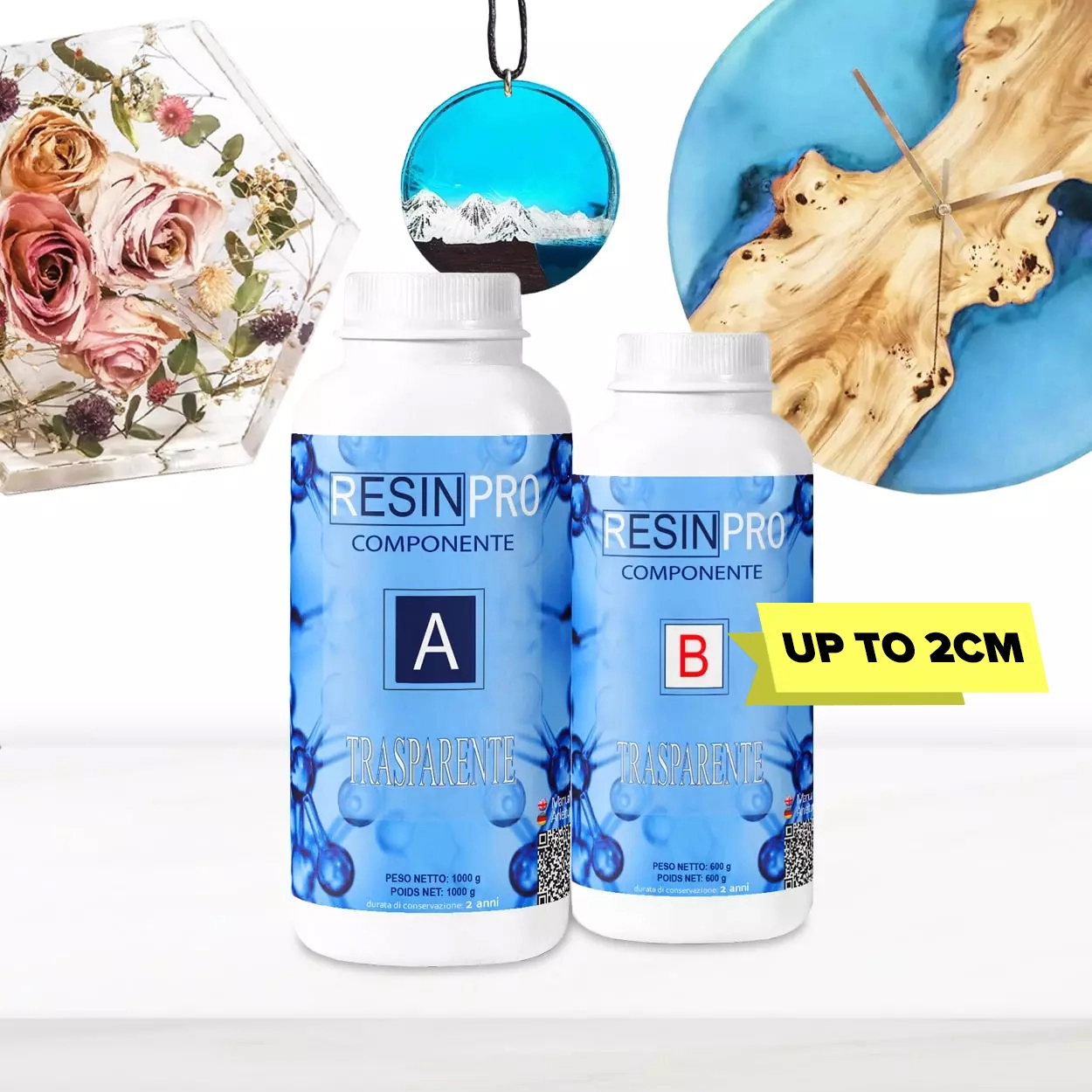 "Trasparente" – Multipurpose Clear Epoxy Resin for Casting – Up to 2cmPrice range: £8.45 through £948.85The "Trasparente" epoxy resin offers a clear, self-levelling finish up to 2 cm, suited for casting and detailed woodworking projects.
Frequently Asked Questions
Can I pour a new resin layer before the previous has fully cured?
Most resins should be allowed to reach at least a partial cure or ‘touch dry’ state before adding another layer. Some products like Art Pro Deluxe and ICreation support quicker layering due to faster initial cure times. Always consult your resin’s specific instructions for the best result.
Which resin is best for deep layering or thick castings?
EpoxyTable 5-Five and Epoxytable 10-Ten are specially designed for deep pouring, allowing you to safely cast up to 5cm and 10cm per layer respectively. Multiple pours with waiting intervals are advised for optimal results and to prevent overheating.
What should I do if the resin layer is fully cured?
If your resin is fully cured, gently sand the surface and wipe with isopropyl alcohol before pouring the next layer. This ensures sound adhesion and a seamless finish.
Does every ResinPro product allow for overlayers on uncured bases?
No, each resin has specific instructions based on chemistry, viscosity, and end use. Refer to the technical sheet or included instructions for detailed guidance.
How thick can I pour each layer?
This varies: “Trasparente” allows up to 2cm, “Art Pro” up to 10mm, “EpoxyTable 5-Five” up to 5cm, and “Epoxytable 10-Ten” up to 10cm. For anything thicker, use multi-layer techniques with wait times.
Are there any risks to pouring new resin over uncured surfaces?
Poor timing can cause cloudiness, bubbles, or failed bonding. For deep table pours especially, pouring too soon risks exothermic reaction and resin deformation.