 Free shipping on orders over £29,85
  Shipping Tracking!


 Google
 Facebook
← Back to How does epoxy resin dry?
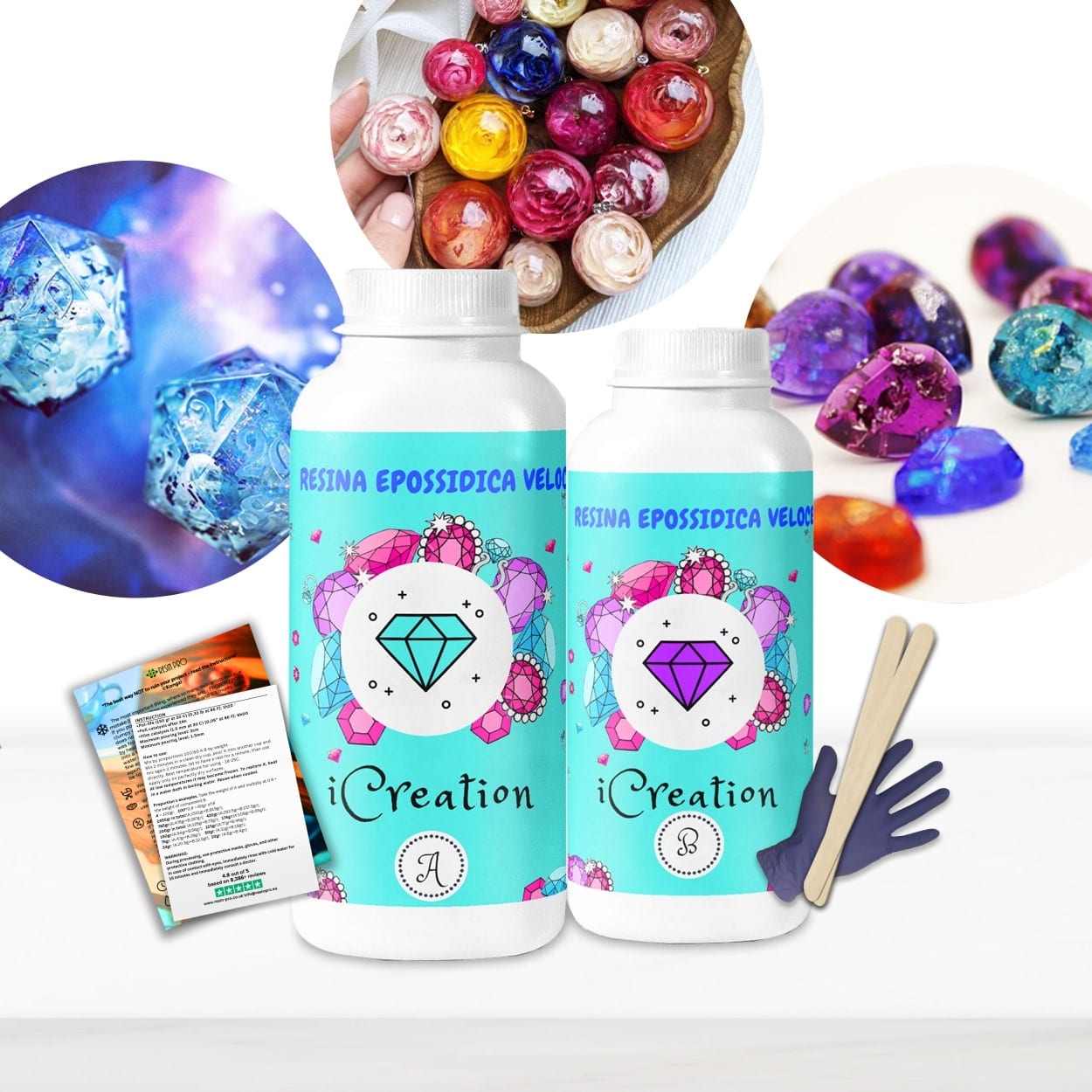
If you work with epoxy resin, you may have come across the terms ‘setting’ and ‘curing.’ Understanding the distinction between these two important stages is key to achieving the best results in your creative or practical resin projects.
What Is Setting in Epoxy Resin?
Setting refers to the initial phase when the epoxy resin has hardened enough to be handled, shaped, or removed from its mould. This stage is often called the demoulding point. While the resin appears solid at this point, it may not yet have reached its full strength or durability. Setting times vary depending on the resin type, ambient conditions, and project thickness—for example, a fast-curing product like ICREATION Fast Epoxy Resin allows demoulding in as little as six hours, helping speed up production for crafts or jewellery.
What Is Curing – And Why Is It Important?
Curing is the process during which the epoxy resin continues to develop its complete mechanical and chemical properties. This means it becomes fully bonded, tough, and chemically stable. Only when curing is truly finished will your resin project achieve its peak strength, clarity, and resistance to damage. With most resins, including deep pour options like “Epoxytable 10-Ten”, the full cure can take 24 to 72 hours, or even longer for very thick castings or challenging conditions.
When This Distinction Matters
- Demoulding too early: Removing pieces before curing is complete may result in warping or fingerprints.
- Finishing and use: Wait for full cure before sanding, polishing, or putting into everyday use, especially for pieces needing durability or food safety, such as those made with EpoxyFood.
Related products
Related guides
Knowing the difference between setting and curing helps you plan your resin projects for the best results. For more on the full drying process, visit our main guide: How does epoxy resin dry?