 Free shipping on orders over £29,85
  Shipping Tracking!


 Google
 Facebook
How do you cover a table with resin?
Transforming a plain table into a stunning, glass-like centrepiece with resin creates a durable and beautifully finished surface. Whether you are enhancing old furniture or building a custom river table, learning the correct method to cover a table with resin ensures long-lasting, professional results you will be proud of.
Step-by-step guide for flawless resin table coatings
What You’ll Need
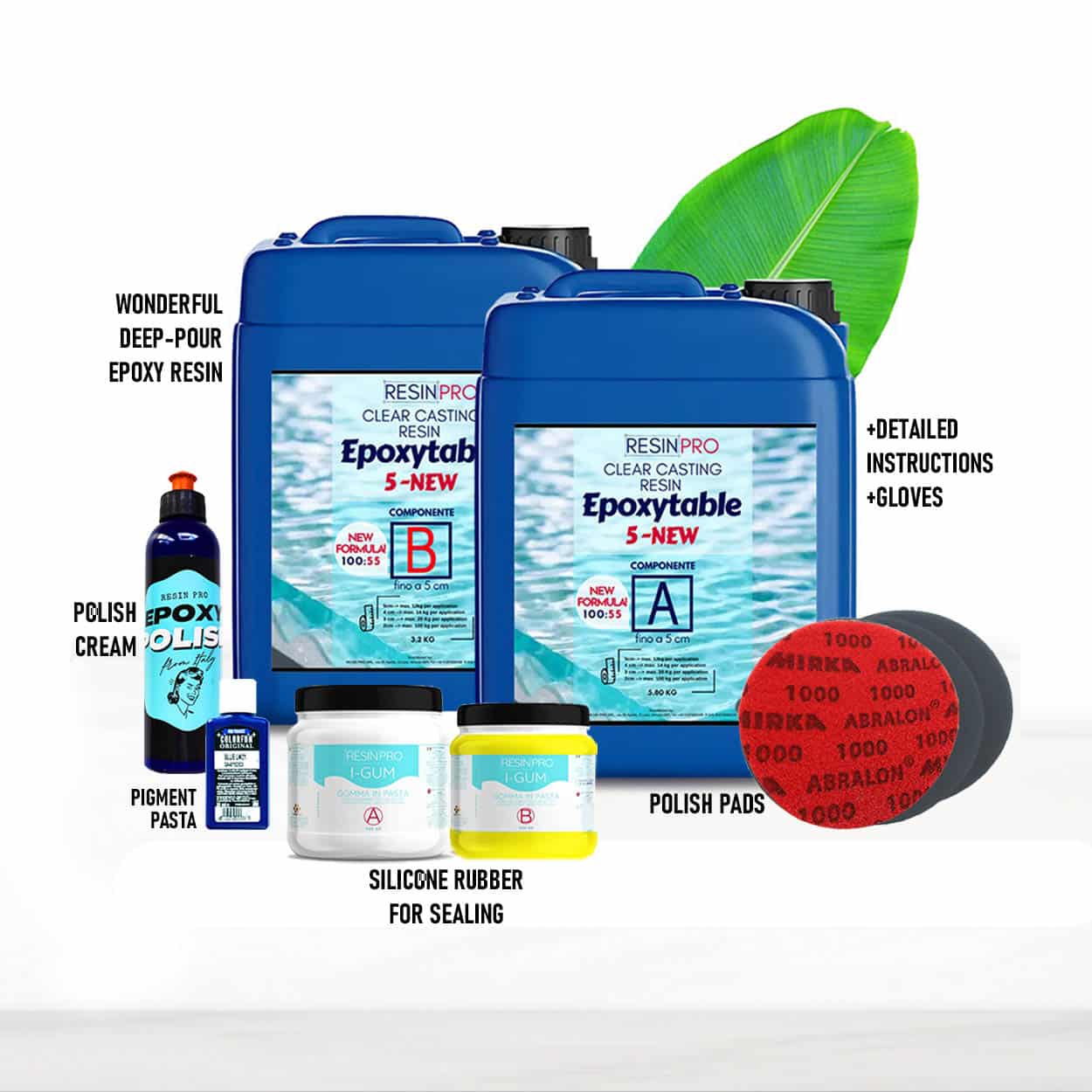
- “River-Table” – Complete Kit for Creating Your First Epoxy Resin Table – Complete kit for beginners, with resin, hardener, and necessary accessories
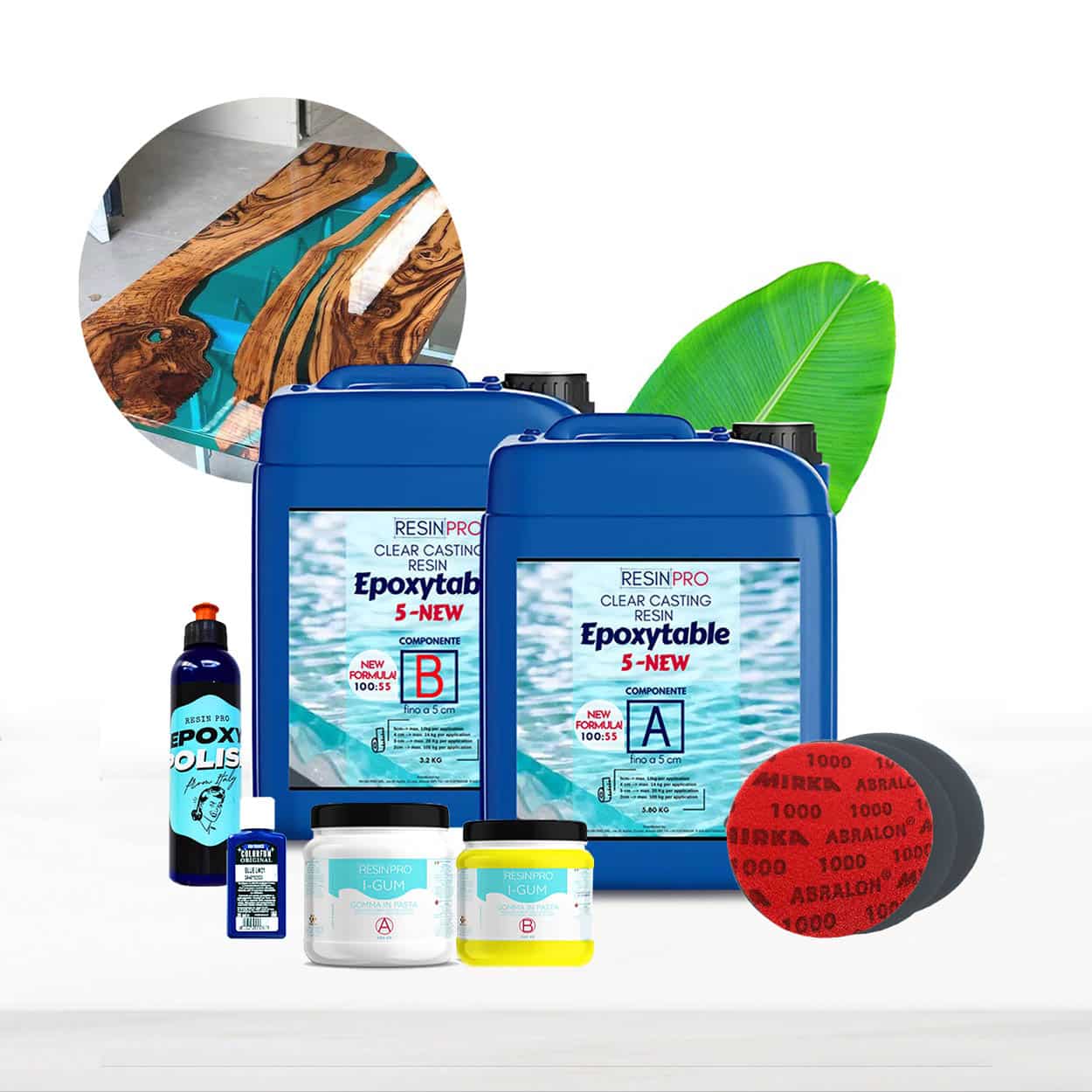
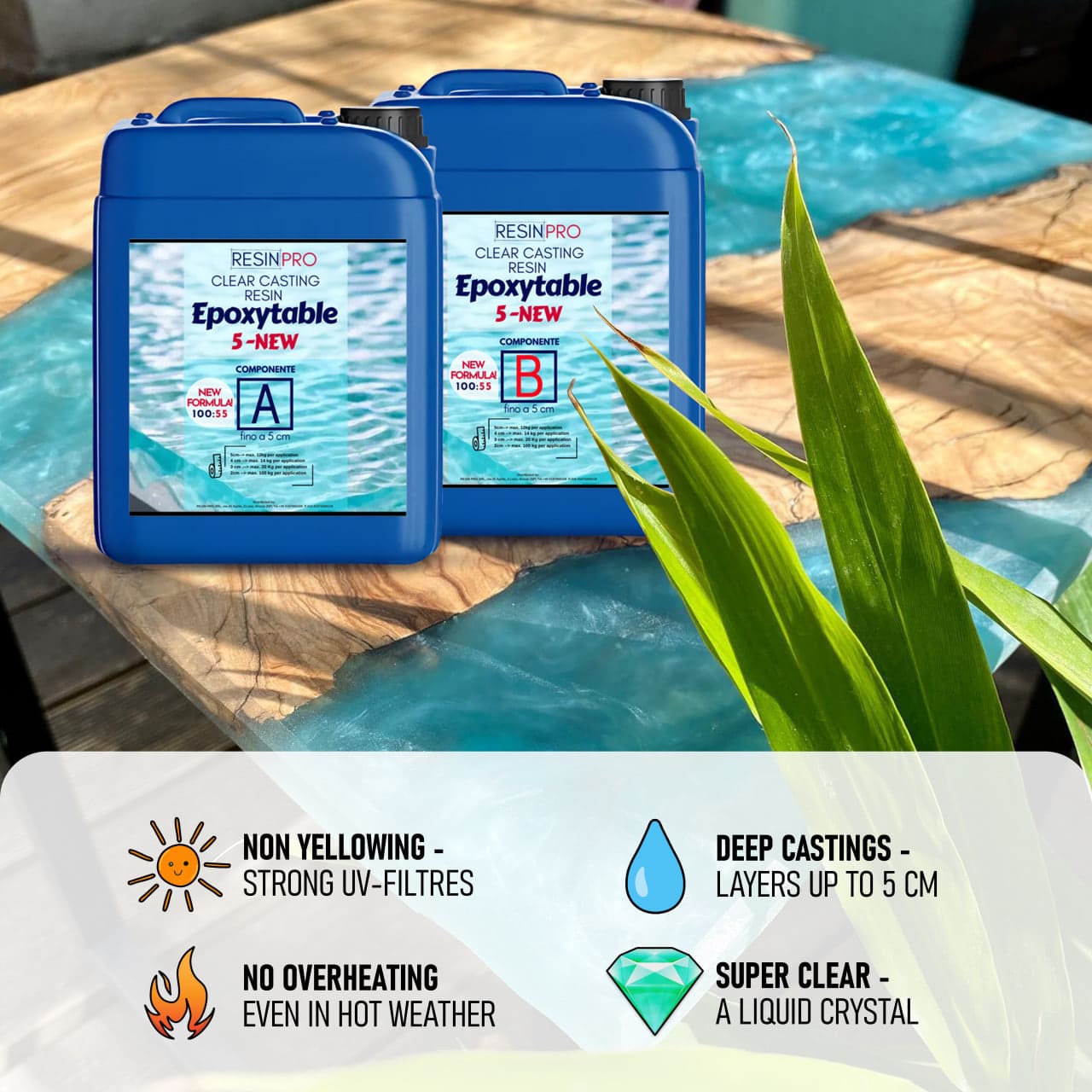
- “EpoxyTable 5-Five” – Deep Pour Epoxy Resin for Tables and Large Projects – Up to 5cm – For thick, bubble-free coatings
- “Epoxytable 10-Ten” – Deep Pour Epoxy Resin for Tables, Up to 10cm Casting – For extra-deep pours and large projects
- “Art Pro” – Clear Epoxy Resin for Artists and Surface Coating – For thin, clear and even top coats
- Protective gloves, safety glasses, apron
- Mixing container and stirring stick
- Clean spatula or notched trowel
- Spirit level (for table positioning)
- Sandpaper (various grits)
- Masking tape and plastic sheeting

Essential Tools for Resin Table Coating
To ensure safety and achieve a smooth finish, gather quality tools before starting. Use nitrile gloves, mixing sticks, and a spirit level to maintain accuracy. An even workspace and protective coverings prevent accidental drips and dust contamination. Always choose the appropriate resin for your project thickness and clarity requirements.
Step 1: Prepare the Table Surface
Start with a thoroughly cleaned table – remove old finishes, wax, dirt, or grease using appropriate cleaning agents. Sand the surface (start with coarse grit, then move to fine) to create a slightly textured finish that helps resin adhere securely. Be sure to remove all dust with a vacuum and tack cloth because surface imperfections show through resin and impact the final result. Repair any cracks or holes with suitable wood filler, allowing this to dry before sanding smooth and levelling out once more.
Step 2: Protect Edges and Surroundings
Line the table edges with quality masking tape to control resin flow and prevent drips. Place plastic sheeting below the table to protect your workspace. Ensuring your work area is level is essential, as resin is self-levelling and will run to the lowest edge if your table is uneven.
Step 3: Mix and Pour the Resin
Measure the required amount of resin and hardener following the manufacturer’s recommended ratio. For deep pours or larger river tables, EpoxyTable 5-Five or Epoxytable 10-Ten is ideal due to their low exothermic reaction and bubble-free results. Mix slowly and thoroughly in a clean container, avoiding rapid stirring to minimise bubble formation. Once blended, pour the resin gently onto the table, using a spatula or notched trowel to spread evenly across the surface.

Step 4: Remove Bubbles and Allow to Cure
After pouring, scan for air bubbles in the resin. Pass a heat gun or torch lightly over the surface to encourage bubbles to rise and pop, working quickly to avoid over-heating. Let the resin cure in a dust-free environment, following the timeframe recommended for your selected product – “Art Pro” works well for thin, clear coatings and cures in 12–24 hours, while deep cast resins may require longer.

Step 5: Finishing Touches
Once fully cured, inspect for any uneven sections or sharp drips along the table’s underside. Smooth these out gently with fine sandpaper. If desired, polish the resin surface to enhance clarity; a polishing kit or fine grade abrasive can help achieve a glass-like shine. Remove edge tape and tidy the workspace before returning the table to use. Always follow safety guidelines for all steps involving resin and power tools.
Tips and Troubleshooting for Resin Table Covering
Work in a well-ventilated space at the recommended ambient temperature. Avoid rushing the process, especially with deep pours, as thick layers cure slowly. Add pigment or effects only after mastering basic application to prevent uneven results. If sticky or undercured areas appear, wait until full cure time has elapsed before attempting to sand or recoat.
Expert Advice for Flawless Resin Tables
Patience is key when working with resin. Pour slowly, minimise vibration during curing, and cover your work to keep dust away. For artistic techniques, experiment on smaller samples before committing to your main table project.

- "River-Table" – Complete Kit for Creating Your First Epoxy Resin TablePrice range: £188.85 through £444.85"River-Table" kit includes epoxy resin and polishing materials with instructions suitable for wood and resin tables.
- "EpoxyTable 5-Five" – Deep Pour Epoxy Resin for Tables and Large Projects – Up to 5cmPrice range: £16.85 through £1,099.85"EpoxyTable 5-Five" is a deep pour resin designed for tables and large projects with up to 5cm thickness, suitable for careful table coating.
 “Epoxytable 10-Ten” – Deep Pour Epoxy Resin for Tables, Up to 10cm CastingPrice range: £33.85 through £334.85“Epoxytable 10-Ten” is an epoxy resin designed for deep pours up to 10cm, offering bubble-free, low exothermic casting suitable for table surfaces.
 "Art Pro" – Clear Epoxy Resin for Artists and Surface CoatingPrice range: £31.15 through £388.85"Art Pro" is a clear epoxy resin suited for artists and crafters, offering durable, scratch-resistant coatings with excellent clarity under the…
Frequently Asked Questions
Which resin is best for covering a table surface?
Use a clear coating-specific resin like Art Pro for thin layers, or opt for deep pour resins for thicker river tables.
How do I avoid bubbles in my resin finish?
Mix slowly and use a heat gun or torch on the surface immediately after pouring to release trapped bubbles.
How should I prepare the table before applying resin?
Thoroughly clean, sand, and dust the table. Repair dents or cracks and ensure the surface is dry and level.
How thick should my resin layer be?
For standard surfaces use under 1cm with Art Pro; for river tables, choose thick-cast resins for layers up to 10cm.
How long does resin take to cure on tables?
Thin coats generally cure within 24 hours; thicker, deep pour resins can take several days for full hardness.
Can I apply more than one resin layer?
Yes, sand lightly between coats once cured, clean dust thoroughly, and pour the next layer following manufacturer guidelines.
Is a resin-covered table safe for everyday use indoors?
Once fully cured, resin tables are safe and ideal for indoor environments due to their sealing, durable properties.