 Free shipping on orders over £29,85
  Shipping Tracking!


 Google
 Facebook
How do you pour epoxy resin?
Step-by-step guide to clean, professional-quality resin pours.
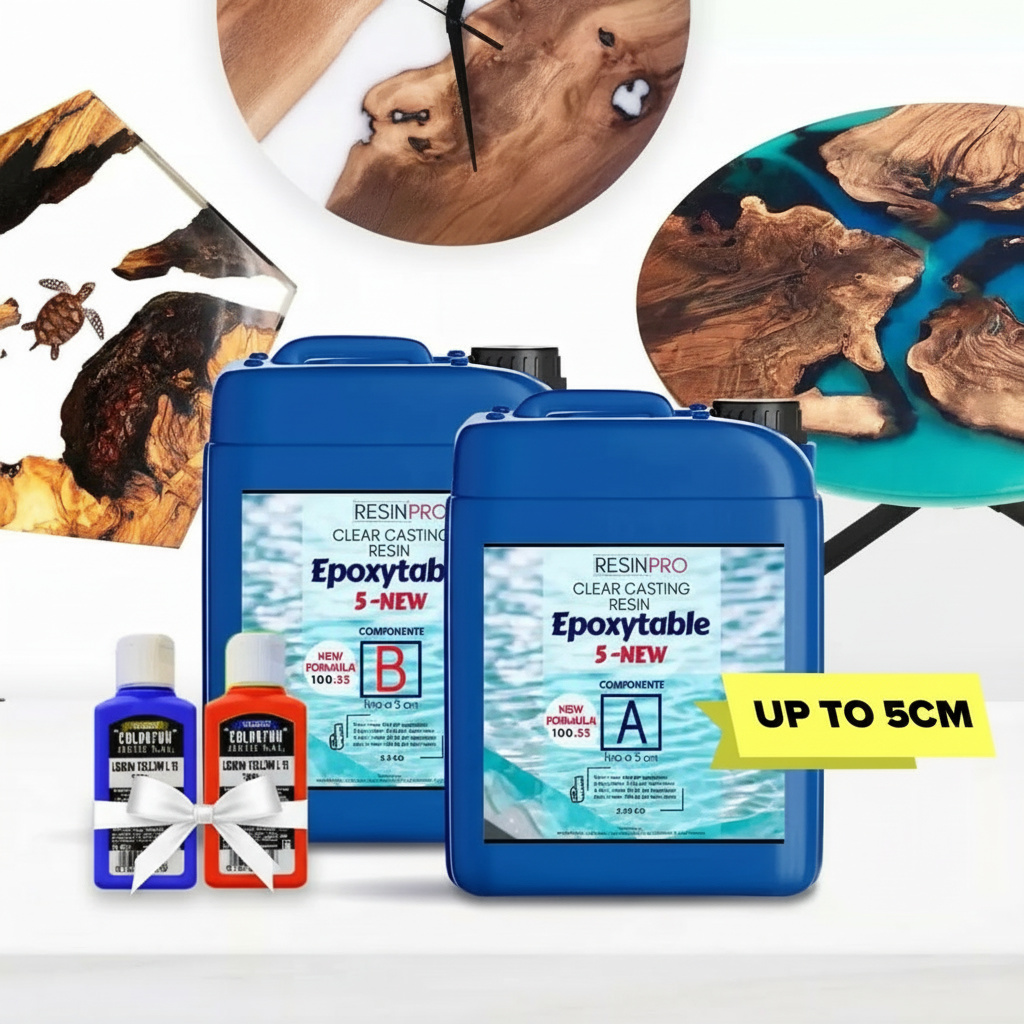

Poured epoxy resin has become the go-to solution for creating stunning tables, art pieces, jewellery, and decorative surfaces. Achieving a flawless, glass-like finish requires precision at every stage—from preparation and measuring, to pouring and curing. This guide is tailored for beginners and hobbyists eager to achieve professional standards with their resin projects, whether you aim to cast small items or create larger features like river tables.
What You’ll Need
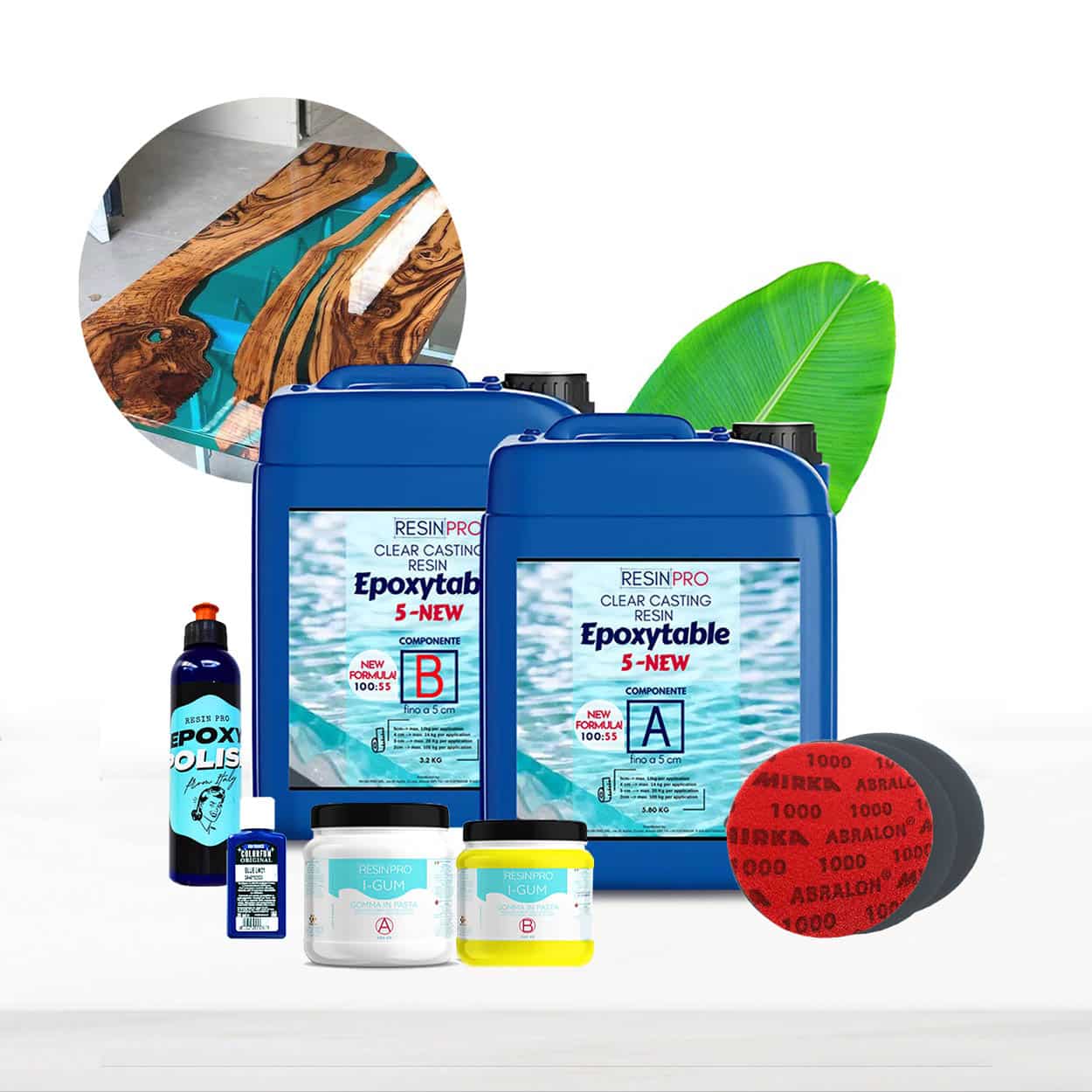
- “Trasparente” – Multipurpose Clear Epoxy Resin for Casting – Up to 2cm for small castings or thin layers
- “EpoxyTable 5-Five” – Deep Pour Epoxy Resin for Tables and Large Projects – Up to 5cm for larger, thicker pours
- “Epoxytable 10-Ten” – Deep Pour Epoxy Resin for Tables, Up to 10cm Casting for super-deep or large-scale pours
- Mixing containers, stirrers, accurate weighing scales
- Silicone or plastic moulds or strong, sealed formwork for your project
- Protective gloves and clothing
- Dust cover (such as a box or sheet) for curing
- Heat gun or torch for popping surface bubbles (optional but helpful)

See Pouring Techniques in Action
Watch examples of epoxy resin mixing, pouring, and bubble removal using proper safety equipment. Notice how careful pouring and environment setup influence the end result.

Step 1: Prepare Your Workspace and Materials
Always prepare your workspace carefully before starting. Choose a clean, dust-free area with a consistent temperature—ideally 18–23°C. Lay down plastic sheeting or protective paper to catch spills. Make sure moulds or formwork are completely sealed to avoid leaks and are placed on a fully level surface—this will determine the final shape and thickness of your resin.
Wear protective gloves and long sleeves, and ensure you have good ventilation. Organise all tools and materials within arm’s reach, as the mixed resin’s working time may be limited depending on your chosen product.
Step 2: Measure and Mix the Epoxy Resin
Carefully measure and mix components using digital weighing scales for best accuracy. Read your selected resin’s instructions thoroughly—epoxy resins cure only with precise resin-to-hardener ratios. Pour each component into a clean container and mix slowly but thoroughly for 2–4 minutes, scraping the sides and bottom to ensure uniformity. Rapid stirring can introduce extra bubbles, so use a steady hand.
If using “River-Table” – Complete Kit for Creating Your First Epoxy Resin Table, follow the supplied step-by-step guide to combine resin, hardener, pigments, and any finishing additives as needed.
Step 3: Pour the Epoxy Resin in Layers
Pour resin in thin layers to prevent overheating. For shallow pours or casting depths up to 2cm, products like “Trasparente” are suitable. For deeper pours (up to 5cm or 10cm per layer), select a deep pour resin designed for that thickness to reduce risk of overheating, clouding, or cracking.
Begin pouring slowly from one corner, allowing the resin to flow and level naturally. For thick projects, consider working in several stages, waiting the recommended cure time between layers to avoid excess heat build-up. Tap the sides of moulds gently to help release trapped air.

Step 4: Remove Bubbles and Allow to Cure
Control bubble formation and curing conditions. After pouring, bubbles may rise to the surface. Use a heat gun or torch (held above the resin, never touching) for a few seconds to help pop bubbles on the surface. Repeat as needed during the initial setting period, taking care not to overheat and damage the resin.
Cover your piece to protect from dust and let it cure undisturbed for the full recommended time. Temperature and humidity can affect cure times and finish, so maintain a stable environment until fully hardened.
Tips and Troubleshooting
Always consider layer thickness—excessively thick pours with unsuitable resin can lead to overheating or incomplete cures. Avoid mixing too vigorously to minimise bubbles, and address any drips or spills promptly before they set. If you notice cloudiness or sticky spots, check your mixing ratio and curing temperature—these are the most common causes of issues in poured resin projects.
Common Pouring Mistakes and Finishing Tips
Explore common pitfalls in epoxy resin projects—such as overpouring, uneven surfaces, or bubble entrapment—and how to address them for a smooth, clear finish every time.
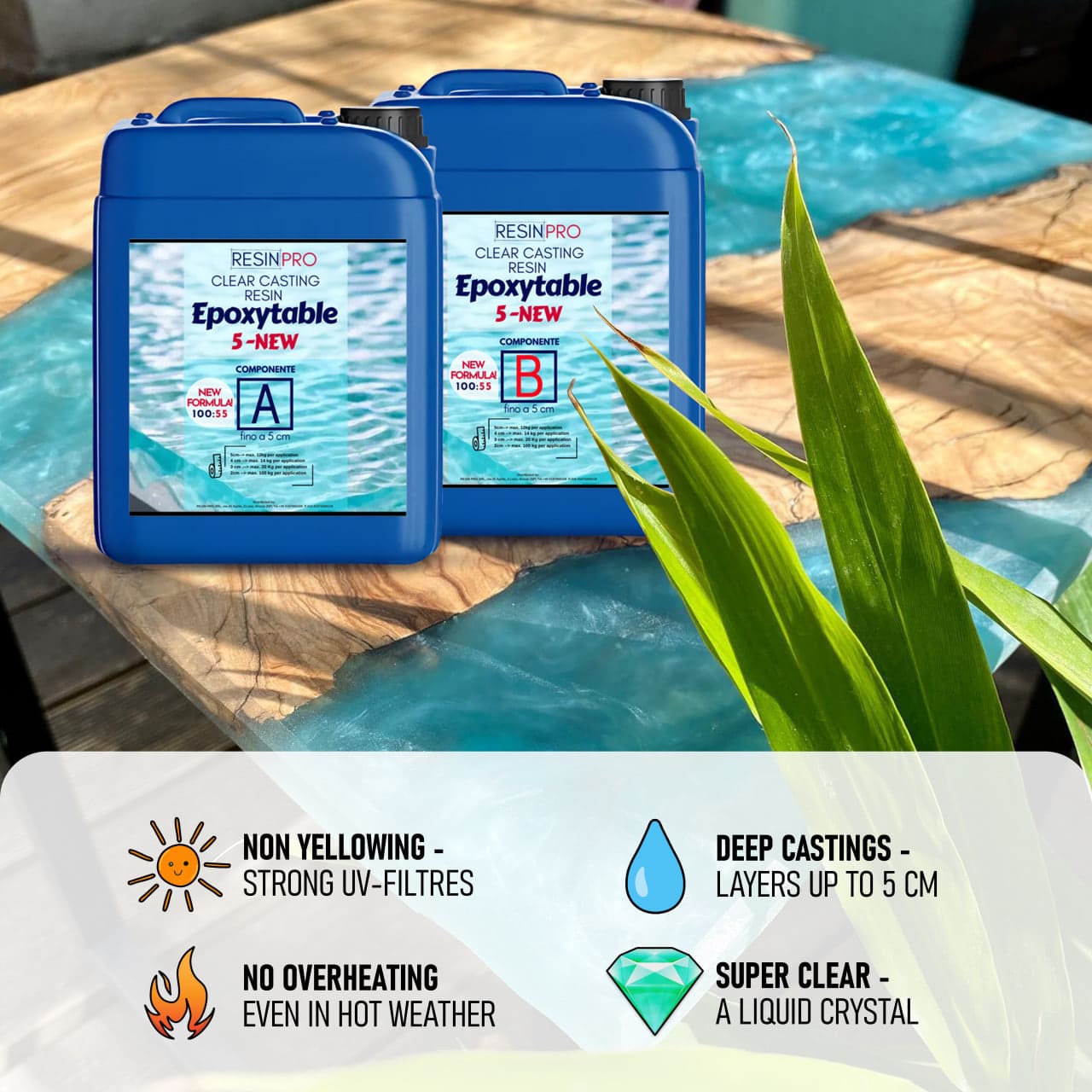
- "EpoxyTable 5-Five" – Deep Pour Epoxy Resin for Tables and Large Projects – Up to 5cmPrice range: £16.85 through £1,099.85EpoxyTable 5-Five is designed for deep pouring projects up to 5cm, suitable for tables and large resin projects.
- "River-Table" – Complete Kit for Creating Your First Epoxy Resin TablePrice range: £188.85 through £444.85"River-Table" kit includes detailed instructions and components for creating a wood and resin table, suitable for beginners.
 “Epoxytable 10-Ten” – Deep Pour Epoxy Resin for Tables, Up to 10cm CastingPrice range: £33.85 through £334.85“Epoxytable 10-Ten” is an epoxy resin designed for deep pours up to 10cm, suitable for tables and large artistic projects.
 "Trasparente" – Multipurpose Clear Epoxy Resin for Casting – Up to 2cmPrice range: £8.45 through £948.85A clear, multipurpose epoxy resin designed for detailed castings and projects up to 2cm thick, delivering a glossy, self-levelling finish.
Frequently Asked Questions
How thick can you pour epoxy resin?
It depends on the resin—some allow 2cm per coat, while deep pour resins support up to 10cm per layer.
How do I avoid bubbles when pouring epoxy resin?
Mix slowly, use a heat gun or torch after pouring, and ensure your workspace is dust-free and at the right temperature.
Why does poured epoxy sometimes stay cloudy or sticky?
Incorrect mix ratios, under-mixing, or poor environmental conditions often lead to cure issues or surface haze.
Can I pour epoxy resin in multiple layers?
Yes, wait until the previous layer reaches a tacky stage before adding the next to ensure proper bonding.
What epoxy resin should I use for deep pours?
Choose a deep pour resin like “Epoxytable 10-Ten” for thicknesses up to 10cm per layer.
Why is my epoxy resin overheating when poured?
Pouring too thickly or exceeding the recommended mass per layer can cause the resin to generate excess heat and cure poorly.
Do I need a heat gun or torch for epoxy resin pours?
A heat gun or torch is useful for removing surface bubbles, especially for thicker or larger resin projects.