 Free shipping on orders over £29,85
  Shipping Tracking!


 Google
 Facebook
How do you pour self-leveling epoxy resin?
Poured self-leveling epoxy resin creates stunningly smooth, glass-like finishes ideal for tables, artwork and countertops. This comprehensive guide walks you through each step—preparation, mixing, pouring, and finishing—to help you achieve bubble-free, level results whether it’s your first time or you’re looking to perfect your craft.
A step-by-step guide for flawless, glass-smooth resin surfaces

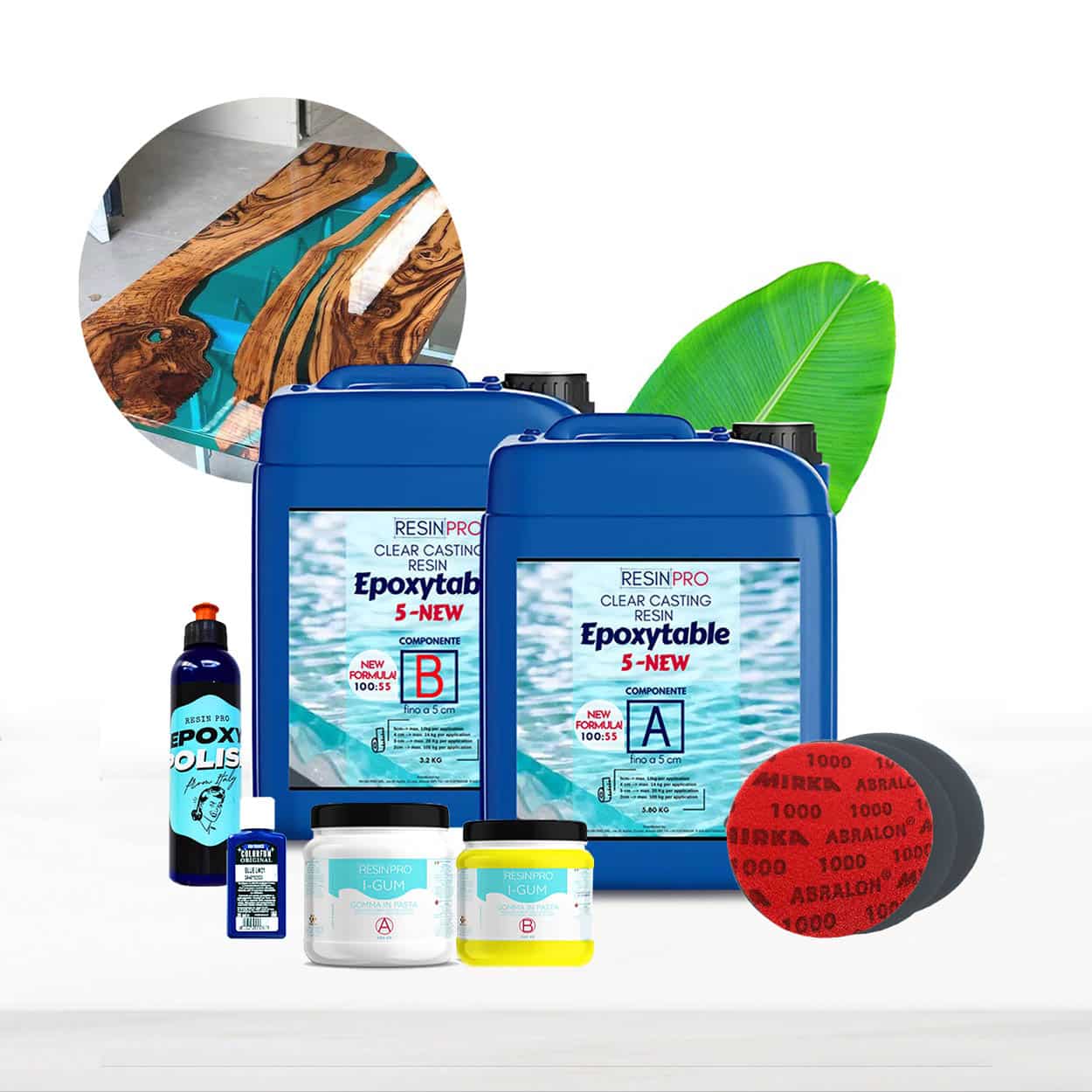
What You’ll Need
- “Trasparente” – Multipurpose Clear Epoxy Resin for Casting – Up to 2cm: Transparent multipurpose epoxy resin for casting layers up to 2cm with self-levelling properties and UV protection.
- “EpoxyTable 5-Five” – Deep Pour Epoxy Resin for Tables and Large Projects – Up to 5cm: For thicker pours, up to 5cm in depth for tables or large artistic projects.
- Anti Bubble Mixer for Epoxy Resin – Reusable Mixing Tool: For gentle mixing and minimising air bubbles.
- Protective gloves, mixing containers, spirit level, masking tape, plastic sheeting, dust cover, heat gun or butane torch.

Essential Materials and Workspace Ready
Gather your materials in advance. Setting up a clean, organised workspace and assembling all required tools makes the process smoother and minimises the risk of mistakes. Protective gloves and sheeting keep you and your work area safe.
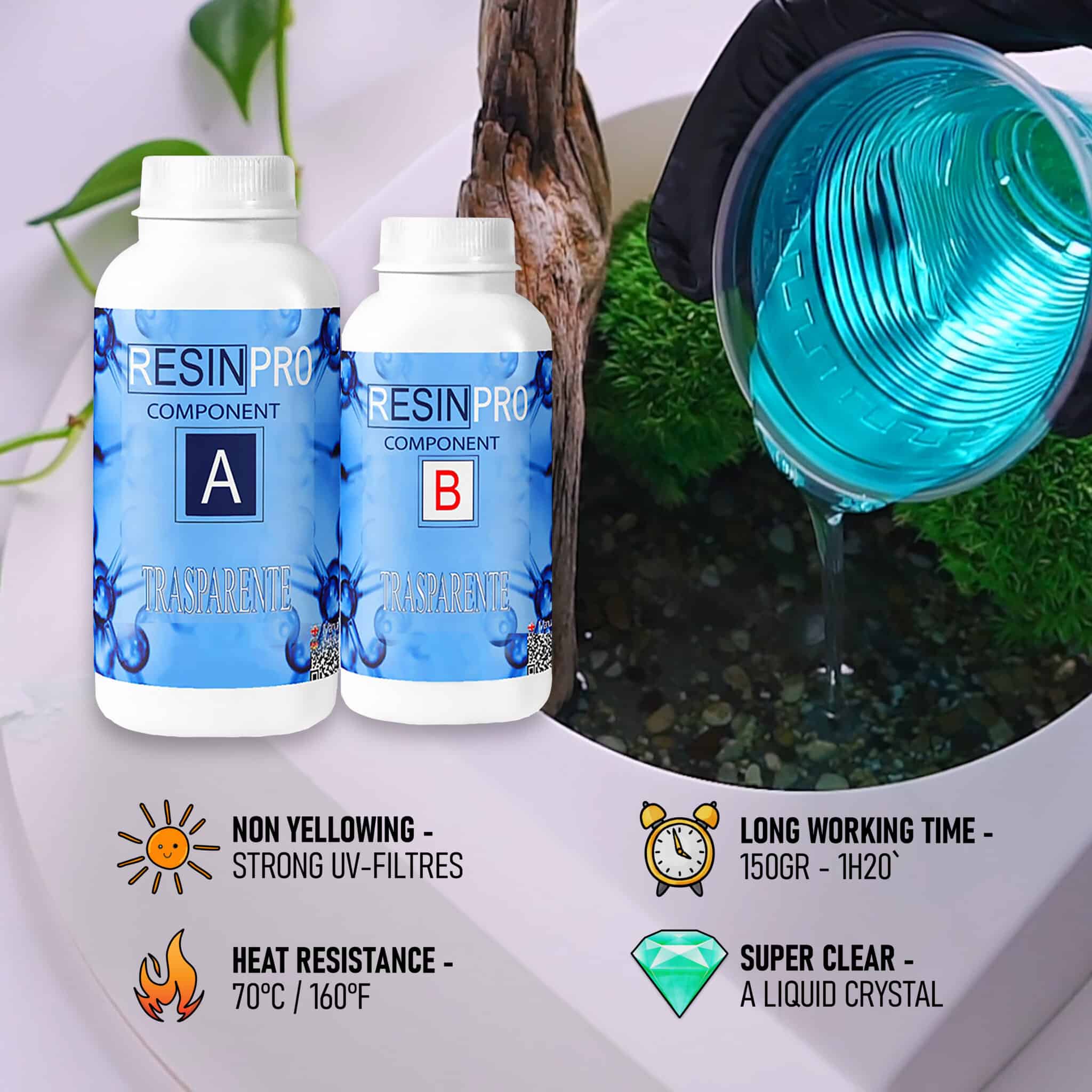
Step 1: Prepare the Surface
A flawless pour always begins with proper preparation. Always ensure the surface is clean, dry, and level. Remove all dust, grease, and debris as any imperfection will be magnified under the clear resin. Use masking tape around the edges or underside of your project to prevent resin runoff, and cover surrounding areas with plastic sheeting to protect from drips. Place your project on a flat, stable surface and use a spirit level to check—even minor tilts can cause uneven curing.
For porous materials like wood, consider pre-sealing with a thin layer of resin to prevent bubbles from escaping during the main pour.
Step 2: Mix the Epoxy Resin Carefully
Getting the mix right is critical for self-leveling resin. Accurately measure resin and hardener according to your product’s instructions, usually by weight. Stir gently to minimise bubble formation; rapid stirring draws in air, leading to hazy finishes. For professional results, a specialised tool like the Anti Bubble Mixer for Epoxy Resin – Reusable Mixing Tool helps blend components thoroughly and gently, ensuring a smooth, bubble-free mix.
Scrape the sides and bottom of your mixing container to avoid unmixed material which can lead to soft spots.
Step 3: Pour the Resin Slowly and Evenly
After mixing, let the resin sit for a minute to allow bubbles to rise. Pour the resin slowly and evenly at the centre of your work and let it flow outward to self-level. Guided by gravity, the resin will naturally fill gaps; use a spatula to assist coverage on large surfaces if necessary. For thicker applications such as resin river tables (up to 5cm), choose a deep-pour formula like “EpoxyTable 5-Five” – Deep Pour Epoxy Resin for Tables and Large Projects – Up to 5cm.
Avoid working in very warm or humid conditions, as these can accelerate curing and increase the risk of bubbles, cloudiness or overheating.

Step 4: Remove Bubbles and Allow to Cure
After pouring, inspect for any surface bubbles. Use a heat gun or butane torch held above the surface briefly—never too close—to gently burst bubbles without scorching the resin. If multiple pours are needed due to depth, wait for the proper curing interval between layers, as specified on your resin’s instructions.
Allow sufficient curing time without disturbance. Dust is the enemy; cover your work with a clean, protective barrier while it cures to ensure a perfectly clear finish.

Pro Tips and Common Mistakes to Avoid
- Work in a dust-free area and avoid draughts to prevent surface contamination.
- Avoid exceeding recommended pour thickness: Pouring thicker than specified increases heat build-up and may result in yellowing or cracking.
- Plan your timing: Epoxy has a limited working window; prepare and mix only what can be poured in one session.
- Mix incorrect ratios can result in soft, sticky, or cloudy finishes—always follow your resin’s instructions precisely.
Achieving a Professional Finish Every Time
Pace your process and maintain patience. True clarity and smoothness result from careful, thoughtful resin applications and respecting recommended curing times. If in doubt, run small test pours before committing to your main project.

- "Trasparente" – Multipurpose Clear Epoxy Resin for Casting – Up to 2cmPrice range: £8.45 through £948.85The "Trasparente" epoxy resin offers a clear, self-levelling finish up to 2cm thickness, suitable for detailed casting and various DIY projects.
- "River-Table" – Complete Kit for Creating Your First Epoxy Resin TablePrice range: £188.85 through £444.85"River-Table" kit provides instructions and materials for a resin and wood table project, suited for beginners and hobbyists.
 Anti Bubble Mixer for Epoxy Resin – Reusable Mixing Tool£4.45The Anti Bubble Mixer is designed for epoxy resin projects to help achieve a finish without bubbles, supporting careful pouring techniques.
 "EpoxyTable 5-Five" – Deep Pour Epoxy Resin for Tables and Large Projects – Up to 5cmPrice range: £16.85 through £1,099.85"EpoxyTable 5-Five" is a deep pour epoxy resin designed for tables and large projects, suitable for layers up to 5cm with a clear and durable finish.
Frequently Asked Questions
Can I pour epoxy resin in thick layers?
Only use deep-pour resins for layers up to 5cm. Thicker pours risk overheating and should be done in multiple stages.
How do I prevent bubbles in epoxy resin?
Mix resin slowly, use an anti-bubble mixing tool, and sweep a heat gun or torch over the surface immediately after pouring.
What is the difference between self-leveling and regular epoxy?
Self-leveling epoxy is formulated to spread evenly and create a flat surface with minimal manual effort.
How long does self-leveling epoxy take to cure?
Curing usually takes 24–72 hours, depending on room temperature, humidity, and product type. Check your resin’s specific guidelines.
Can I fix mistakes after the resin has cured?
Most surface flaws can be sanded and recoated. Deep bubbles or other issues may require a partial re-pour or filling.
Do I need to seal wood before resin pouring?
Sealing porous wood with a thin resin layer beforehand helps prevent bubbles released from the wood into the main pour.