 Free shipping on orders over £29,85
  Shipping Tracking!


 Google
 Facebook
How many litres of resin per square metre?
Calculating accurate resin quantities for your casting or coating job
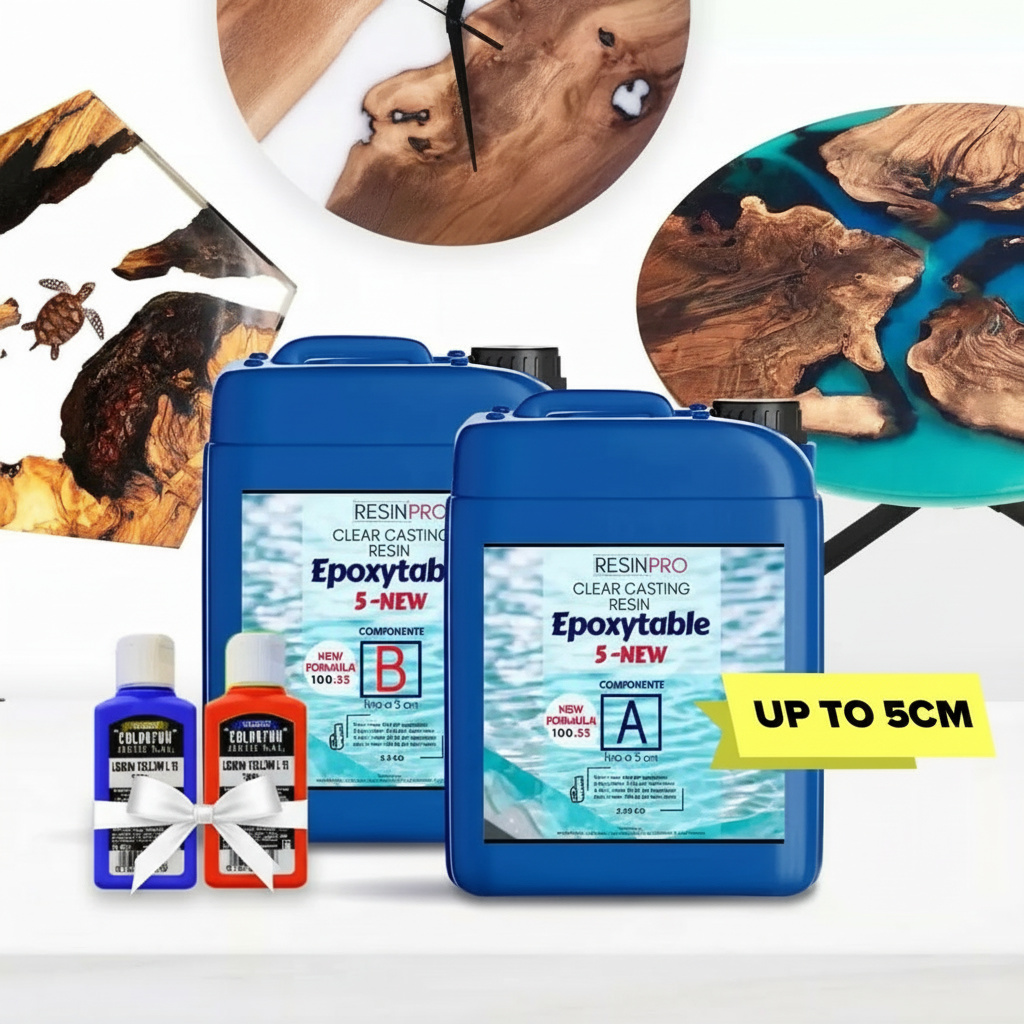
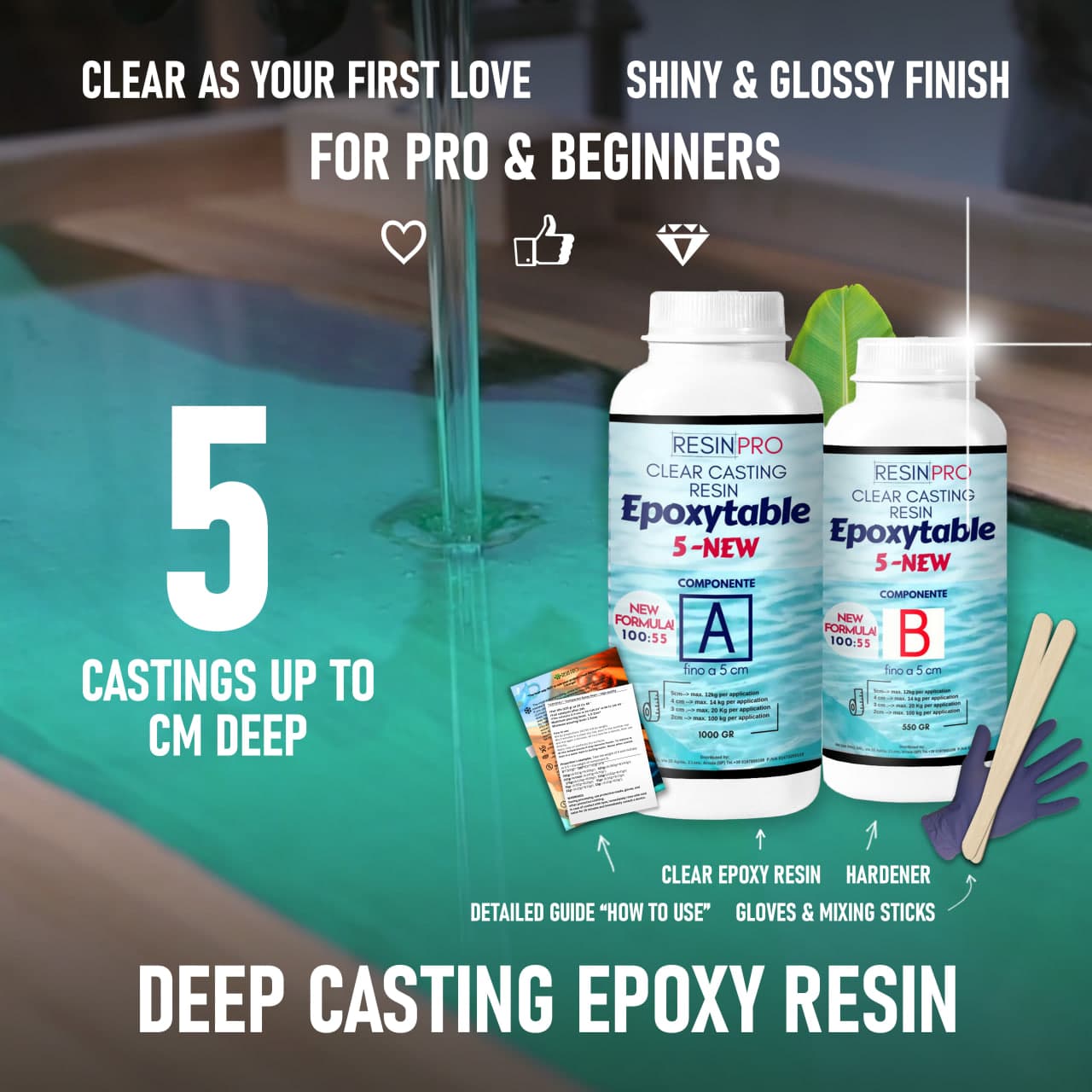
Understanding how many litres of resin you need per square metre is crucial for anyone planning a resin table, floor, or artwork. This guide explains how different resins affect your calculations, typical coverage at various thicknesses, and helps you choose the right epoxy product for your project, whether you are working with shallow coats, deep pours, or glossy surface finishes.
Choosing the Right Epoxy Resin: Thickness and Consumption Explained
The amount of resin required per square metre always depends on your planned layer thickness and the type of resin suitable for your use-case. Thin coatings will take less resin, while deep pours (like for river tables) consume much more per area. For a 1mm coating, you will need approximately 1 litre per m², while a 10mm (1cm) pour requires about 10 litres per m². The physical properties of each resin also make a difference—some resins handle deep pours without overheating, while others are made for ultra-clear, thin coatings.

Visualising Resin Depth and Coverage
To determine litres per square metre, use the formula: Surface Area (m²) × Desired Thickness (cm) = Resin Volume (litres). For instance, coating a 1m × 1m area with 2cm will require 2 litres. Deep pours or thick castings amplify this value, making accurate calculation essential before buying resin.
“Epoxytable 10-Ten” – For Super-Deep Pours up to 10cm
If your project demands exceptionally deep layers, such as river tables or large castings up to 10cm, “Epoxytable 10-Ten” – Deep Pour Epoxy Resin for Tables, Up to 10cm Casting is purpose-engineered for such applications. Thanks to its very low exothermic reaction and bubble-free finish, you can calculate volumes with confidence: for each centimetre of thickness, you need 1 litre per square metre. For a 5cm river table, this means 5 litres per square metre; for 10cm, 10 litres. It’s the optimal choice when you want to achieve flawless results in a single pour for thick, clear artistic pieces or oversized tabletops.
“EpoxyTable 5-Five” – Ideal for Medium-Deep Pours up to 5cm
When your pour depth sits between 2 and 5cm, “EpoxyTable 5-Five” – Deep Pour Epoxy Resin for Tables and Large Projects provides safe, low-heat curing and high clarity over most medium-depth table, furniture or embedded art projects. For a 2cm-thick layer, prepare around 2 litres of resin per square metre. Like its 10cm counterpart, this resin’s low viscosity ensures it fills spaces evenly, letting you predict your resin requirements with pinpoint accuracy for both smaller and larger projects.
“Trasparente” – Multipurpose Resin for Casting Up To 2cm
“Trasparente” – Multipurpose Clear Epoxy Resin for Casting – Up to 2cm is the go-to product for jewellery, artwork, and detailed DIY applications with casting layers from 0.5cm to 2cm. For a typical 1cm thick pour, estimate 1 litre per square metre; double that for the full 2cm capacity. Its ultra-clear, bubble-free finish and outstanding UV resistance make it ideal for transparent layers where precise dosing is needed over a defined surface area.
“Art Pro” – Surface Coating and Artistic Layer Resin
If high-gloss, scratch-resistant thin coatings are your priority, “Art Pro” – Clear Epoxy Resin for Artists and Surface Coating is formulated for pours as thin as 1.5mm up to 10mm. For a standard clear coat of 2mm, you’ll require approximately 2 litres per square metre. Its dense, non-drip texture makes it a reliable choice for coasters, trays, and decorative finishes where uniform coverage and easy application are essential.
Tips for Calculating Resin Volume and Project Preparation
Always calculate your resin needs based on both area and desired thickness—multiply your surface area (in m²) by the thickness (in cm) to estimate litres needed. Consider that intricate designs or wood absorption may slightly increase required volume. When pouring deep layers over large areas, working in stages may be necessary to prevent overheating. For added peace of mind, always have extra resin on hand to account for mixing losses or unexpected absorption.
Practical Guidance for Project Success
Work methodically—measure twice, mix once. Always factor in a margin for overpour and absorbent surfaces, and consult the product page for detailed mixing ratios and properties. For tables, art pieces or deep castings, choosing a resin formulated for your depth will ensure the most reliable finish with minimal waste.
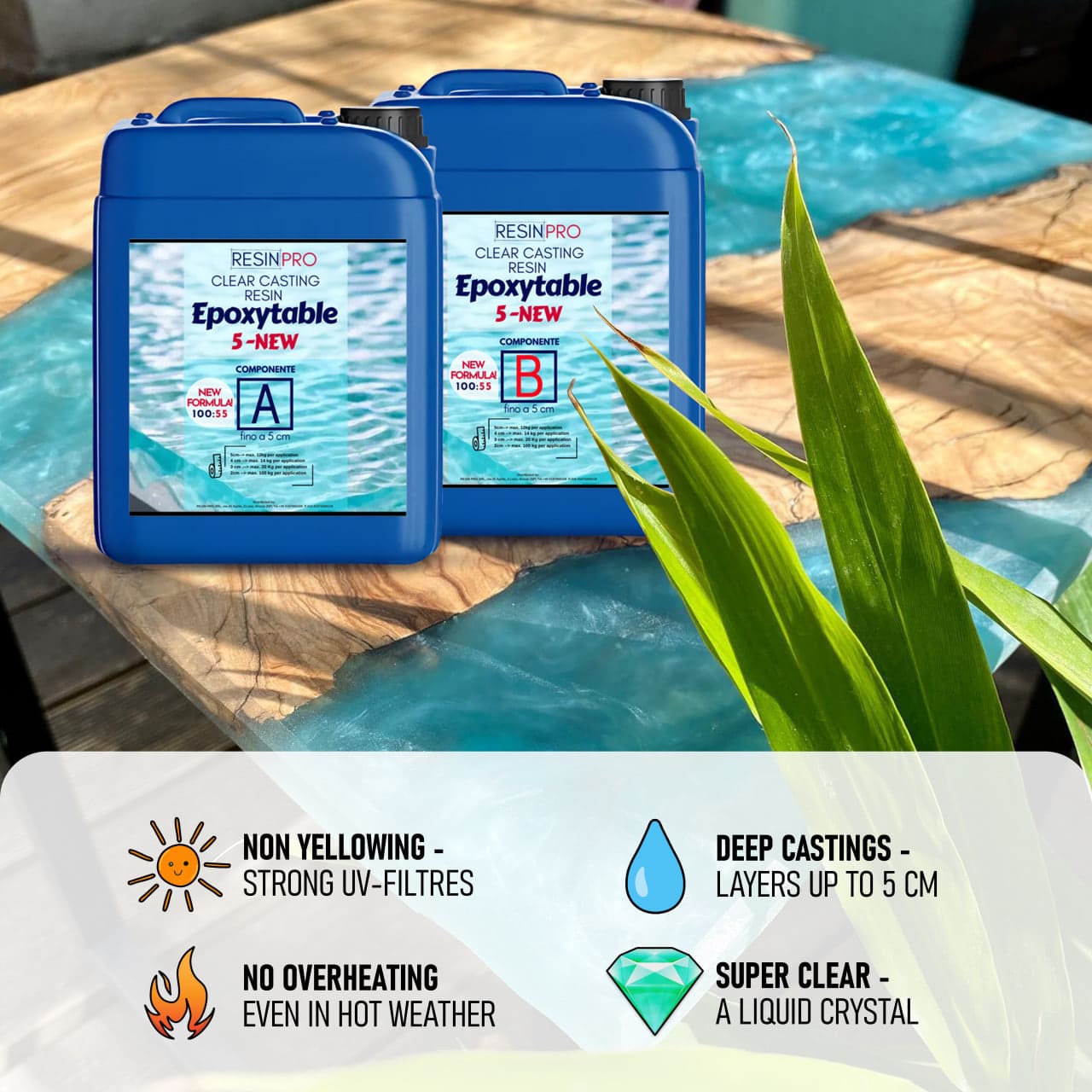
- "EpoxyTable 5-Five" – Deep Pour Epoxy Resin for Tables and Large Projects – Up to 5cmPrice range: £17.95 through £1,154.95"EpoxyTable 5-Five" is designed for deep pouring up to 5cm, suitable for tables and larger projects with good mechanical resistance.
 "Art Pro" – Clear Epoxy Resin for Artists and Surface CoatingPrice range: £19.95 through £267.95"Art Pro" clear epoxy resin is designed for artists and crafters, providing durable, glass-like finishes suitable for surface coatings.
 “Epoxytable 10-Ten” – Deep Pour Epoxy Resin for Tables, Up to 10cm CastingPrice range: £35.95 through £351.95Epoxy resin for casting tables and large projects requiring pour thickness up to 10cm with UV protection and low viscosity.
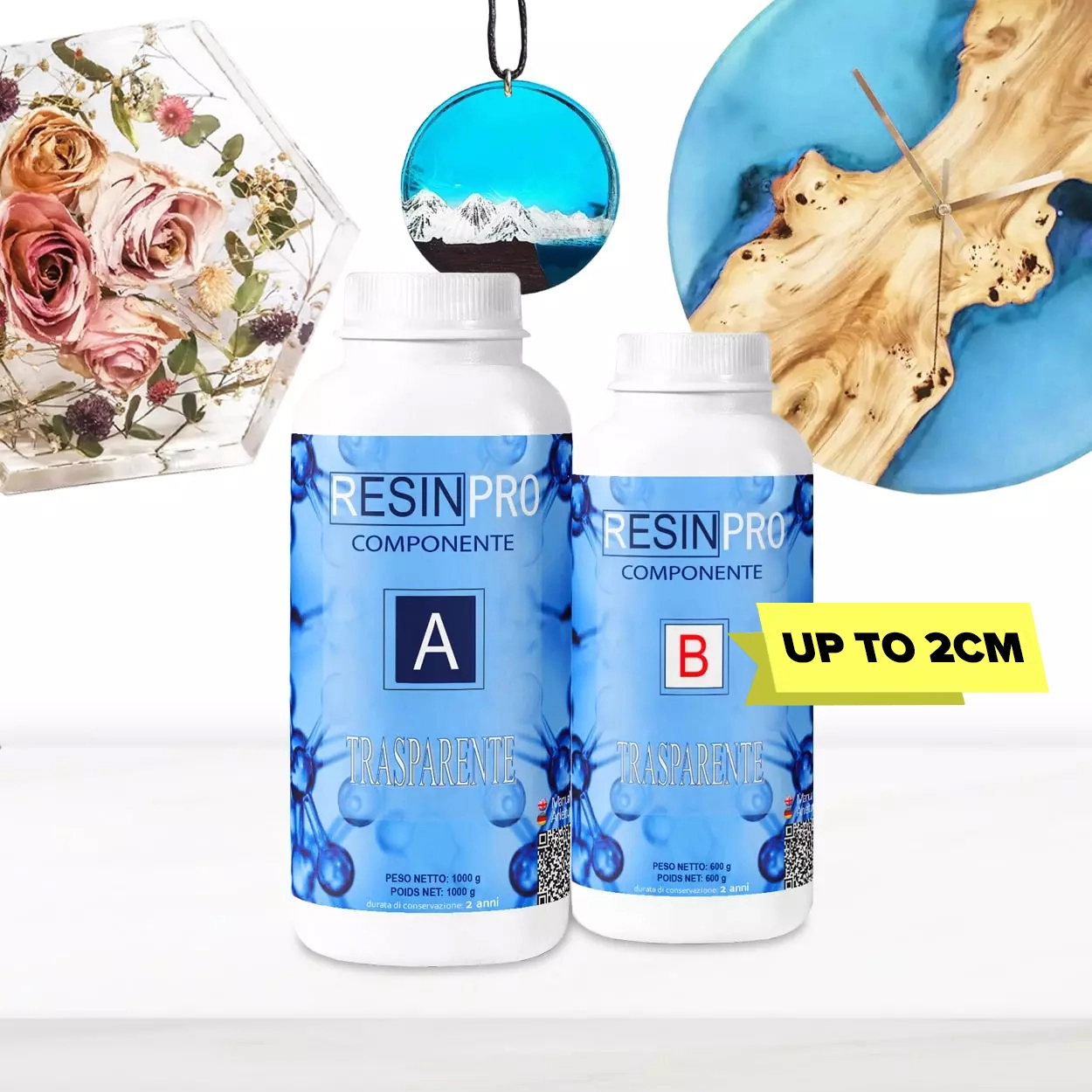 "Trasparente" – Multipurpose Clear Epoxy Resin for Casting – Up to 2cmPrice range: £8.95 through £397.95A clear, multipurpose casting epoxy resin suitable for up to 2cm layers, delivering a gloss finish for DIY and woodworking.
Frequently Asked Questions
How do I calculate litres of resin per square metre?
Multiply the area in m² by the desired layer thickness in cm. The result is the number of litres needed.
Which resin is best for deep pour tables?
Choose Epoxytable 10-Ten for pours up to 10cm; for 2–5cm depth, use EpoxyTable 5-Five.
Which resin is suitable for surface coating artwork?
Art Pro is ideal for glossy coatings and thin surface layers on crafted pieces and art.
What resin is recommended for projects under 2cm thick?
The "Trasparente" resin is best for layers up to 2cm in jewellery or art projects.
Can I apply resin in multiple layers for deep projects?
Yes, for thicknesses above the recommended pour depth, it's best to work in layers to prevent overheating.
Should I order extra resin for my project?
It's wise to order slightly more resin than calculated, to allow for wastage and unexpected losses.