 Free shipping on orders over £29,85
  Shipping Tracking!


 Google
 Facebook
How much catalyst is needed for 200 g of resin?
Get precise mixing ratios for flawless resin projects at home.

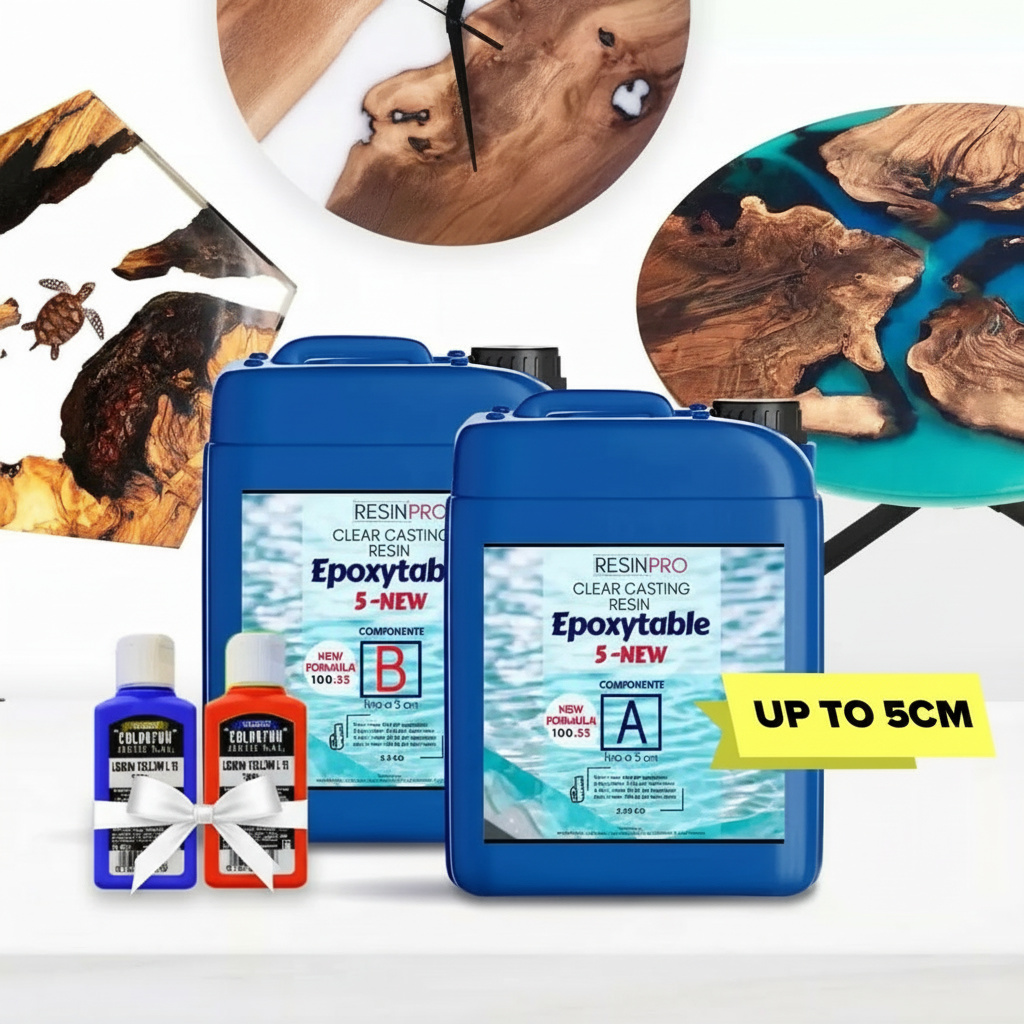
Accurately measuring the amount of catalyst (hardener) is essential for achieving optimal results with your epoxy resin projects. This page provides clear guidance on how much hardener you need for 200 grams of resin, with real-world examples for ResinPro’s most popular epoxy kits. Whether you’re casting, coating, or making furniture, understanding the right ratio ensures a strong cure and flawless finish.
Mixing Ratio Guide: Catalyst Amounts for 200g of Resin
Most high-quality epoxy resins from ResinPro, including “Carbon Resin”, “EpoxyTable 5-Five”, Epoxytable 10-Ten, and the “Trasparente” Epoxy Resin Kit, use a standard mixing ratio: 100 parts resin to 55 parts catalyst (hardener) by weight. For 200g of resin, you will need 110g of hardener (200g x 0.55 = 110g). Always weigh both components precisely for optimal curing and physical properties.

Visual Guide to Measuring Catalyst
Use clear digital scales to measure out 110g of catalyst for every 200g of resin. This ensures strong, reliable results and a consistent finish. Accuracy in weighing prevents under-curing or wasted material.
“Carbon Resin” – Epoxy Resin for Carbon Fibre and Fibreglass Coating
“Carbon Resin” is engineered for advanced composites, modelling, and technical fabrics. The 100:55 by weight mixing ratio ensures perfect impregnation and structural integrity for your project. For 200g of resin, use 110g hardener. Its room temperature curing simplifies use, making precise hardener measurement crucial for a bubble-free, glossy finish.
Best for: composite technicians, makers, or model builders working with carbon fibre and fibreglass who require outstanding durability.
“EpoxyTable 5-Five” – Deep Pour Epoxy for Tables and Large Castings
The “EpoxyTable 5-Five” resin is tailored for deep pours up to 5cm thickness. With the same 100:55 resin-to-catalyst ratio, 200g of resin needs 110g of hardener. This accurate amount prevents unwanted heat buildup, giving you a deep pour epoxy resin for tables & large projects with glass-like clarity and strong UV resistance. Carefully follow the ratio for best performance in river tables, countertops, and artistic pours.
Epoxytable 10-Ten – Super-Deep Pours and Large-Scale Projects
Epoxytable 10-Ten is formulated for super-deep casting up to 10cm. It uses the same 100:55 ratio, so 200g resin requires 110g hardener. This ensures a controlled cure for super-deep pouring up to 10cm without overheating or formation of bubbles. Suitable for large artistic pieces and substantial DIY creations where clarity and stability are paramount.
“Trasparente” Epoxy Resin Kit – Clear Multipurpose Applications
The “Trasparente” Epoxy Resin Kit is a versatile choice for craft, woodworking, and décor. Mixing 200g resin with exactly 110g hardener gives a self-levelling, high transparency result, ideal for jewellery, coasters, or surface coating. Always rely on precision weighing, especially for smaller batches, to avoid issues like tackiness or incomplete cures.
Mixing Tips for Accurate Results
Always use digital scales for weighing resin and hardener—accuracy is vital for all project sizes. Mix thoroughly, scraping container sides and bottom, until the blend is completely uniform. If working in cool environments, ensure both parts are at room temperature for easier mixing and to prevent cloudy results. For best bonding and finish, avoid deviating from the recommended ratios: too much or too little catalyst can lead to weak cures, discolouration, or sticky surfaces.
Why Precision Matters in Epoxy Mixing
A slight error in adding catalyst can cause soft spots, cloudiness, or poor bonding in your finished piece. Stick to the 100:55 by weight ratio for the best performance, appearance, and project longevity.

- "Carbon Resin" – Epoxy Resin for Carbon Fiber & Fiberglass CoatingPrice range: £19.95 through £37.95"Carbon Resin" is an epoxy resin for carbon fibre and fibreglass designed for composites and modelling with careful impregnation and structural…
- "EpoxyTable 5-Five" – Deep Pour Epoxy Resin for Tables and Large Projects – Up to 5cmPrice range: £17.95 through £1,154.95"EpoxyTable 5-Five" is designed for deep pour applications up to 5cm, commonly used for tables and large projects requiring a scratch-resistant…
 “Epoxytable 10-Ten” – Deep Pour Epoxy Resin for Tables, Up to 10cm CastingPrice range: £35.95 through £351.95“Epoxytable 10-Ten” is designed for super-deep casting applications up to 10cm with low viscosity and strong UV filters.
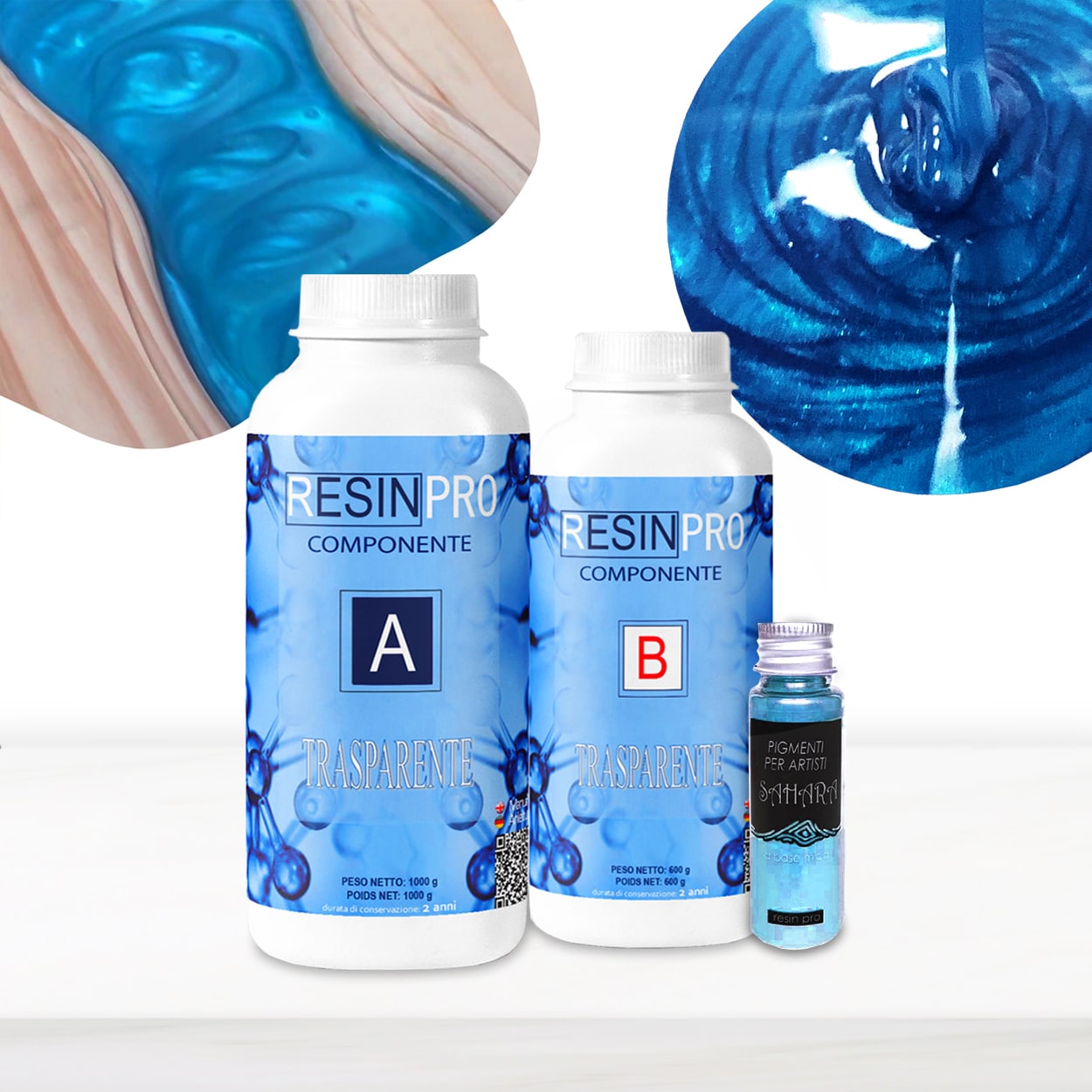 "Trasparente" Epoxy Resin Kit 800g + Mica Powder 10g – 10 Colour Variations£20.95"Trasparente" Epoxy Resin Kit is an ultra clear multipurpose resin suitable for castings, table making and DIY, aligned with the theme of catalyst…
Frequently Asked Questions
What is the catalyst amount for 200g of resin?
You need exactly 110g of hardener for 200g of resin using the standard 100:55 mixing ratio.
How should I stir resin and catalyst together?
Stir slowly and thoroughly for several minutes, scraping sides and bottom, until the mix is clear and uniform.
What happens if I add too much or too little catalyst?
Too much can cause overheating or brittleness; too little can prevent full curing, leaving the surface sticky or soft.
Why are digital scales recommended for epoxy mixing?
Digital scales ensure precise measurements, which are crucial for reliable curing and a professional finish.
Should resin and catalyst be at room temperature before mixing?
Yes, room temperature mixing ensures proper blending and minimises bubbles or cloudiness in the finished resin.
Is catalyst the same as hardener in epoxy resins?
Yes, in epoxy systems, the catalyst refers to the hardener that reacts with the resin to form a solid material.