 Free shipping on orders over £29,85
  Shipping Tracking!


 Google
 Facebook
How to coat the fireplace marble with resin?
A step-by-step method to protect and beautify marble surfaces
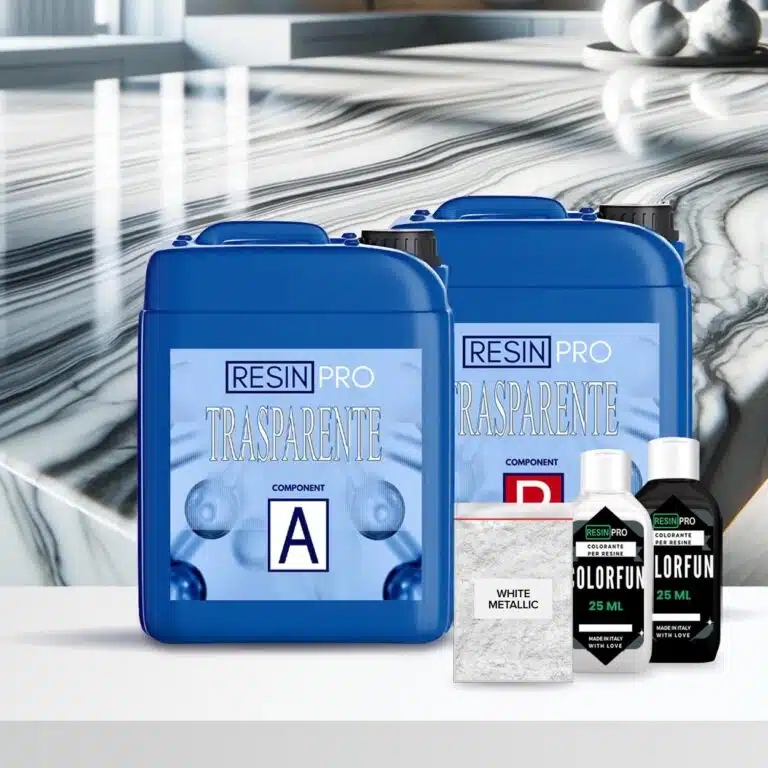
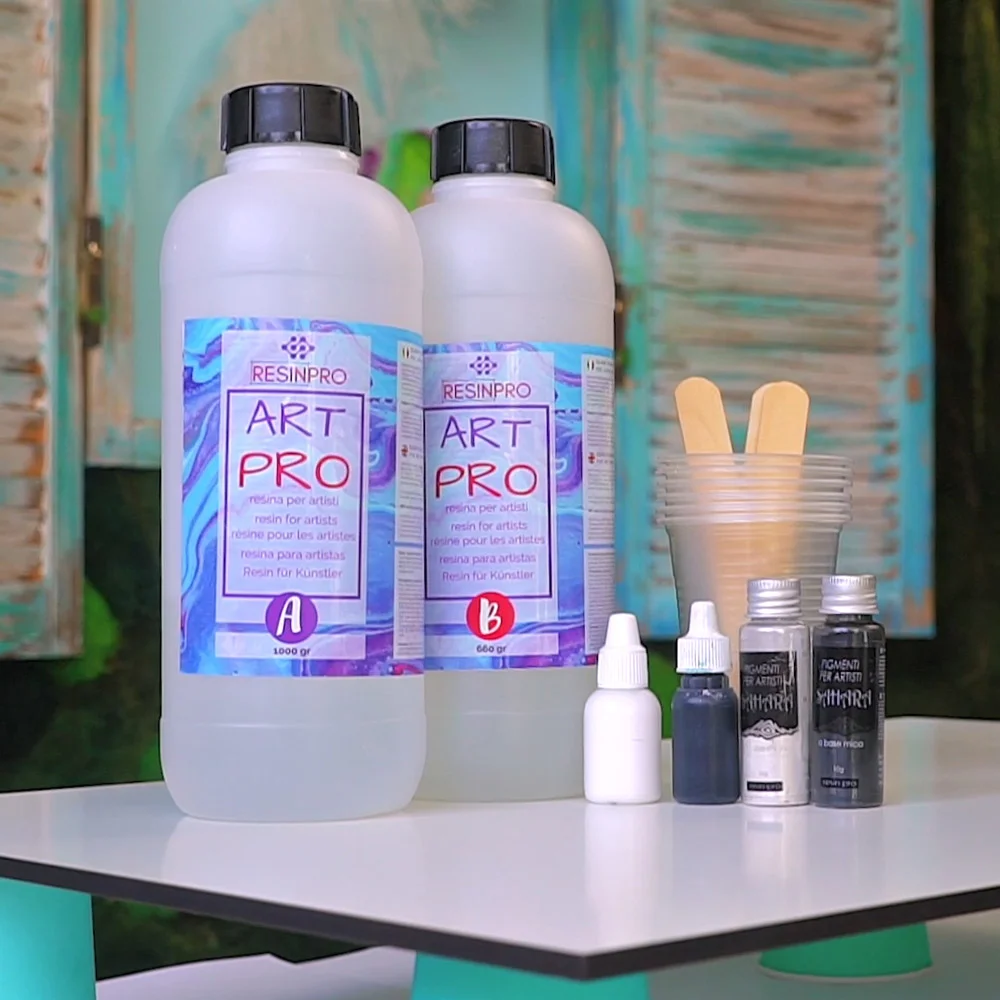
Coating your fireplace marble with resin is a fantastic way to revitalise its appearance while providing lasting protection against scratches, stains, and heat. Whether you want a glossy finish or wish to add creative effects, this guide will walk you through each stage for a professional result. Even if you have minimal DIY experience, following these steps will help ensure your surface remains durable and beautiful for years.
What You’ll Need
- “Stone Effect Collection” – Marble Epoxy Resin Countertop Kit – Perfect for realistic marble and stone finishes, includes pigments, isopropyl alcohol, and tools.
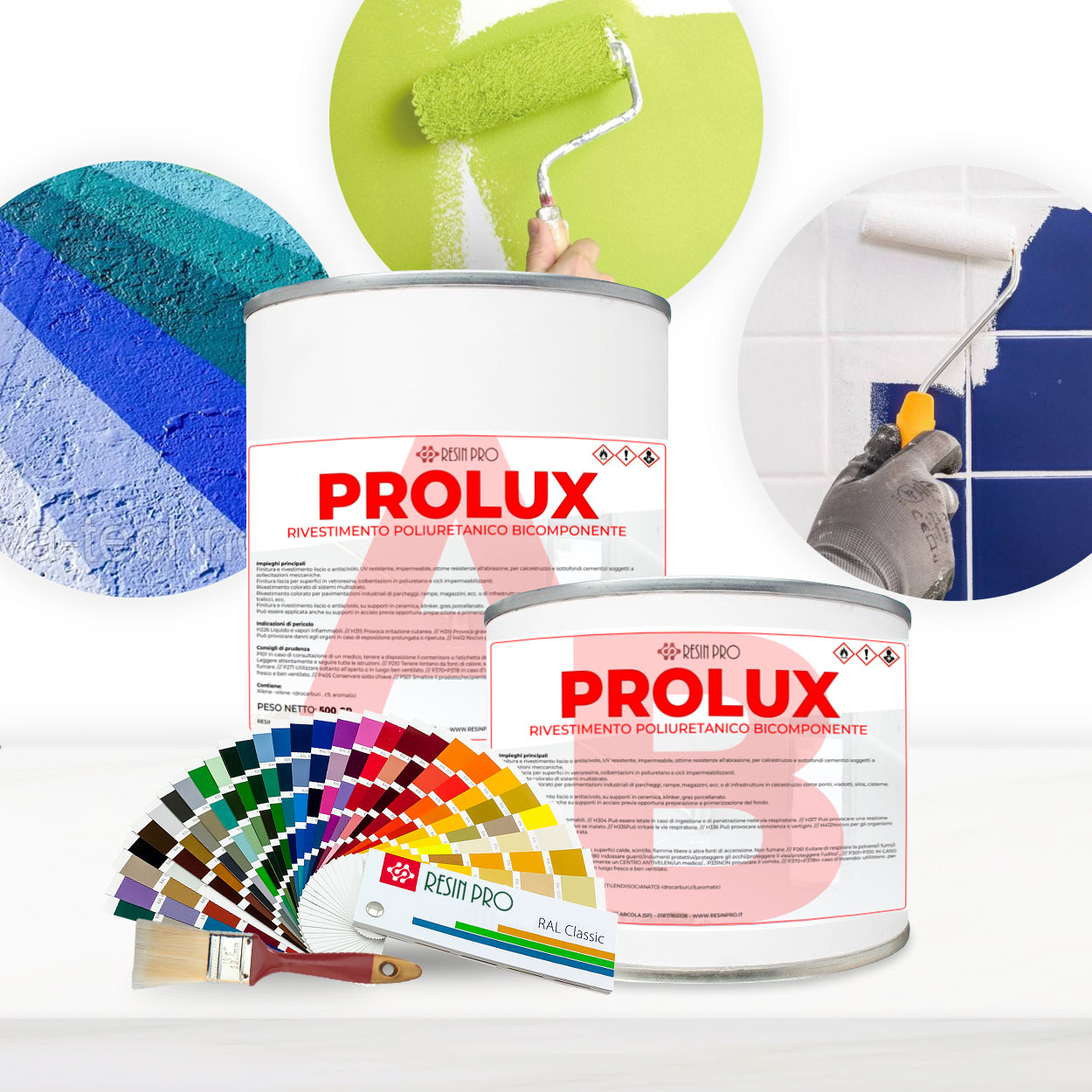
- “Prolux” – PU coating for tiles, concrete, plastic and metal – suitable for driveable surfaces – Provides a tough, UV-resistant finish for surfaces requiring extra durability.
- “Art Pro Deluxe” – Ultra-High Viscosity Epoxy Resin for Artists – Ideal for decorative finishes, high-viscosity control and artistic applications.
- “Icrystal” – Clear Epoxy Resin – Odourless Formula – Up to 1.5cm – Best for clear coatings with minimal odour and up to 1.5 cm thickness per layer.
- Painter’s tape or masking tape
- Fine-grade sandpaper
- Mixing containers and stir sticks
- Protective gloves and safety mask
- Lint-free cloths
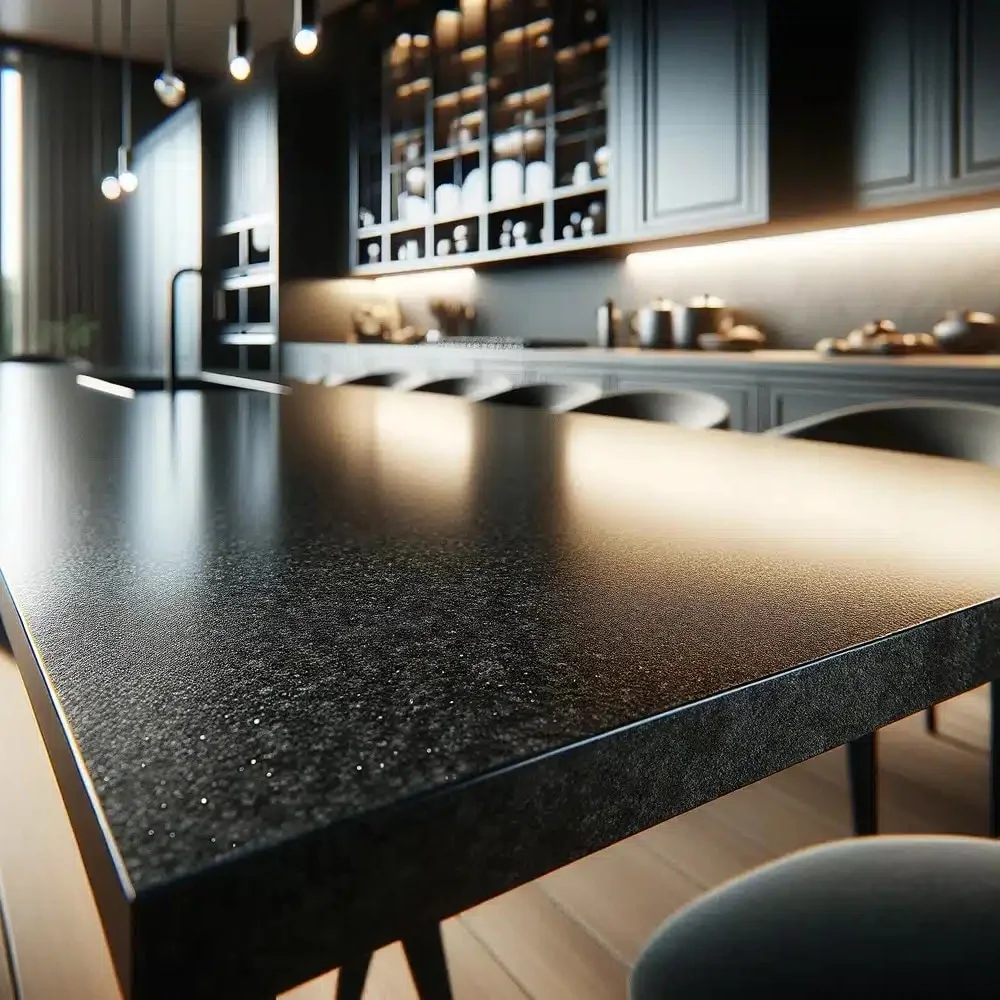
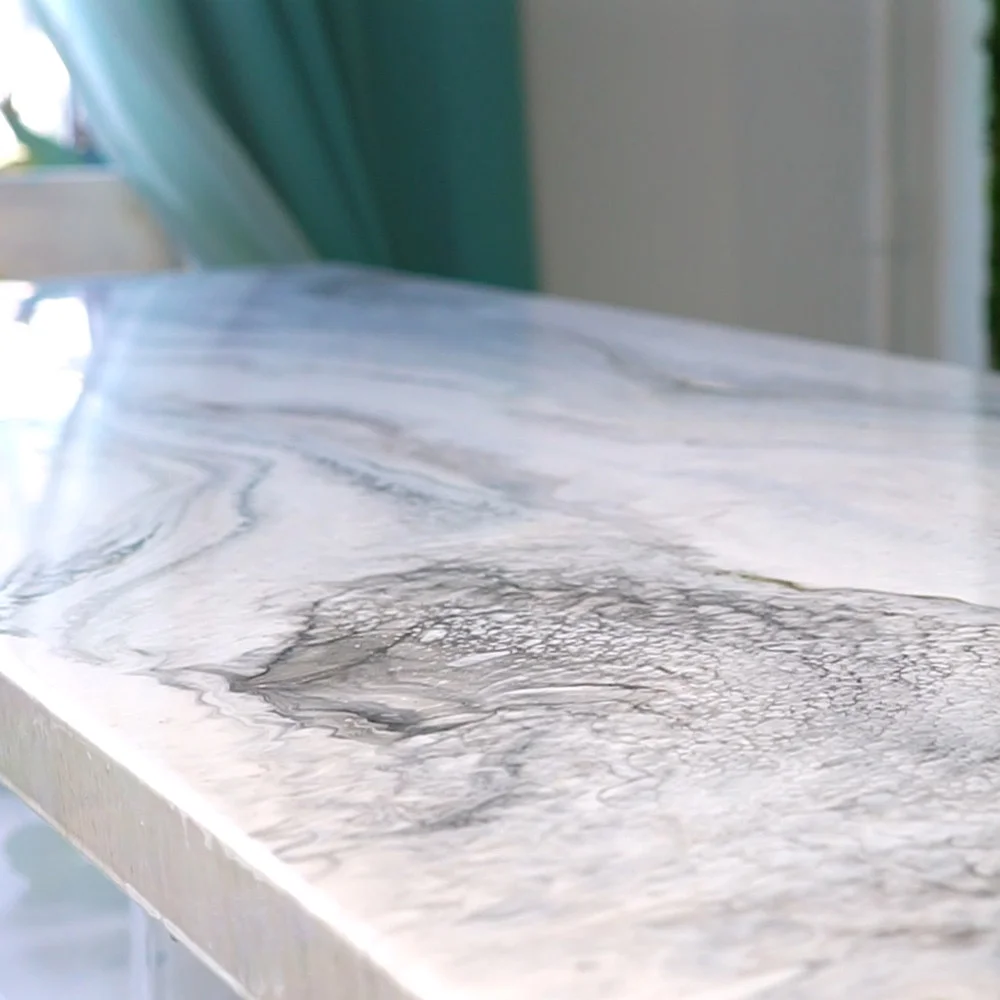
Visual inspiration: marbled fireplace resin finishes
See before-and-after photos and creative marble effect coatings on fireplaces, showing the kinds of transformations achievable with epoxy resin. Surfaces can range from classic Carrara-inspired white veined looks to modern glossy quartzite and deep black marble effects.
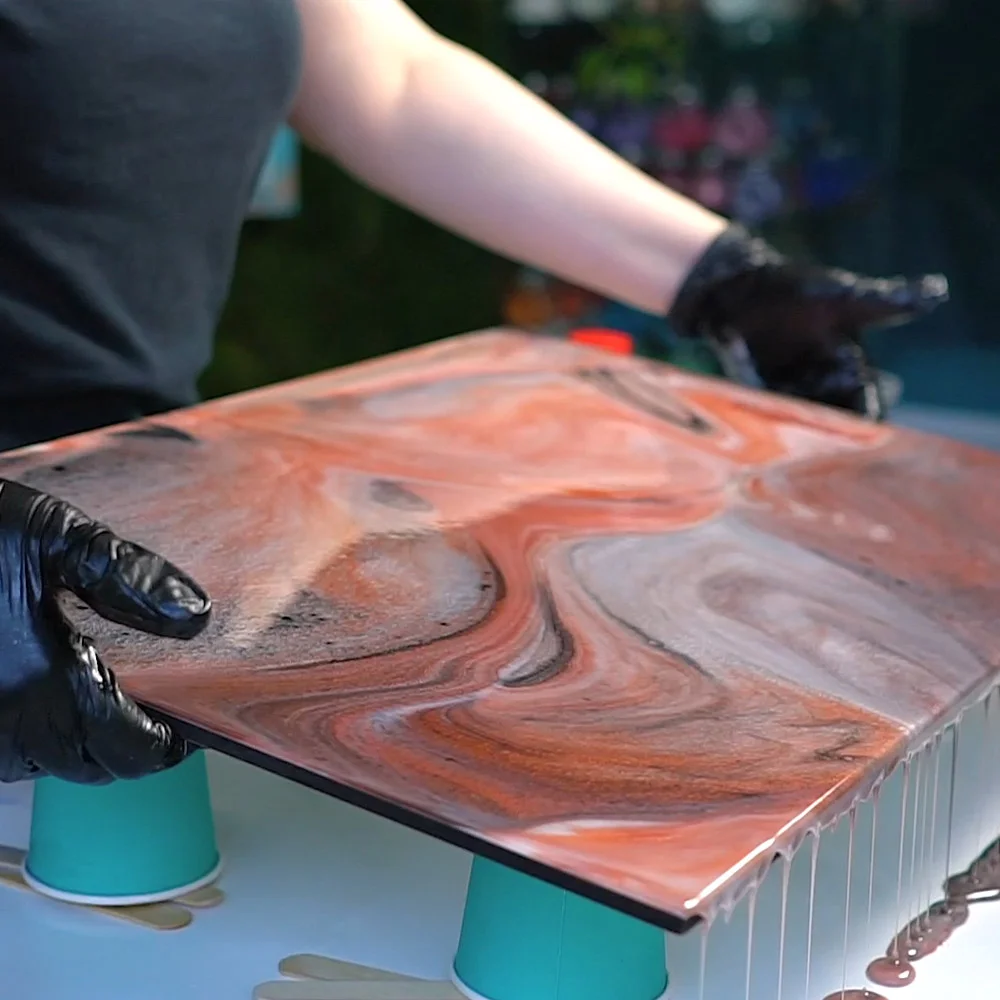
Step 1: Prepare the Marble Surface
Clean the marble thoroughly using a mild, residue-free detergent and warm water. Remove any traces of wax, oils, soot, or polishes, as these can prevent adhesion and result in defects. Rinse well and allow the surface to dry completely.
Mask adjoining surfaces such as fireplace surrounds, flooring, or walls with painter’s tape. This will protect them from accidental resin drips or splashes. Ensure the work area is well-ventilated.
Step 2: Sand and Degrease the Surface
Use fine-grade sandpaper (around 400–600 grit) to lightly abrade the marble. The goal is not to remove the finish but to introduce a subtle texture for better resin adhesion. Wipe away any dust with a lint-free, damp cloth.
If working on an older or polished marble, degrease with isopropyl alcohol after sanding to remove any residual contaminants and ensure proper bonding.
Step 3: Apply the Resin Coating
Choose your epoxy based on your desired effect. For authentic marble designs with integrated veins, select the “Stone Effect Collection” – Marble Epoxy Resin Countertop Kit. This kit combines artistic pigments and a self-levelling clear resin for professional finishes. If your goal is a simple clear, odourless protection layer, “Icrystal” – Clear Epoxy Resin is an ideal choice.
Mix and pour the resin carefully, following your selected product’s recommended ratio and mixing times. Slowly stir each component to avoid introducing air bubbles, then pour or brush on the resin in a steady motion. Spread evenly with a roller, brush, or spatula, ensuring complete coverage.
For vertical or decorative effects, consider “Art Pro Deluxe” – Ultra-High Viscosity Epoxy Resin for Artists, which offers superior line control and is ideal for layered or textured finishes.
Step 4: Cure and Finish
Allow proper curing time according to your resin’s instructions. Maintain a dust-free environment and avoid disturbing the surface while it sets. Depending on product and environmental conditions, this may take between 12 and 48 hours.
After curing, gently remove the masking tape. Examine the finish for runs or drips – these can be sanded and re-coated if perfection is desired. Avoid placing items or cleaning the surface until the resin has fully hardened.
Tips, Troubleshooting, and Common Mistakes
Work in a moderate-temperature, low-humidity environment to ensure the resin cures smoothly and without cloudiness. Always mix the resin and hardener thoroughly, scraping the sides and bottom of the mixing container. Bubbles can be removed by gently blowing or using a heat gun held at a safe distance. Common mistakes include failing to degrease the marble, which leads to poor adhesion and peeling, or applying the resin too thickly, causing issues with curing.
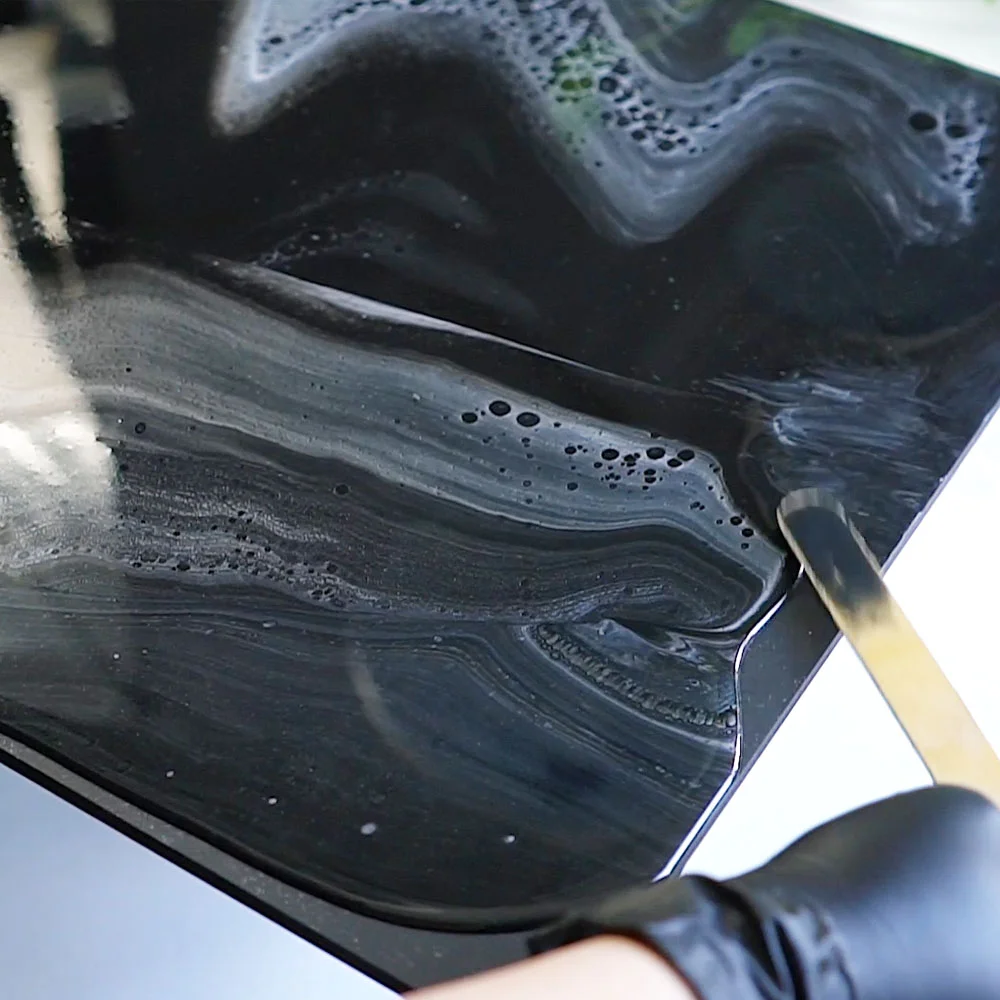
Resin curing and finishing examples
Explore detailed shots of resin setting on marble, close-ups of smooth, dust-free finishes, and tips for sanding or re-coating. These images illustrate what to expect as your resin cures and highlight the benefits of patient, careful finishing for a flawless result.
- "Stone Effect Collection" – Marble Epoxy Resin Countertop KitPrice range: £57.95 through £272.95"Stone Effect Collection" is an epoxy resin kit for professional marble and stone effects with a durable, scratch-resistant finish for surfaces such…
- "Prolux" – PU coating for tiles, concrete, plastic and metal – suitable for driveable surfacesPrice range: £44.85 through £494.85"Prolux" offers an advanced polyurethane finish suitable for various surfaces, including tiles and concrete, aligned with 'How to coat the fireplace…
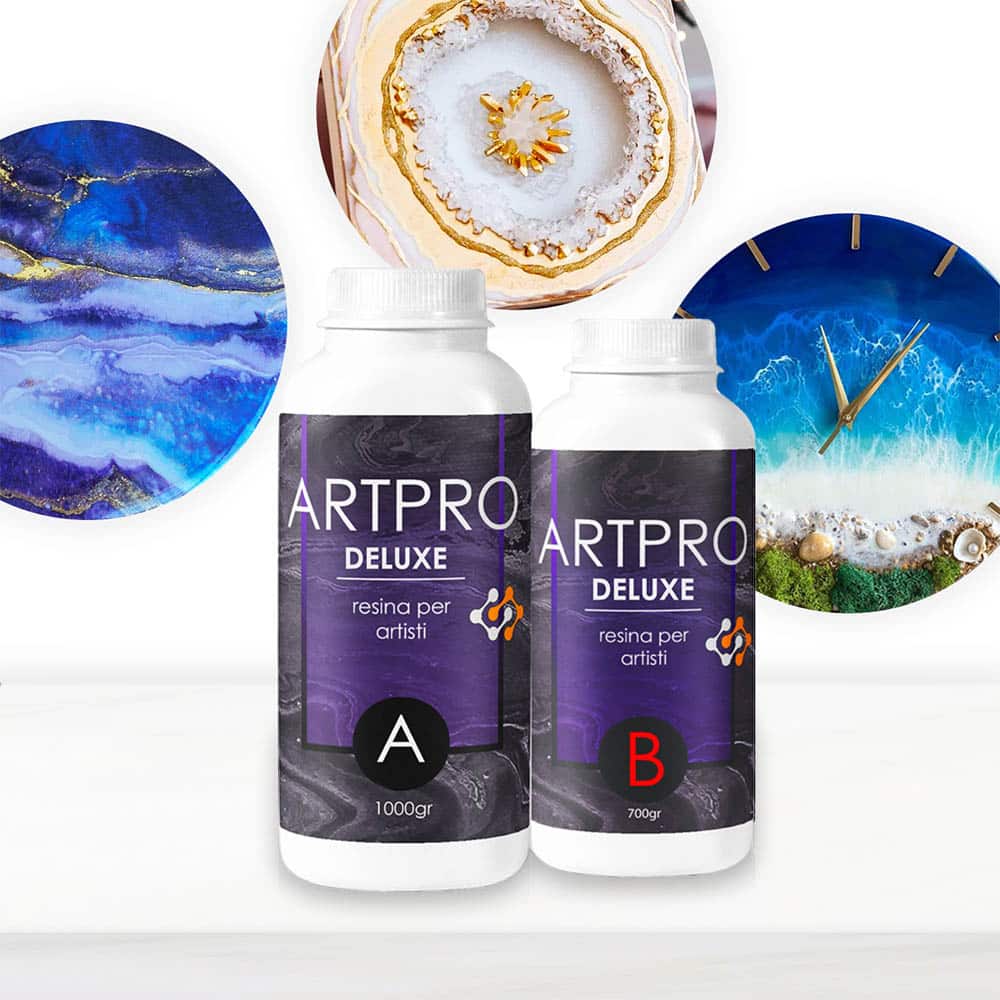 "Art Pro Deluxe" – Ultra-High Viscosity Epoxy Resin for ArtistsPrice range: £35.95 through £302.45"Art Pro Deluxe" epoxy resin offers very high viscosity and a clear, scratch-resistant finish suitable for artistic resin work.
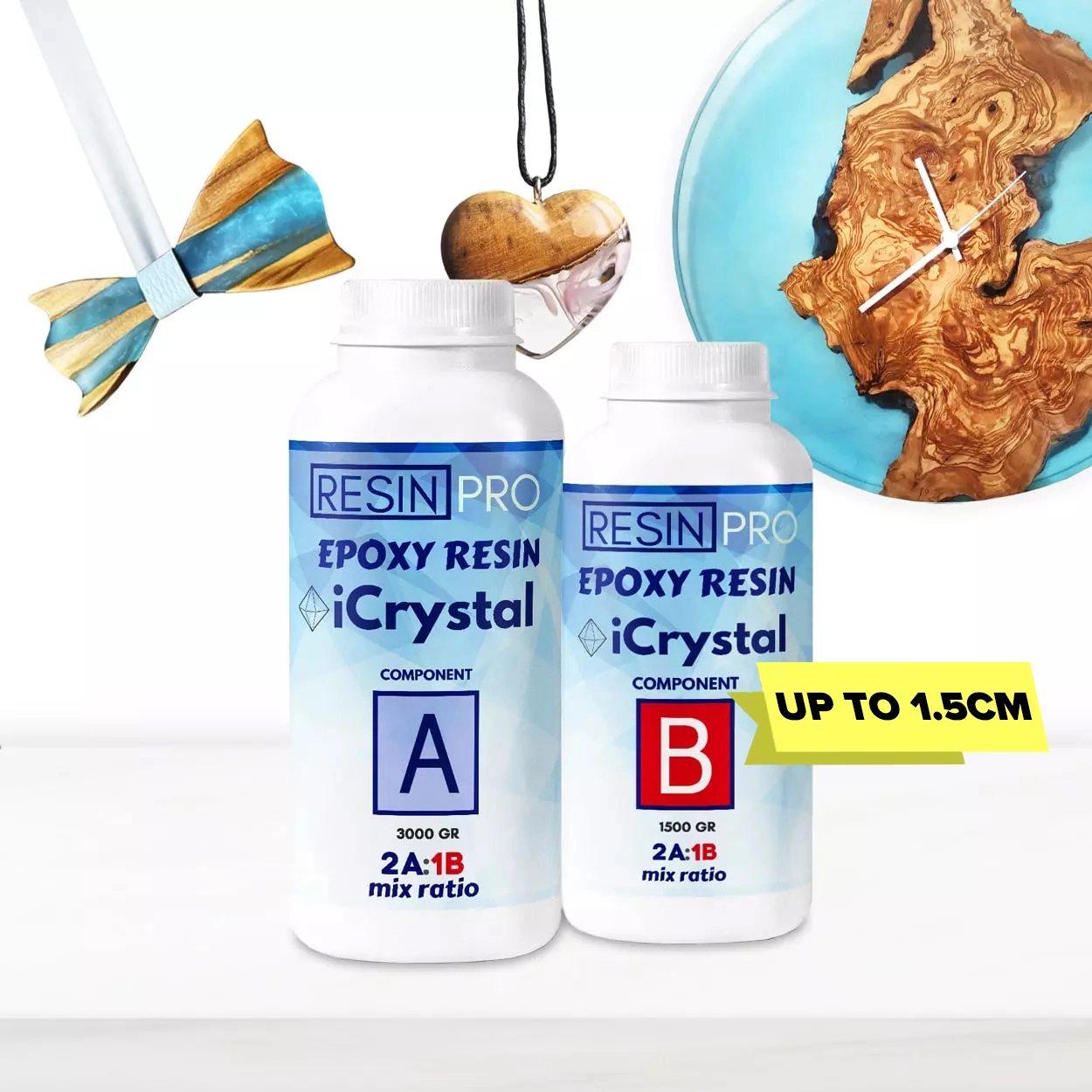 "Icrystal" – Clear Epoxy Resin – Odourless Formula – Up to 1.5cmPrice range: £12.45 through £341.45"Icrystal" is a transparent, odourless epoxy resin designed for clear coatings with up to 1.5cm layer per application.
Frequently Asked Questions
What is the best resin for coating a marble fireplace?
The Stone Effect Collection Epoxy Resin Countertop Kit is excellent for marble fireplaces, combining strength and creative finish options for lasting protection.
How should I prepare marble before resin coating?
Thoroughly clean and lightly sand the marble, then degrease with isopropyl alcohol to ensure ideal resin adhesion and a smooth, lasting result.
Is polyurethane (PU) coating suitable for fireplace marble?
Yes, Prolux PU coating is also suitable for marble, especially where extra durability and resistance to UV or abrasion are needed.
Is epoxy resin safe for indoor use on fireplaces?
Modern, odourless epoxy resins like Icrystal are safe for indoor decorative use once fully cured. Always work in a ventilated space during application.
How long does resin take to cure on marble fireplaces?
Initial curing varies between 12 and 48 hours, depending on the resin and room conditions. Full hardness may take up to 7 days.
Can decorative or art resin be used for marble fireplaces?
Art Pro Deluxe can be used for fine detail or surface layers on marble fireplaces, as long as application thickness and heat resistance are suitable for the area.
How can I avoid bubbles or surface defects when coating marble?
Mix resin slowly to prevent bubbles and use a heat gun or gentle blowing to remove surface bubbles immediately after application.