 Free shipping on orders over £29,85
  Shipping Tracking!


 Google
 Facebook
Is the resin still soft after 24-48 hours?
Understanding curing times and how to achieve a hard finish
One of the most common questions among resin crafters and professionals is whether resin should remain soft after 24-48 hours. Achieving a hard, durable finish depends on choosing the right resin and understanding its curing process. On this page, we’ll address the causes of softness, explain which resins set fastest, and guide you to suitable products from the ResinPro range for your application—be it kitchenware, jewellery, art, or furniture.
Whether you’re a first-time DIY enthusiast or an experienced maker, working with Multipurpose Epoxy Resins or exploring specialist resins for art, this guide will help you troubleshoot and select the best option for reliable curing every time.
Curing times: What to expect from different resin types
Different resins are engineered for specific uses, and their curing speed can vary considerably. For instance, “Icrystal” – Clear Epoxy Resin – Odourless Formula – Up to 1.5cm offers a fast curing time of around 24 hours, making it ideal for quick-turnaround projects. Meanwhile, “ICreation” – Fast Epoxy Resin, 6h Demoulding, Transparent Gloss Finish delivers a 6-hour demoulding time and is fully cured within about 12 hours—significantly reducing the risk of residual softness at the 24-48 hour mark.
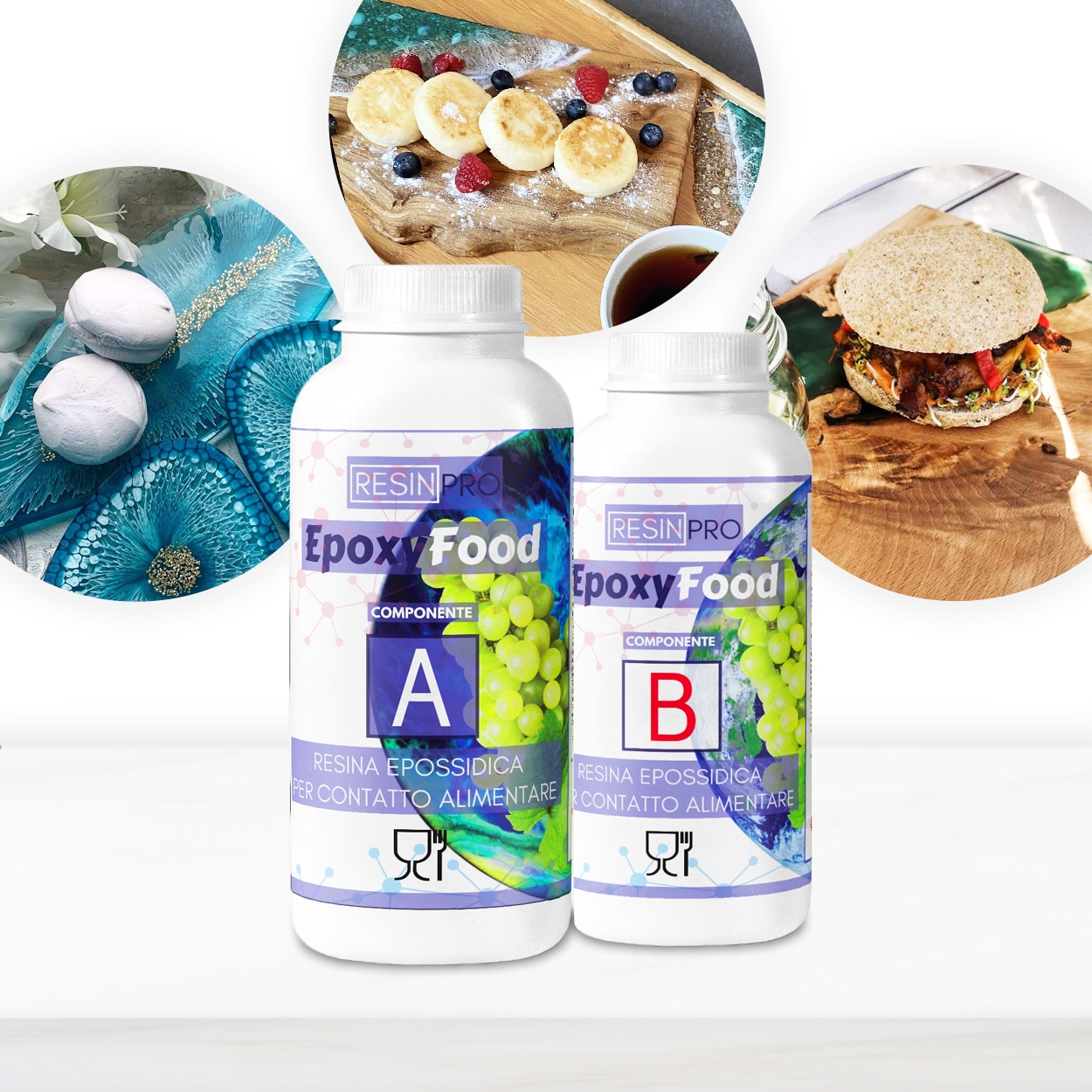
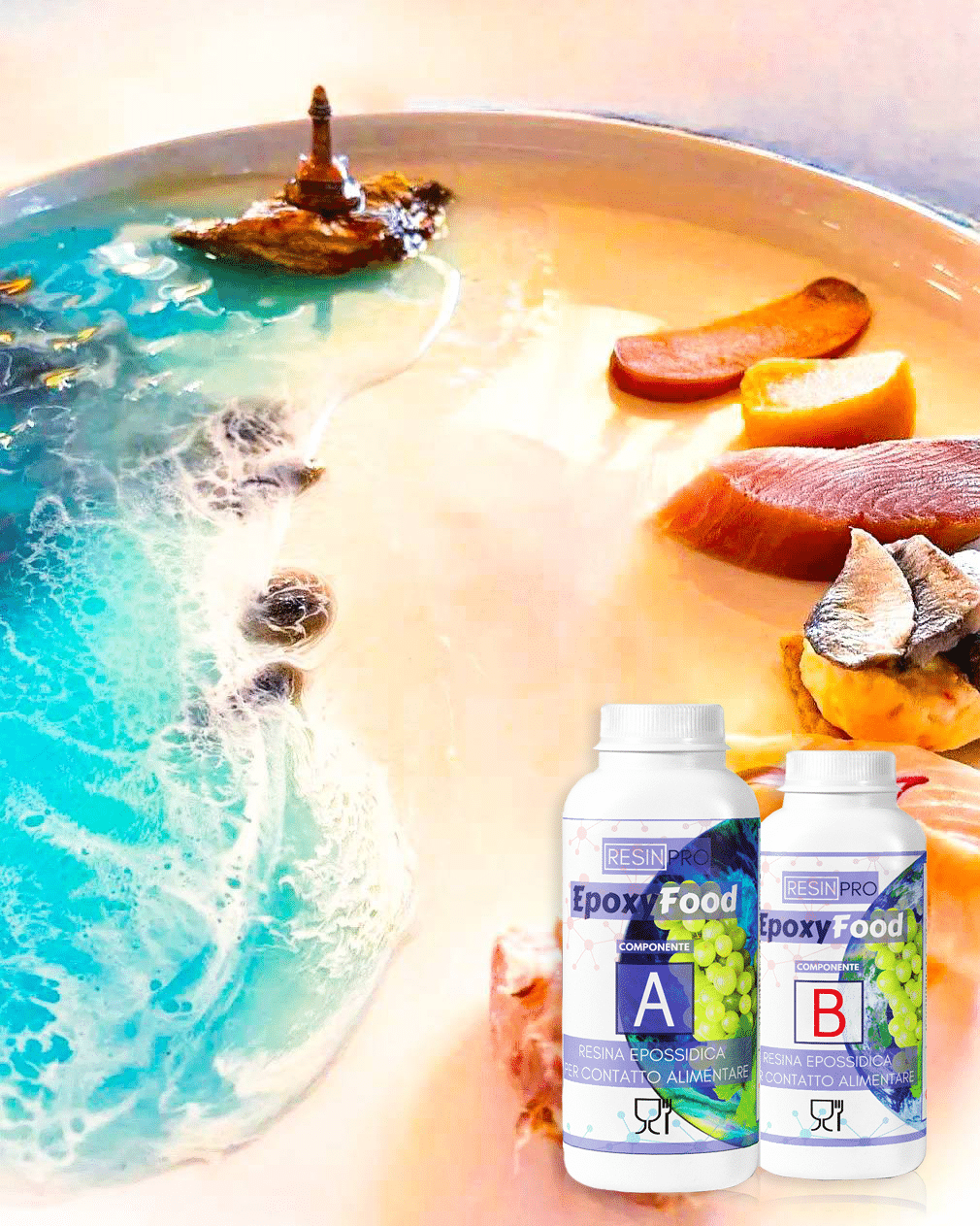
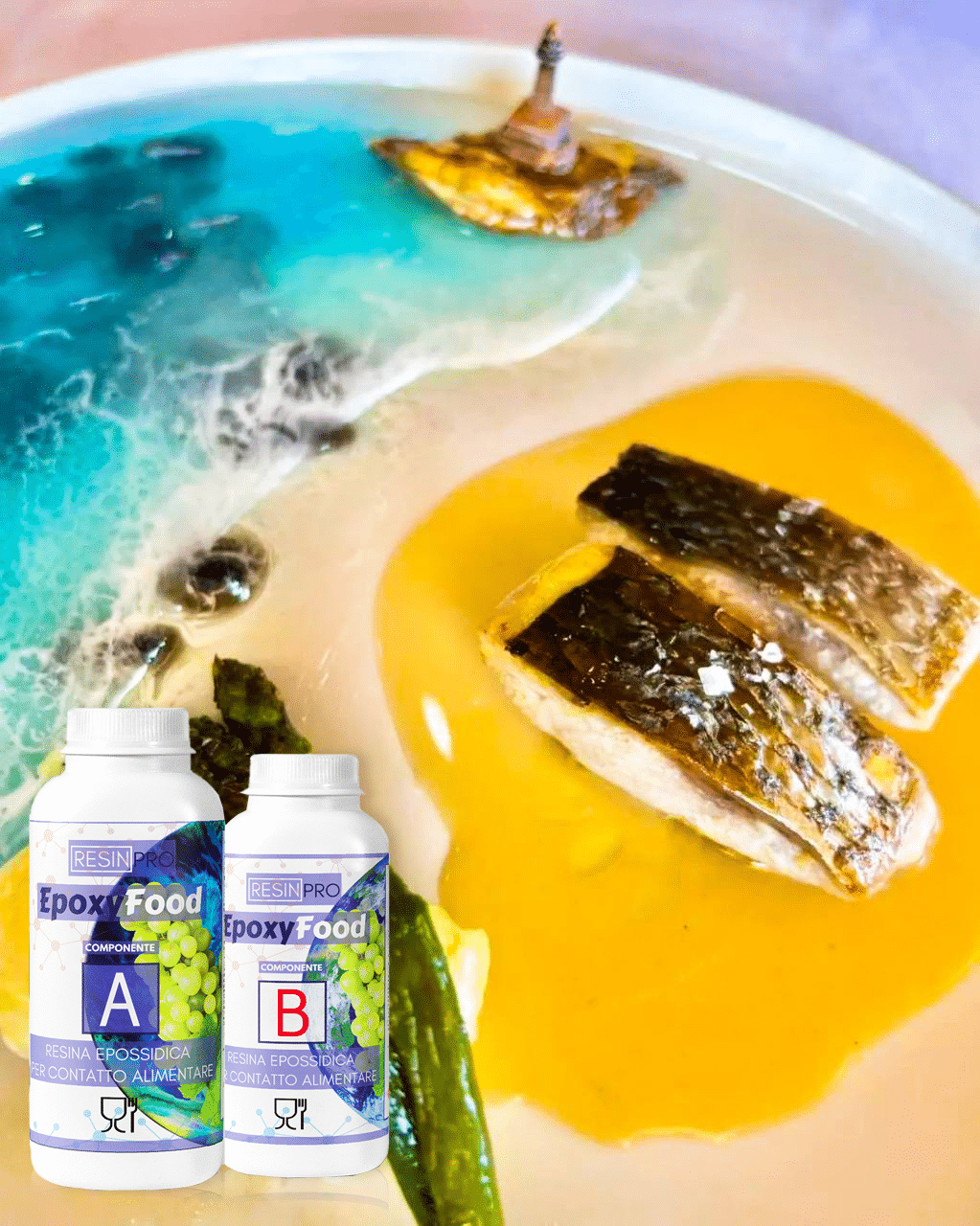
On the other hand, applications requiring waterproofing and food safety, such as kitchenware, benefit from specialist products like “EpoxyFood” – Certified Clear Food Contact Epoxy Resin for Coating. This food-safe resin is designed to be durable and fully cured within 24-48 hours, as long as proper ratios and procedures are followed.
For deeper castings and slabs, “Trasparente” – Multipurpose Clear Epoxy Resin for Casting – Up to 2cm is specifically formulated to deliver a hard, glossy finish for layers up to 2cm. Its crystal-clear, self-levelling nature—coupled with a non-toxic formula—helps ensure full curing within normal timescales.
Finally, if you need instant curing, “UV–Creation” – Fast Acrylic Resin, 3 Minute UV Cure provides handling-ready results in as little as 3 minutes under a UV lamp. This makes stickiness or softness after 24 hours extremely unlikely under recommended application conditions.
Artist-focused resins, such as “Art Pro Deluxe” – Ultra-High Viscosity Epoxy Resin for Artists, provide ultra-high viscosity for intricate designs and guarantee a tough, scratch-resistant finish after 24-48 hours when instructions are followed.
Comparing ResinPro ranges for hardness and curing reliability
To help you compare, here’s a quick overview of core curing characteristics for each featured resin:
- EpoxyFood: Fully cured within 24-48 hours, certified food safe, UV-resistant for kitchenware.
- ICreation Fast Epoxy: 6-hour demould, full cure at 12 hours, best for time-sensitive craft and jewellery projects.
- Trasparente Multipurpose Epoxy: For layers up to 2cm, typically curing hard in standard workshop environments.
- Icrystal Transparent Epoxy: About 24 hours to full cure, odourless and VOC-free for indoor use.
- UV–Creation Fast Acrylic: Instant curing in 2–3 minutes under UV, no mixing required.
- Art Pro Deluxe Epoxy: First cure in 10-12 hours, fully hard at 24-48 hours, excellent for artists needing high viscosity control.
By choosing the right resin and following product instructions, softness or tackiness beyond the expected curing window is almost always avoidable with ResinPro solutions.
How to Recognise When Your Resin is Fully Set
If your resin remains soft after 24-48 hours, gently press the surface with your nail or spatula—properly cured resin should resist indentation and feel hard and glassy. Slight warmth or flexibility may indicate incomplete curing, which can usually be remedied by allowing more time or improving room temperature and airflow.
Remember that the surface should be tack-free, especially with products like UV–Creation Fast Acrylic Resin and Art Pro Deluxe. If tackiness persists, review your ratio and environment before casting large projects.
Common causes of soft resin after 24-48 hours
Even with high-quality resins, improper handling can lead to incomplete curing or soft results. The most frequent cause of ongoing softness is incorrect mixing ratios, as is the case for both EpoxyFood (100:55 by weight) and the simple 2:1 systems for ICreation and Icrystal. Environmental factors—like cold or excessively humid conditions—can also prolong the curing period, particularly for thicker casts (e.g., “Trasparente” up to 2cm, or “Art Pro Deluxe” up to 1cm per layer).
Over-pouring beyond specified thickness may result in overheating, trapped bubbles, or delayed curing. Always follow the product layer recommendations, and if uncertain, test with smaller batches first. For UV–Creation resins, make sure a suitable UV lamp is used—air drying alone is insufficient for a proper cure.
Appropriate mixing, environmental control, and use of compatible additives (or none, where food safety is a priority) all assure optimal curing results with ResinPro products.
How to ensure your resin cures hard every time
If you’ve struggled with soft finishes before, adopting these best practices can make all the difference:
- Measure by weight, not volume, using digital scales for accuracy. This is crucial for EpoxyFood and ICreation Fast Epoxy.
- Mix slowly but thoroughly for at least 3-5 minutes, scraping all surfaces of your container.
- Respect environmental recommendations—working around standard UK room temperature (18–23°C) is ideal.
- Only use compatible colourants and additives. For UV resins, select designed-for-UV options such as Colourfun colourants.
- Layer in increments if working above recommended pour depth—this is central to avoiding overheating with “Trasparente” or “Art Pro Deluxe”.
If you still experience softness, check both the batch size and your mixing ratios, as well as the advice provided in each ResinPro product’s detail page.
Troubleshooting: Still soft after two days?
If your resin is still soft after 48 hours, carefully verify the mixing ratio and layer thickness for your chosen product. For instance, Trasparente and Icrystal are designed for thin pours—exceeding these can slow or stall curing. Check your workspace temperature, ensure ingredients are fresh, and consult the relevant product category for further support or alternatives.

Explore the full ResinPro range for hard, reliable finishes
For kitchen use, EpoxyFood offers certified safety and excellent UV protection. For rapid craft and jewellery projects, consider ICreation, or for swift one-component solutions, UV–Creation—both trusted for quick, hard results. Deep casting and art projects of all sizes can benefit from the clarity and robustness of Trasparente, the versatility and odourless safety of Icrystal, or the expert-grade finish of Art Pro Deluxe.
For more details or tailored product suggestions, browse Resin for Jewellery, UV resins and accessories, or explore our Resins for tables and surfaces finishes and Resins for pour paint and accessories categories.
- "EpoxyFood" – Certified Clear Food Contact Epoxy Resin for CoatingOriginal price was: £39.00.£32.85Current price is: £32.85."EpoxyFood" is a food-safe transparent resin suitable for coating items like plates and cutting boards, offering clarity with a gloss finish.
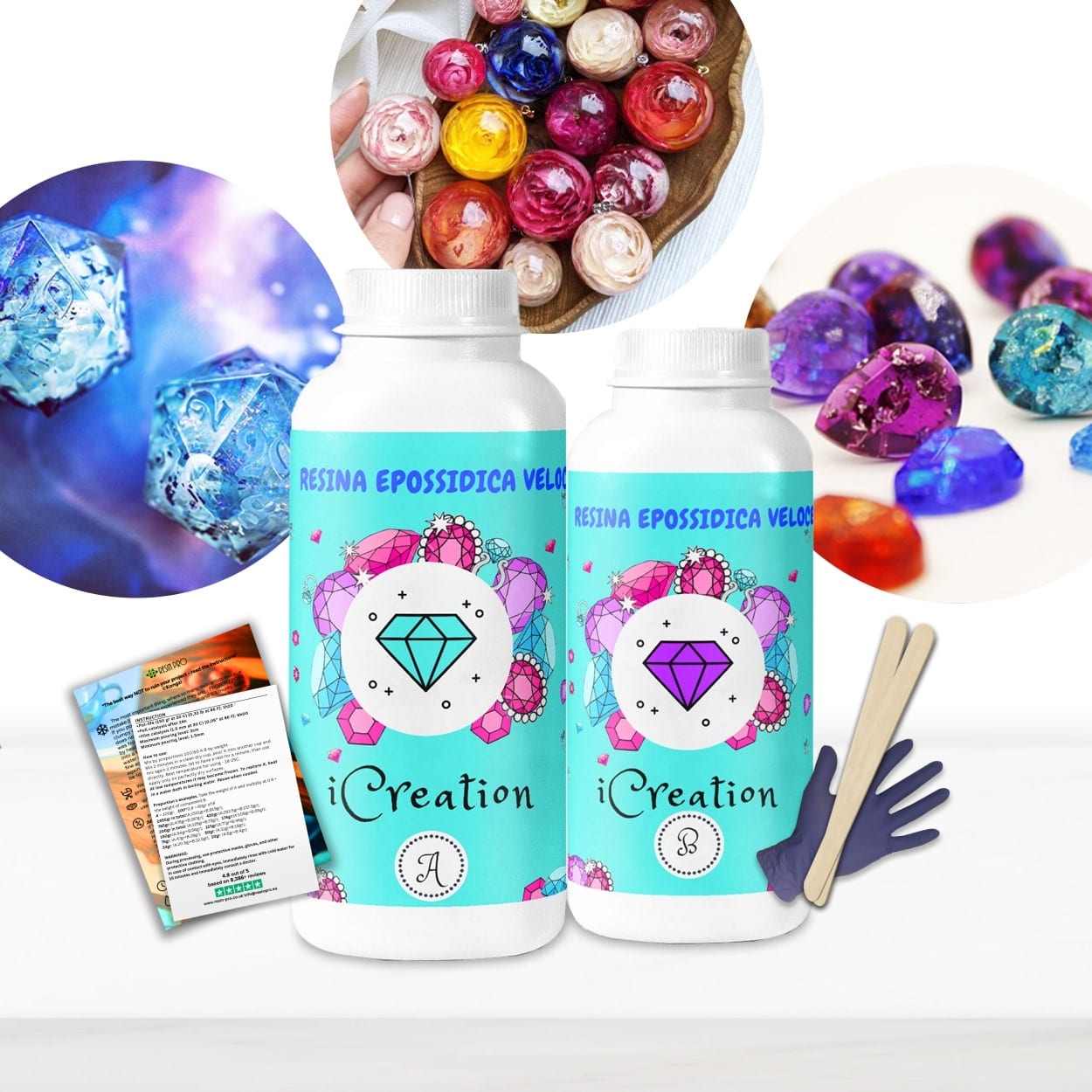 "ICreation" – Fast Epoxy Resin, 6h Demoulding, Transparent Gloss FinishPrice range: £19.40 through £52.85ICreation Fast Epoxy Resin offers a fast curing, transparent, glossy finish suitable for jewellery and craft projects.
 "Trasparente" – Multipurpose Clear Epoxy Resin for Casting – Up to 2cmPrice range: £8.45 through £948.85"Trasparente" clear epoxy resin is suitable for detailed castings and tables up to 2cm thick, offering a clear, glossy finish for various projects.
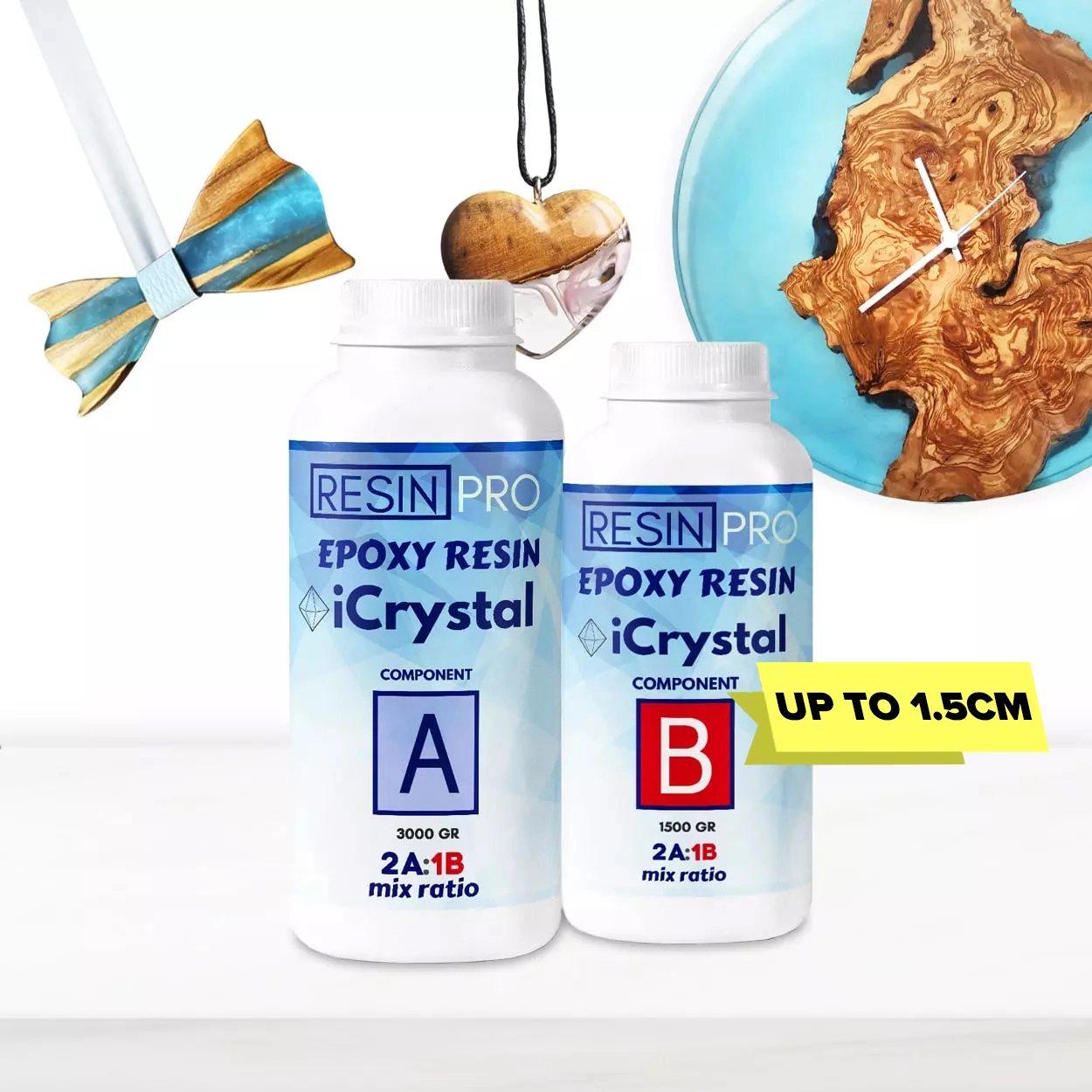 "Icrystal" – Clear Epoxy Resin – Odourless Formula – Up to 1.5cmPrice range: £11.65 through £954.85"Icrystal" is a clear epoxy resin designed for artistic and craft uses and fits the theme of resin softness after 24-48 hours.
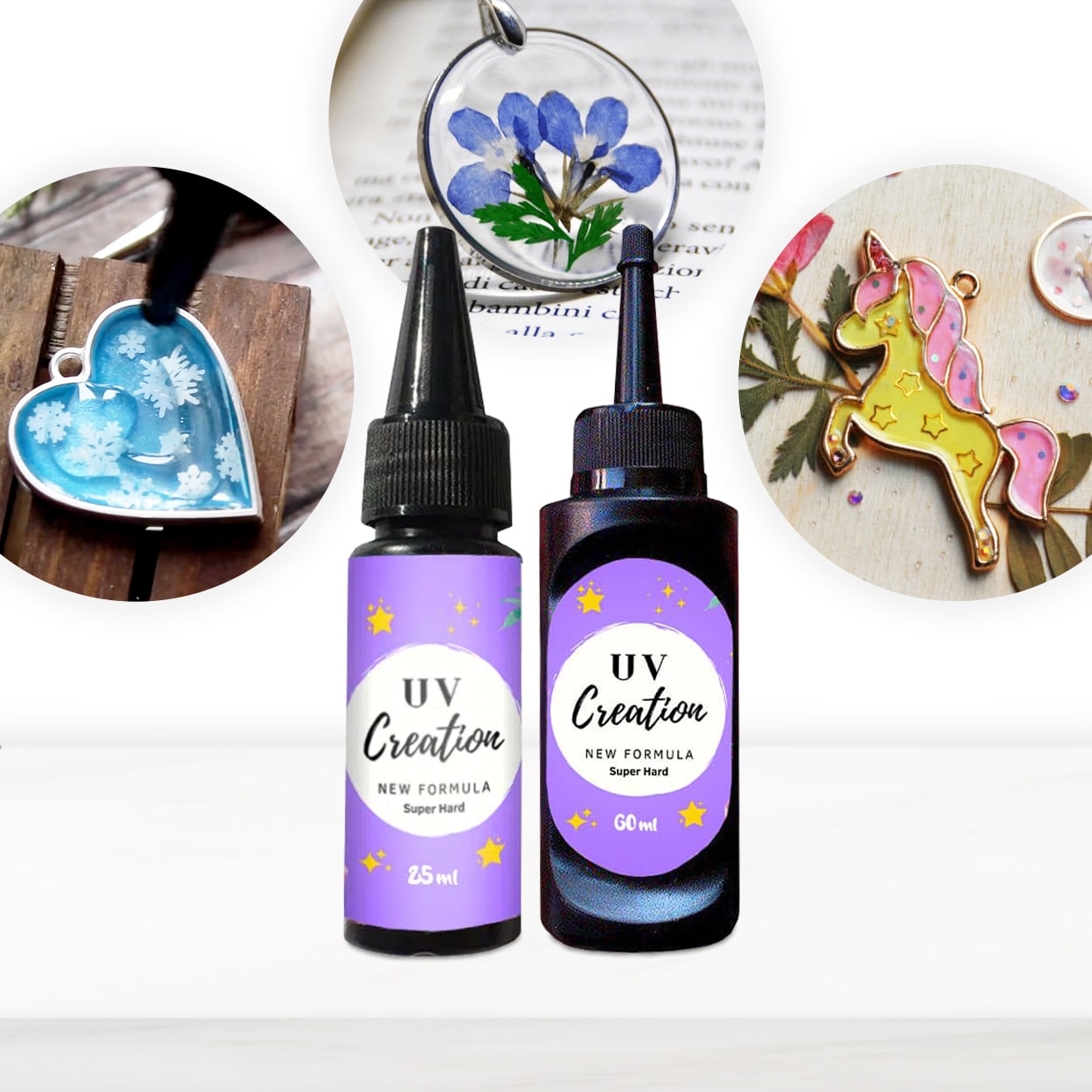 "UV–Creation" – Fast Acrylic Resin, 3 Minute UV CurePrice range: £7.85 through £59.85"UV–Creation" is a ready-to-use acrylic UV resin curing quickly for crafting jewellery with a clear, non-yellowing finish.
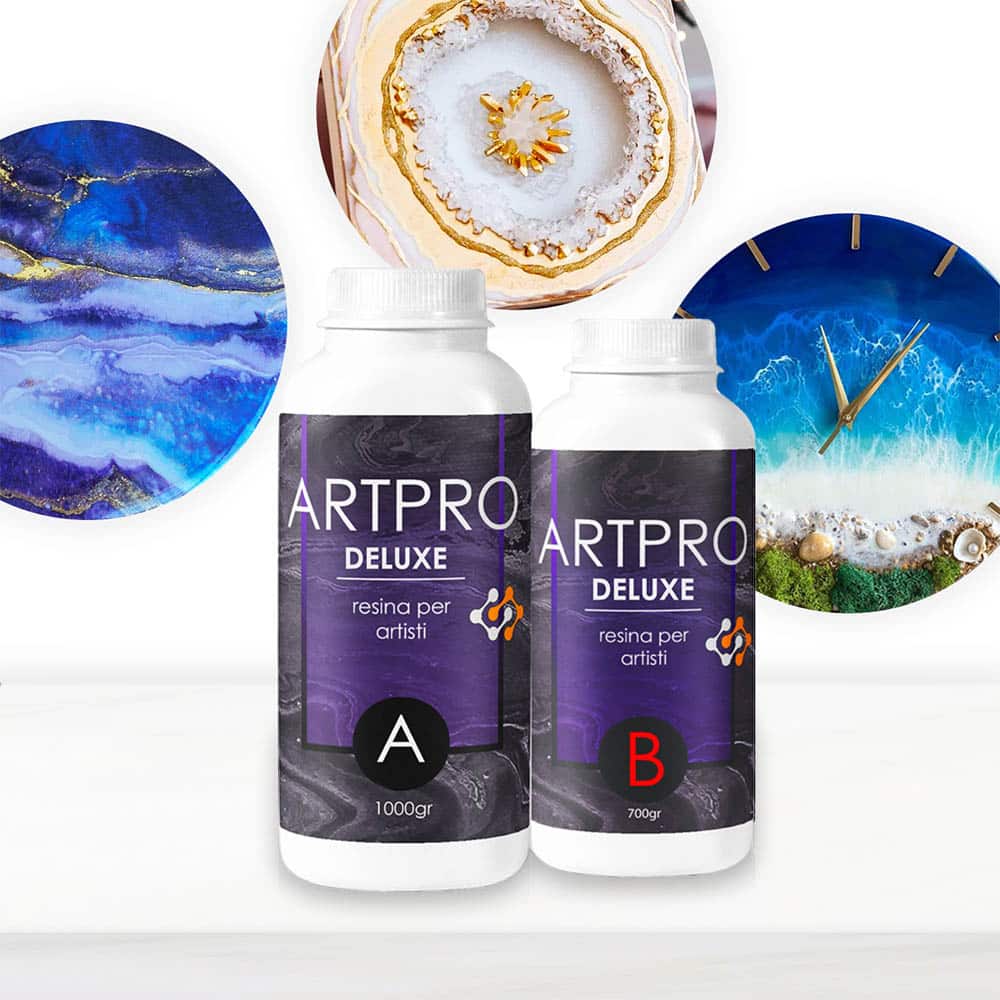 "Art Pro Deluxe" – Ultra-High Viscosity Epoxy Resin for ArtistsPrice range: £33.85 through £287.85Art Pro Deluxe is an ultra-high viscosity epoxy resin providing precise control and a glossy, scratch-resistant finish for resin art.
Frequently Asked Questions
Why is my resin still soft after 24-48 hours?
If your resin hasn’t cured fully after 24-48 hours, the most likely reason is an incorrect mixing ratio or environmental factors such as low temperature. Always check the product instructions for mixing by weight and ensure you pour within recommended layer limits for your chosen resin.
Which resin cures fastest for crafts or jewellery?
For the quickest curing, opt for UV–Creation (3 minutes under a UV lamp) or ICreation Fast Epoxy (demould in 6 hours, fully hard in 12 hours). Both are excellent for time-critical creative projects.
Is there a food-safe epoxy resin for kitchen projects?
Yes, "EpoxyFood" is certified for direct contact with food when used as directed. It is ideal for coating plates, chopping boards and cups, achieving a glass-hard, non-toxic surface within 24-48 hours.
Can pouring resin too thick leave it soft or with bubbles?
Yes, exceeding the specified layering (e.g., beyond 2 cm for "Trasparente") can slow curing and cause soft or uneven results. Always pour in increments according to your resin’s guidelines for best results.
Does sticky resin after two days mean it has failed?
Sticky or tacky resin after 48 hours suggests incomplete curing, likely due to measuring, mixing, or environmental issues. If the mixing ratio and method were correct and the temperature is suitable, allowing more time may help. If it's still tacky after several days, re-casting may be necessary.