 Free shipping on orders over £29,85
  Shipping Tracking!


 Google
 Facebook
← Back to What is epoxy resin used for?
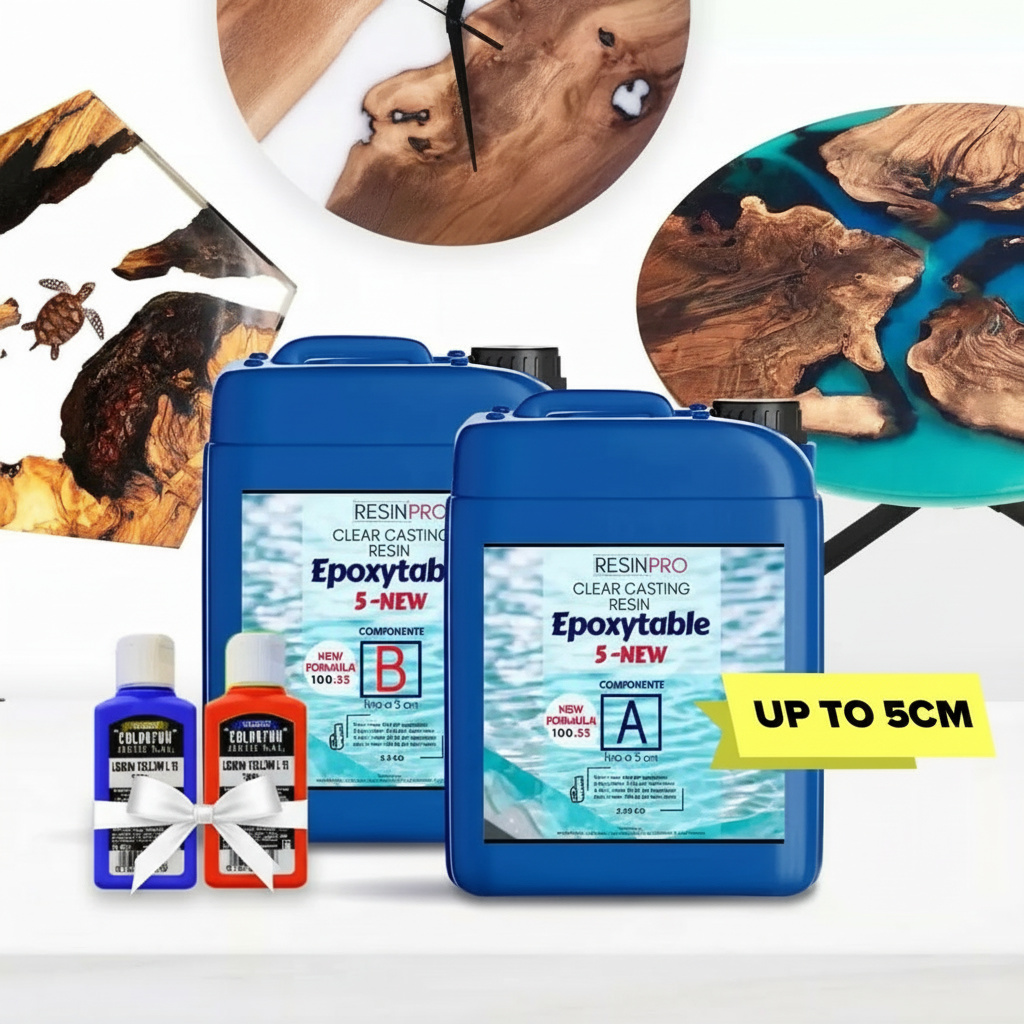
When working with epoxy resin for larger or thicker projects, understanding the concept of a low exothermic reaction is essential. It helps ensure safer pours and a superior finish, especially for deep or large castings often used in furniture making and art.
What Is a Low Exothermic Reaction?
The exothermic reaction occurs when epoxy resin cures and releases heat. Products formulated for a low exothermic reaction generate less heat during curing, which helps to prevent problems like cracking, warping, or cloudiness caused by overheating. This property is particularly important for projects where resin is poured in thick layers, as standard epoxies can become dangerously hot in deep pours.
Choosing the Right Resin for Your Pour
If your project involves layers thicker than 2cm—such as river tables or large decorative pieces—always select an epoxy designed for low exothermic reaction. For example, EpoxyTable 5-Five handles depths up to 5cm, maintaining minimal heat development and reducing the risk of faults. For even deeper applications, a dedicated product like Epoxytable 10-Ten supports castings up to 10cm thick while keeping the curing process stable and controlled.
When Does Low Exothermic Reaction Matter Most?
- Deep pours: Projects exceeding 2cm in thickness, such as resin river tables or artistic sculptures.
- Large surface areas: Pieces spanning more than 100cm, or using over 8kg of resin in a single pour.
- Bubble-free finishes: Reduced heat also helps minimise bubble formation, leading to crystal-clear results.
Related products
Related guides
Understanding and selecting a low exothermic reaction epoxy is key for safe, professional outcomes in large or deep resin work. For more on choosing the best resin for your creative projects, see our main guide on what epoxy resin is used for.