 Free shipping on orders over £29,85
  Shipping Tracking!


 Google
 Facebook
← Back to How do you work with resin?
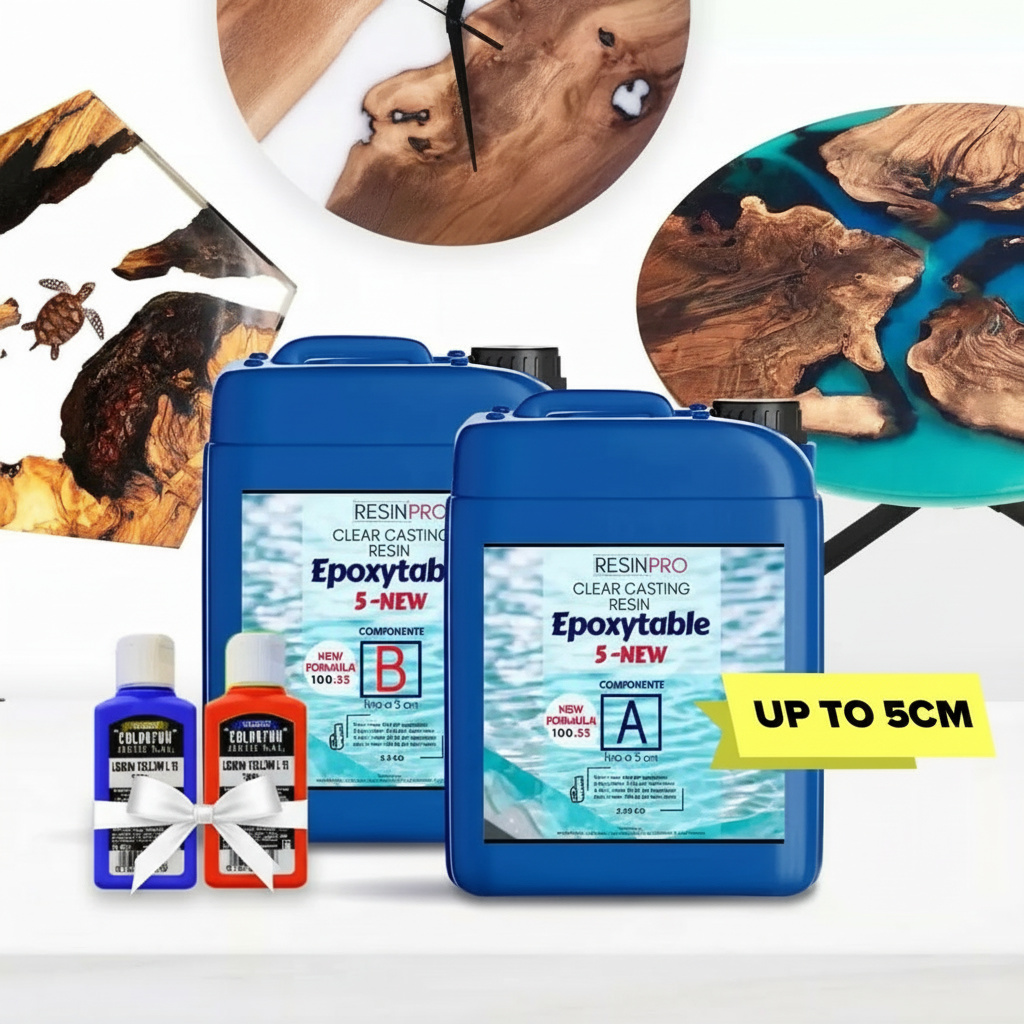
Deep pour resin projects require careful material selection, especially when casting layers up to 5cm thick. Using a low exothermic epoxy is key to achieving clear, crack-free results for furniture and craft applications.
What Is a Low Exothermic Reaction in Epoxy Pours?
When working with epoxy resin, the heat generated during curing is called the exothermic reaction. Low exothermic systems are specially formulated to release heat slowly, which significantly reduces the risk of cracks and bubbles when pouring thick layers—particularly in castings up to 5cm deep.
For deep pours such as resin river tables or large moulds, this quality is essential. Epoxy resins like EpoxyTable 5-Five are developed for this purpose, allowing reliable casts up to this thickness in a single application while maintaining optical clarity.
Practical Guidance for 5cm Deep Castings
- Resin Selection: Ensure your resin is tested for pours up to 5cm, as not all resins are suitable for deep applications.
- Mixing and Pouring: Follow the manufacturer’s recommended ratio; for EpoxyTable 5-Five, mix 100 parts resin to 55 parts hardener by weight. Pour slowly to allow bubbles to rise and dissipate.
- Environmental Control: Work in a dust-free, stable temperature (ideally 20–25°C) area to help the resin cure evenly.
- Safety: Wear nitrile gloves to protect your hands from resin contact, and ensure good ventilation during the process.
When Does a 5cm Pour Matter?
Choosing a resin with low exothermic reaction becomes especially important for large projects—think tables, countertops, or embedding decorative objects. It enables thicker, clearer pours in fewer steps, saving time and reducing the complexity of your build. For pieces requiring even greater thickness, it is safer to pour in multiple layers, letting each one cure before adding the next.
Related products
Related guides
Understanding low exothermic epoxy for deep casting opens the door to ambitious resin projects—like river tables and embedded designs. For a broader overview on working with resin, explore all the guidance in our main how to work with resin hub.