 Free shipping on orders over £29,85
  Shipping Tracking!


 Google
 Facebook
← Back to How much hardener should be used with penetrating resin?
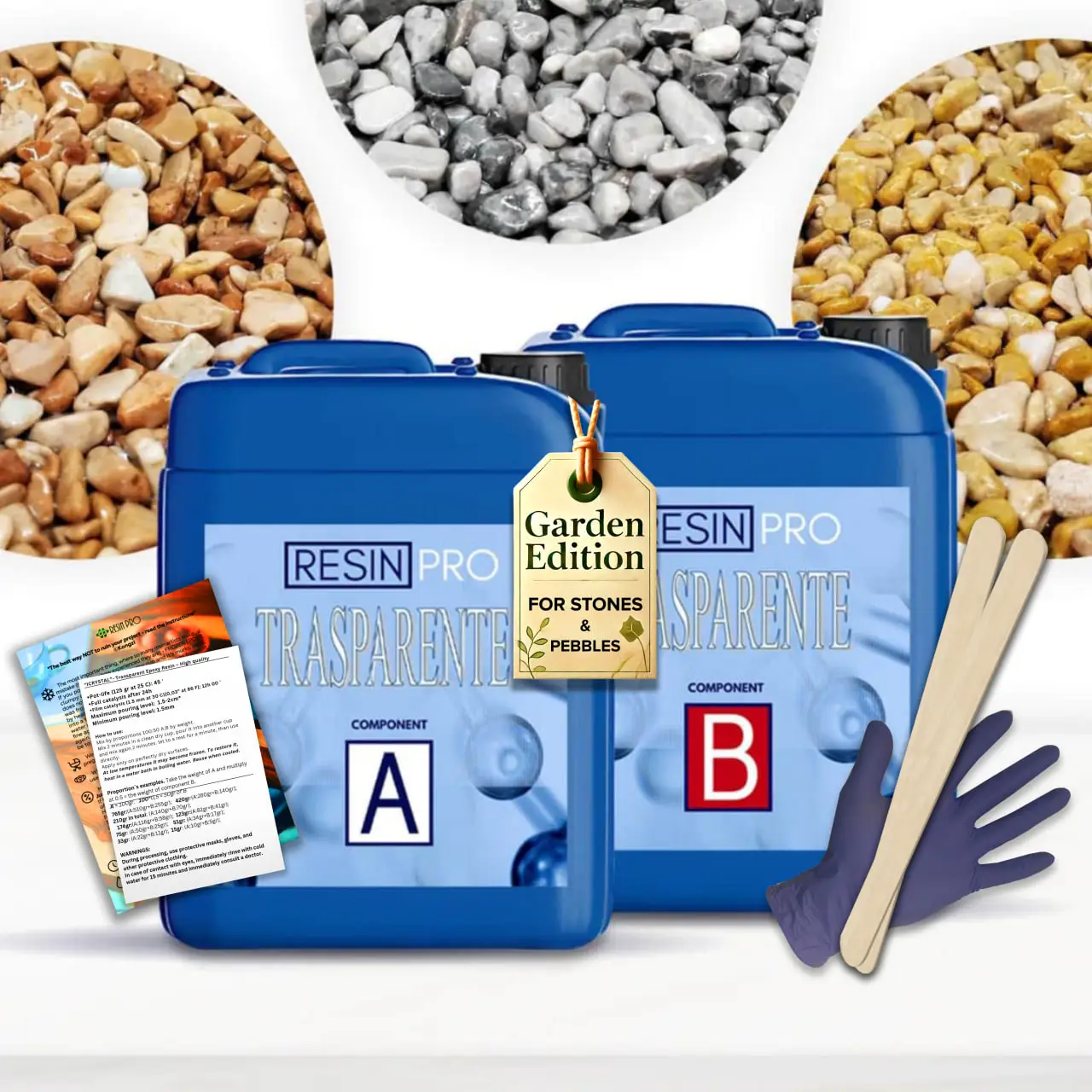
When installing pebble or aggregate flooring, the ability of the resin to saturate and bind each particle is crucial. Low viscosity resins streamline this process, ensuring the finished surface is both attractive and durable.
Why Low Viscosity Matters
A low viscosity epoxy resin flows rapidly around and between aggregate pieces, resulting in consistent and thorough impregnation. This fluidity lets the binder reach even the smallest gaps, creating a strong hold that prevents loose stones and potential surface weaknesses.
- Ensures full wetting and support of each particle
- Improves adhesion for a stable, walkable surface
- Reduces trapped air and bubbles, producing a clearer finish
Choosing and Using a Deep-Penetrating Binder
When selecting a binder for decorative pebble or grit surfaces, always opt for an epoxy designed to offer both clarity and low viscosity. “Trasparente” is formulated specifically for deep, quick aggregate impregnation and UV resistance, providing a professional, long-lasting look. For best results, mix the aggregate and resin thoroughly before application to guarantee uniform coverage and maximum bond strength.
When Is Deep Aggregate Impregnation Essential?
Rapid and deep impregnation is especially important for external surfaces exposed to foot traffic or the elements, such as driveways, paths, or garden features. It also benefits decorative projects, where a flawless, bubble-free finish is desired.
Related products
Related guides
Understanding the advantages of low viscosity epoxies ensures impeccable, robust surfaces. For more details on mixing ratios and hardener use with penetrating resins, see our main guide.