 Free shipping on orders over £29,85
  Shipping Tracking!


 Google
 Facebook
← Back to Epoxy resin. Single or multiple pours?
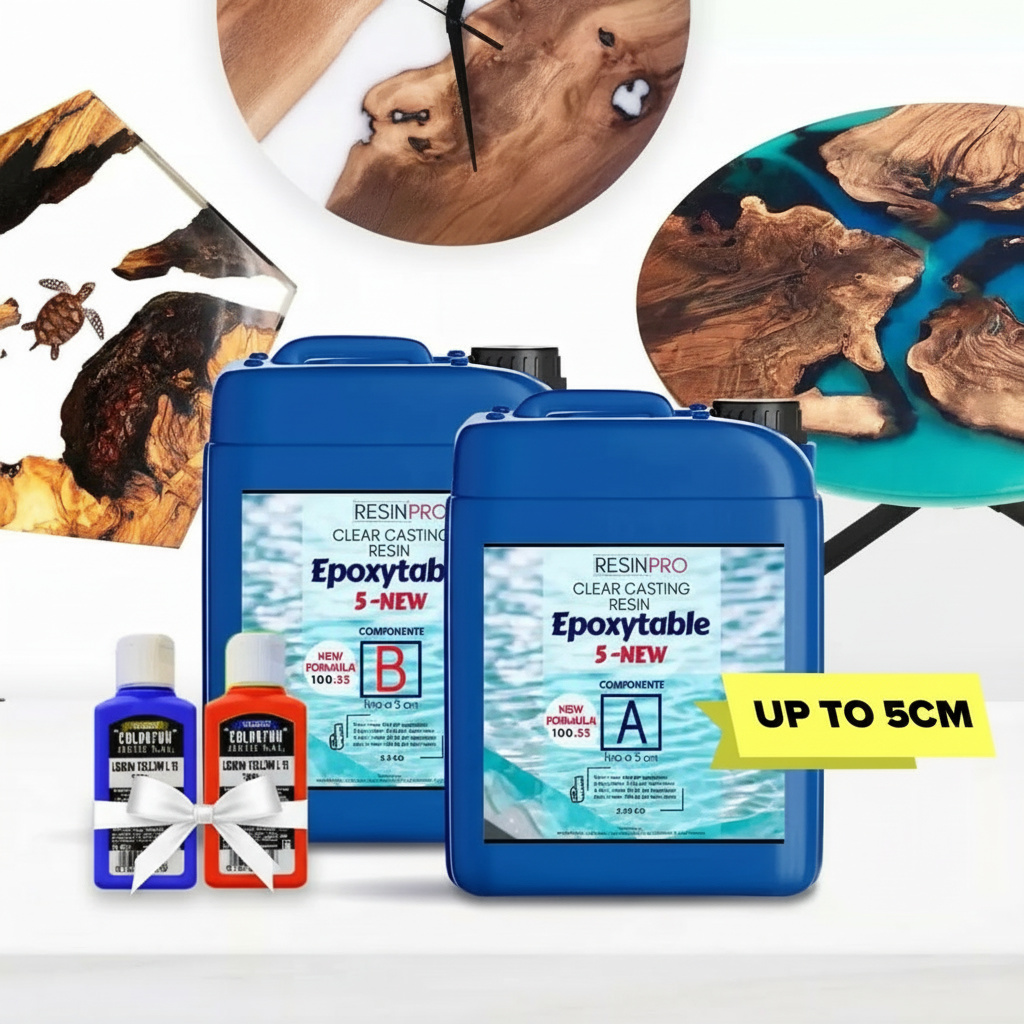
Deciding whether to pour epoxy resin in a single layer or multiple stages depends on your project’s size and the resin you select. Understanding pour depth is crucial for safe, successful results and a flawless finish.
Why Pouring Depth Matters
Every epoxy resin comes with a manufacturer-recommended maximum pour depth per application. Pouring thicker than advised may cause overheating or incomplete curing, especially in large surfaces or deep castings. For example, when working on slab tables or river tables wider than 100cm or involving more than 8kg of resin, it’s best to split into several layers. This helps maintain clarity and structural integrity.
How to Safely Build Up Resin Layers
If your project exceeds a single-layer pour recommendation, apply resin in separate stages. Allow each layer to partially cure — often 6–8 hours for products like EpoxyTable 5-Five — before adding the next. This layering method reduces heat build-up and secures firm bonding between layers. For intricate or smaller projects (up to 2cm thickness), a product such as “Trasparente” may be poured in a single go, but anything deeper calls for a staged approach.
Choosing the Right Resin for Your Project
- Shallow projects (up to 2cm): Use a clear casting resin such as “Trasparente”.
- Medium depth (up to 5cm): Select a dedicated deep pour option like EpoxyTable 5-Five.
- Super-deep casting (up to 10cm): For the thickest pours, “Epoxytable 10-Ten” is designed for safe, bubble-free results.
Always consult your chosen resin’s guidelines on thickness and curing times to prevent unwanted effects.
When Multiple Pours Are Essential
Layered pours are vital when working on extra-large table projects, moulds with significant depth, or whenever the total resin volume could exceed recommendations. This practice ensures safety and maximises durability, particularly with deep river tables or heavy castings.
Related products
Related guides
Choosing between a single pour or multiple stages is fundamental for reliable curing and a professional result. Refer to your epoxy’s instructions and, for deeper or larger castings, consider staged applications – explore further in our main epoxy guide.