 Free shipping on orders over £29,85
  Shipping Tracking!


 Google
 Facebook
← Back to How do you colour UV resin?
Getting the balance right when mixing pigment with UV resin is crucial for beautiful, properly cured creations. Using too much colour can result in problems, but with the correct ratio you’ll achieve strong, lasting colour without compromising the finish.
Best pigment-to-resin ratio
For UV resin, pigments should usually account for less than 5% of the resin’s weight. This conservative approach ensures enough UV light can penetrate and fully cure your project. Pigment powders, dispersions, and liquid dyes all follow this general rule—always start with a small quantity and build up if you want a deeper hue.
Adding more than 5% can lead to incomplete curing, making surfaces sticky or soft. Clear, intense colours can be achieved by using products such as Magic Crystal Transparent Resin Colour, which are specially formulated for clarity at low doses.
How to mix for reliable results
Begin by weighing your resin and then calculate up to 5% for your pigment. Sprinkle or drip pigment gradually, mixing thoroughly after each addition. Test a small amount on a disposable surface and cure briefly to check both colour depth and curing quality.
- Work in thin layers when possible, especially with opaque or metallic pigments.
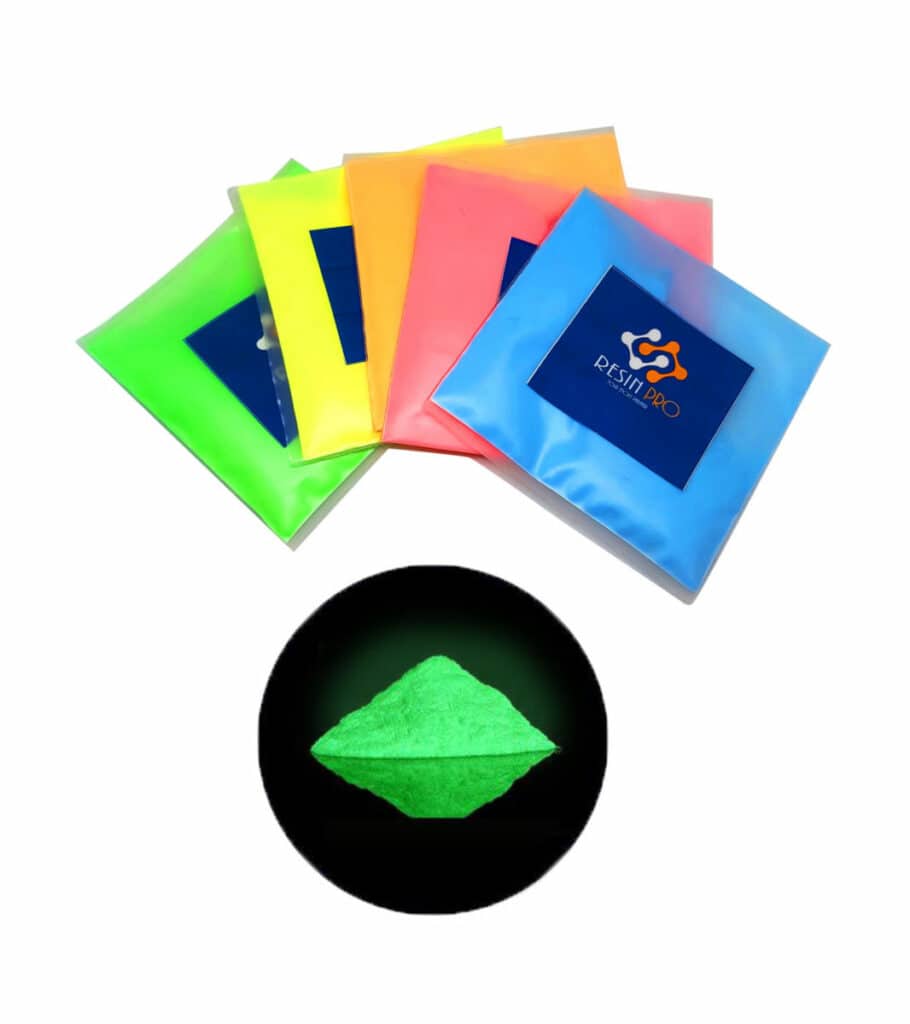
- If using powders (like Fluorescent UV Pigment Powder), mix until smooth with no clumps.
- For interference or metallic effects, as with Sahara Space Interference Metallic Pigment, use well below the 5% limit.
When this matters
Staying within the recommended pigment limit is especially important for UV resin jewellery, small casts, detailed art, and projects where a smooth, glassy finish is critical. It also helps avoid wasted materials and disappointing results.
Related products
Related guides
Choosing the right ratio and mixing technique ensures your coloured UV resin cures thoroughly, looks vibrant, and remains durable. For further details on colouring options and techniques, visit our main guide on how to colour UV resin.