 Free shipping on orders over £29,85
  Shipping Tracking!


 Google
 Facebook
← Back to At what temperature does resin crystallise?
Keeping epoxy resin transparent and stable over time is a top concern for makers, especially when aiming to avoid issues like yellowing or unwanted crystallisation. UV filters play a valuable role in promoting long-lasting clarity and can assist in limiting certain crystallisation effects in clear resin projects.
How UV Filters Influence Crystallisation
UV filters are additives included in epoxy resin formulations primarily to reduce the rate of yellowing from sunlight or indoor lighting. While their main purpose is to maintain the fresh transparency of cured resin, UV filters also promote stability within the resin matrix. This stabilising effect does not completely stop crystallisation from happening, but by protecting against UV degradation, UV filters help slow down the chemical changes that could otherwise encourage microcrystals or cloudiness. When used alongside proper temperature management, they contribute to a more predictable and uniform cure.
Best Practices for Achieving Clarity
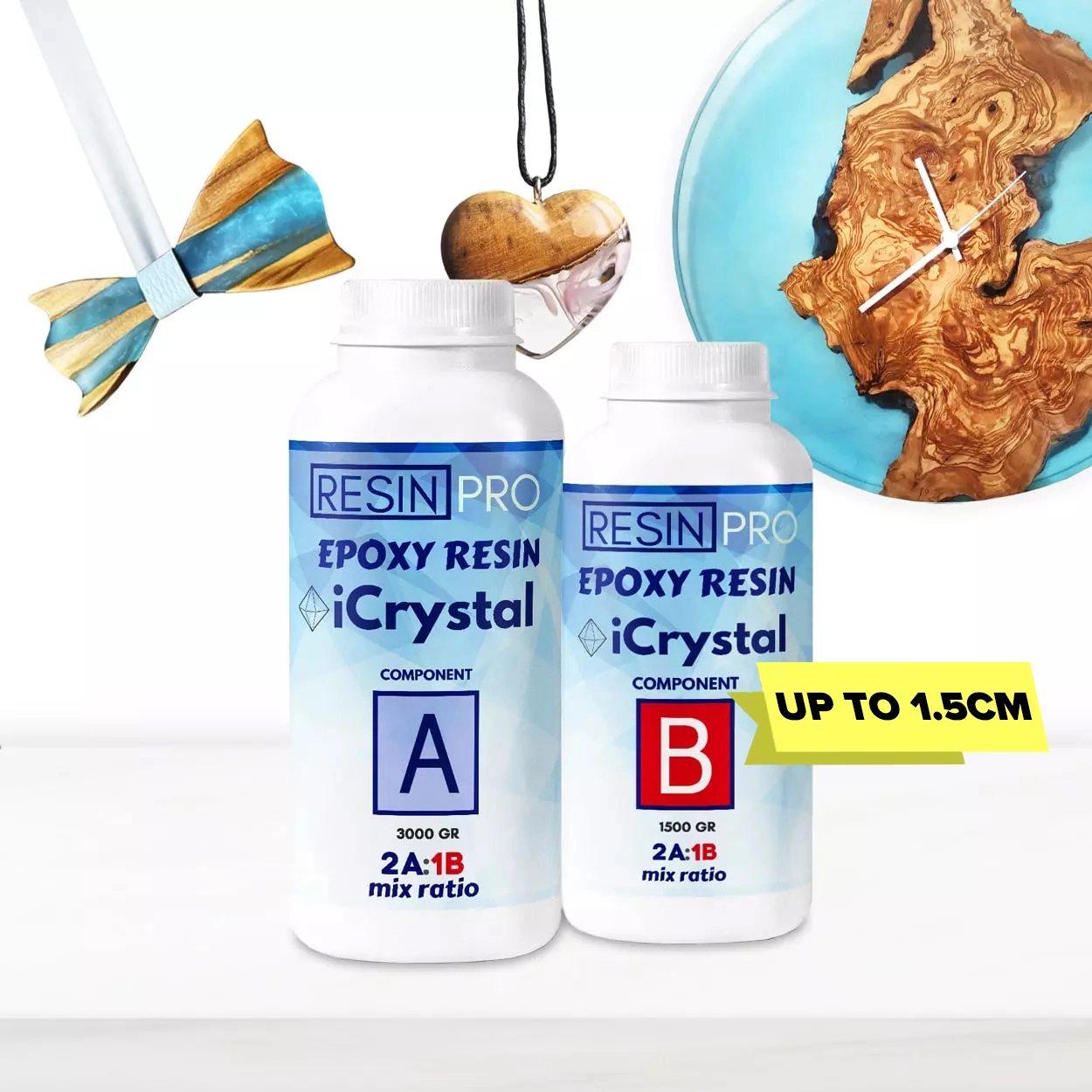
To minimise crystallisation and preserve the intended clarity, always use an epoxy resin designed for your project’s thickness and exposure. Choose resins with integrated UV filters, such as “Icrystal” – Clear Epoxy Resin – Odourless Formula – Up to 1.5cm, for items where transparency and stability are priorities. Pair UV-resistant resins with steady, moderate ambient temperatures and avoid drastic cold, which can increase the crystallisation risk even with filters present.
When UV Filter Protection Matters Most
- Outdoor or sunlit tabletop coatings
- Deep or thick-layer castings where clarity is vital
- Decorative pieces and furniture subject to long-term display
In these scenarios, using epoxies with UV filters helps guard against dulling as well as unwanted textural changes, supporting the original look throughout use.
Related products
Related guides
For resin projects where optical clarity and longevity matter, choosing an epoxy with built-in UV filters supports both colour stability and resistance to crystallisation. For further details on how temperature and other factors impact resin behaviour, explore our main guide on at what temperature does resin crystallise.