 Free shipping on orders over £29,85
  Shipping Tracking!


 Google
 Facebook
Which wood is best for resin pours?
Compare wood types for art, stability and brilliant resin finishes

If you are planning a resin pour art project, one of the most important first steps is choosing the right wood base. The type of wood you select affects your artwork’s stability, longevity, and overall finish. This guide compares popular wood options for resin pours—such as natural wood slices and MDF art boards—so you can select the best base for striking results every time. Whether you are a beginner, keen hobbyist, or a professional maker, read on for clear pros, cons, and real product examples to inspire your next project.
Wood Types for Resin Pours: Comparison and Overview
When working with resin, wood choice matters as much as the resin itself. For artistic pours, there are two main approaches: using natural wood slices (often kiln-dried for stability and unique grain) or engineered wood panels like MDF (medium-density fibreboard) for a predictable, smooth surface. Natural wood brings organic beauty, rustic edges, and individual character but needs proper drying and preparation to prevent warping or cracks. MDF, on the other hand, provides a completely flat, stable base that is especially popular for modern wall art, ocean effects, and geode patterns. The best choice depends on your project style, desired effect, and preparation time available.

Visual Inspiration: Wood and MDF Resin Art Examples
Explore the creative possibilities of both natural wood slices and MDF art boards in resin projects. Notice how wood grain adds organic warmth, while MDF’s clean contours support crisp geode effects, abstract pours, and vibrant ocean art visuals.
“Forest Glow” – Resin Art Kit with Wood Slices, Pigments, and Epoxy Resin
This dedicated kit includes two pre-prepared 15cm natural wood slices, kiln-dried for maximum resin adhesion and crack resistance. The kit combines the character of real wood with everything needed for resin pours, including medium-viscosity epoxy, metallic pigments, and complete accessories. The wood slices are ideal for those creating rustic or nature-inspired décor, allowing the natural grain and edge to enhance your completed piece. No hunting for materials or mystery about preparation—each slice is ready to use, saving you time and avoiding common pitfalls of working with unseasoned timber. See more: “Forest Glow” – Resin Art Kit with Wood Slices, Pigments, and Epoxy Resin.
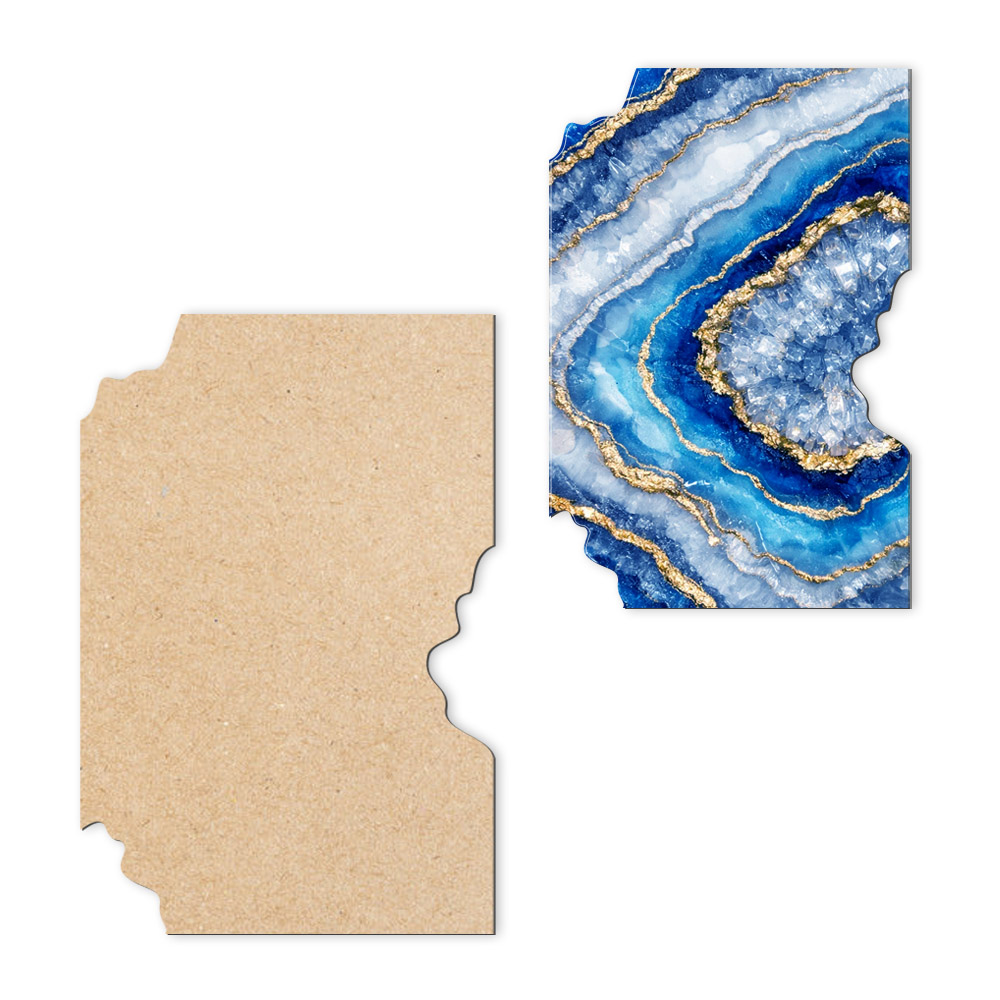
MDF Resin Art Board – Geode V3 – 60x40cm
For makers looking for a highly stable, modern surface, this 6mm MDF board offers excellent results. It has geode-style edge cut-outs, giving a premium touch to wall panels and abstract resin artworks. MDF’s engineered compactness prevents warping often seen in solid timber, and its smoothness is ideal for resin to self-level and flow evenly. For best performance, prime or seal all surfaces—especially cut edges—before pouring to prevent unwanted resin absorption. Discover the product: MDF Resin Art Board – Geode V3 – 60x40cm.
MDF Resin Art Board – Surfboard Shape – 60x19cm
For ocean art, wave pours, or modern beach-themed pieces, this surfboard-shaped MDF board provides a clean, sturdy base. MDF’s smooth surface gives you perfect, wave-like colour blending and fine detail. Its precision-cut silhouette is especially suited for foamy shoreline effects and resin gradients. As with all MDF, light sanding and a coat of primer or sealer are advised before your pour. Learn more: MDF Resin Art Board – Surfboard Shape – 60x19cm.
MDF Resin Art Board – Geode V2 – 46x60cm
This organic-blob-shaped MDF art board is designed for fluid art, abstract resin pours and mixed media. At 6mm thick, MDF offers stability for large pours and metallic veins. Its irregular shape inspires contemporary artworks and can be primed and sealed just like other MDF. For modern designs and reliable resin results, this board is a standout choice. View details: MDF Resin Art Board – Geode V2 – 46x60cm.
Choosing the Right Wood: Tips and Project Ideas
When selecting between natural wood and MDF, consider first your final vision. Natural wood slices are best for rustic, organic looks with pronounced grain, while MDF boards excel for flat, contemporary designs and bold colour effects. Always use kiln-dried or pre-prepared wood slices to avoid splitting or poor adhesion. For MDF, never skip priming/sealing—this prevents resin from soaking in, helping your colours pop and finishes shine. Start with smaller panels as you learn, experiment with pigment layering, and pair your chosen base with quality epoxy for truly professional resin art outcomes.
Expert Advice: Preparing Wood Surfaces for Resin
Proper surface preparation is essential for flawless resin art. Kiln-dried or pre-prepared wood slices are ready to use, minimising risk of cracks. For MDF boards, always sand and seal edges and faces before pouring resin for sleek, even finishes that last.

- "Forest Glow" – Resin Art Kit with Wood Slices, Pigments, and Epoxy Resin£31.45"Forest Glow" resin kit provides a ready set for artistic wood slice crafting with natural 15cm wood and metallic shining pigments.
- MDF Resin Art Board – Geode V3 – 60x40cm£20.95MDF Resin Art Board – Geode V3 – 60x40cm provides a sturdy 6mm MDF surface with geode-style edges designed for resin pours.
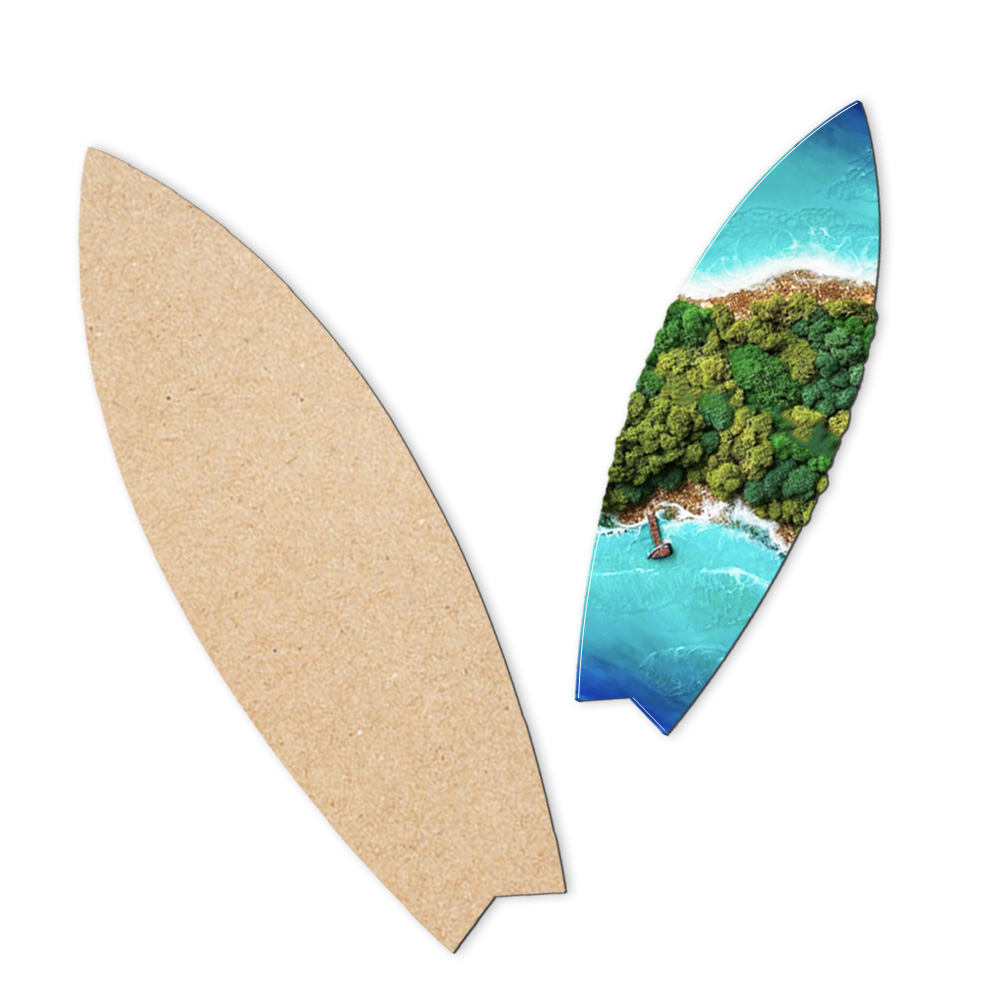 MDF Resin Art Board – Surfboard Shape – 60x19cm£16.95MDF Surfboard-shaped art board designed for resin ocean art with a sturdy 6mm base, suitable for waves and beach pours.
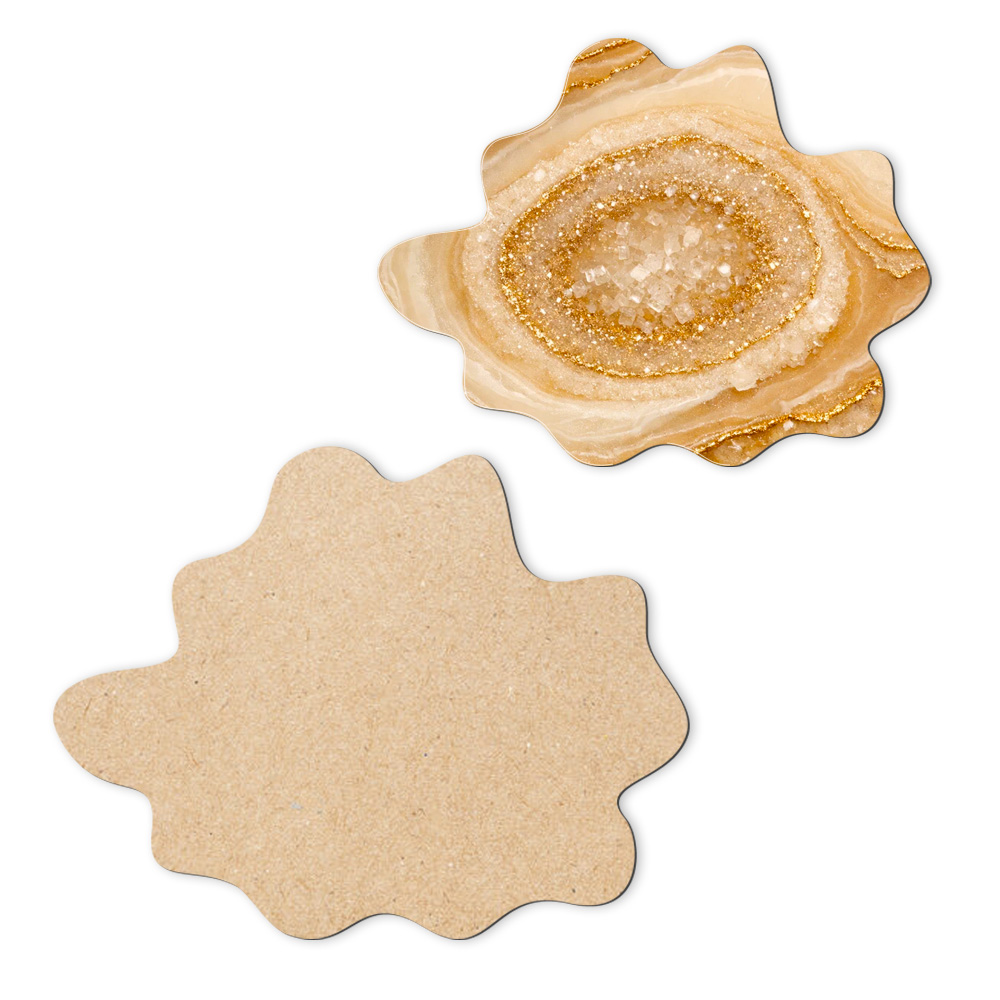 MDF Resin Art Board – Geode V2 – 46x60cm£25.45MDF Resin Art Board – Geode V2 – 46x60cm is a 6mm MDF board designed for fluid art and abstract resin pours.
Frequently Asked Questions
What is the best type of wood for resin art?
Kiln-dried natural wood and smooth MDF boards are both excellent choices. The right option depends on your project’s desired look and finish.
Why use kiln-dried wood for resin pours?
Kiln-dried wood reduces moisture content and minimises risk of cracking or warping, providing a stable base for resin adhesion.
Should MDF be primed or sealed before pouring resin?
Yes, sealing MDF—especially the edges—is strongly recommended to improve finish and prevent unwanted resin absorption.
What’s the difference between using wood slices and MDF panels for resin?</question>
Wood slices give a natural, organic look while MDF provides a flat, stable surface for modern or abstract resin art.
How do you avoid cracks in resin art on wood?
Use properly dried or prepared wood and maintain a climate-controlled environment during curing for best results.
Are MDF boards suitable for resin pours?
Yes. MDF provides a smooth, stable surface popular for resin art. Always prime and seal to achieve a high-quality finish.