 Free shipping on orders over £29,85
  Shipping Tracking!


 Google
 Facebook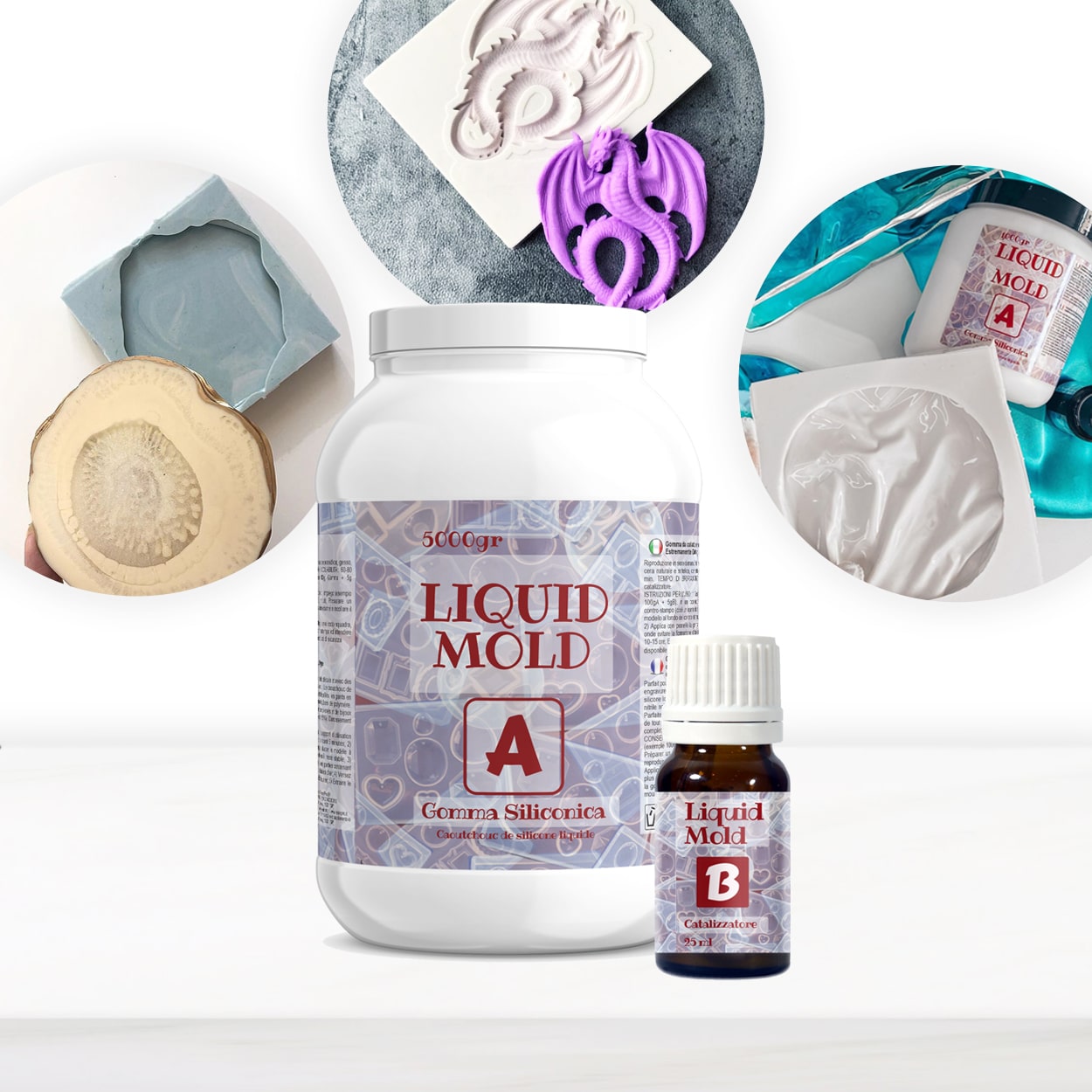
On sale
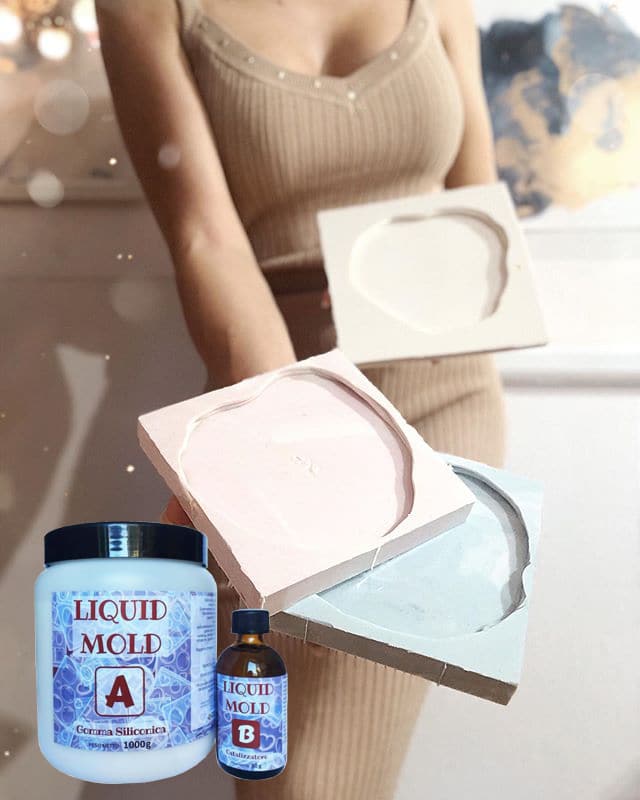
“Liquid Mould” – Casting Liquid Silicone Rubber, 5-40 Shores, Bi-Component A+B
 Available, ready for shipping
 Order now to receive your product between Friday 19 June and Saturday 20 June.
 Shipping from £1.97 - Free for orders over £29.85
 Price range: £14.45 through £387.45
Thu, 18. Jun
Ordered
Thu, 18. Jun - Fri, 19. Jun
Order Shipped
Fri, 19. Jun - Sat, 20. Jun
Estimated delivery
CASTING LIQUID SILICONE RUBBER – for moulds, bi-component A + B.
Excellent for hot waxes used in candle making.
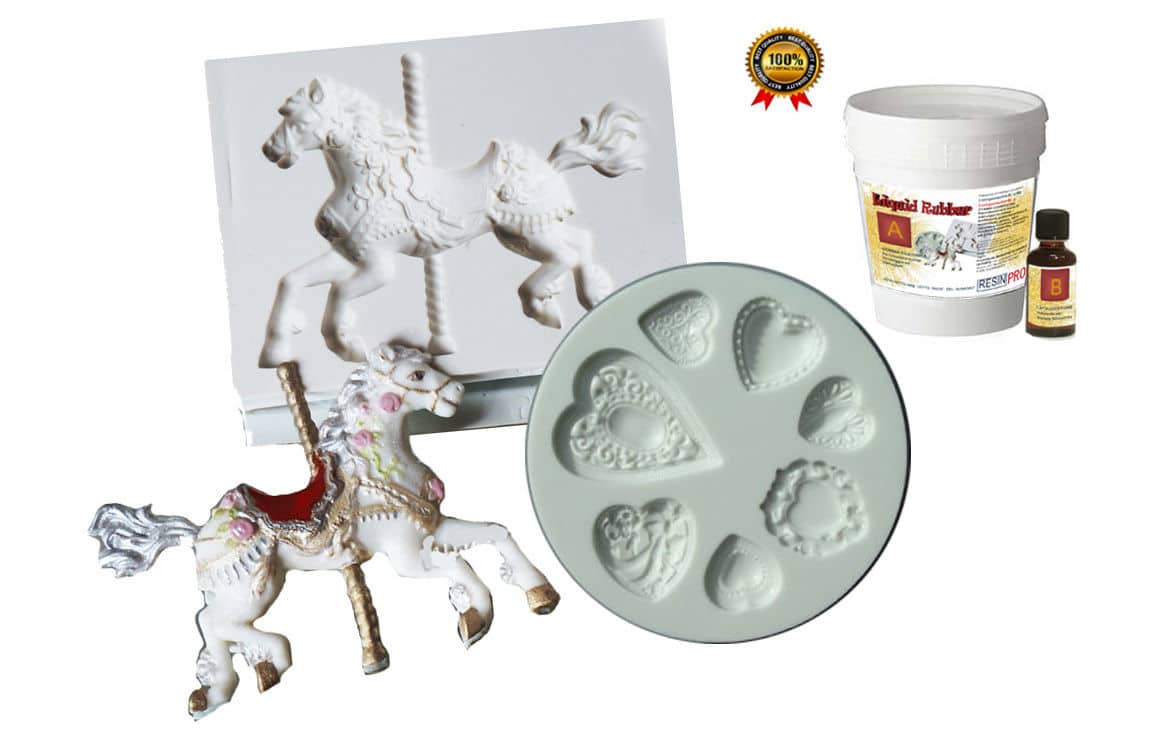
Casting liquid silicone rubber, able to penetrate everywhere and to reproduce any small detail.
It is suitable for making moulds for small objects, even with very fine details and noticeable undercuts.Before use, it is necessary to add of catalyst.
Liquid Silicone Rubber for Making Highly Detailed Moulds
Compatible with Resin, Soap and Polymer Pastes.
Ideal for multiple reproductions of models and complex shapes and jewels of any kind.
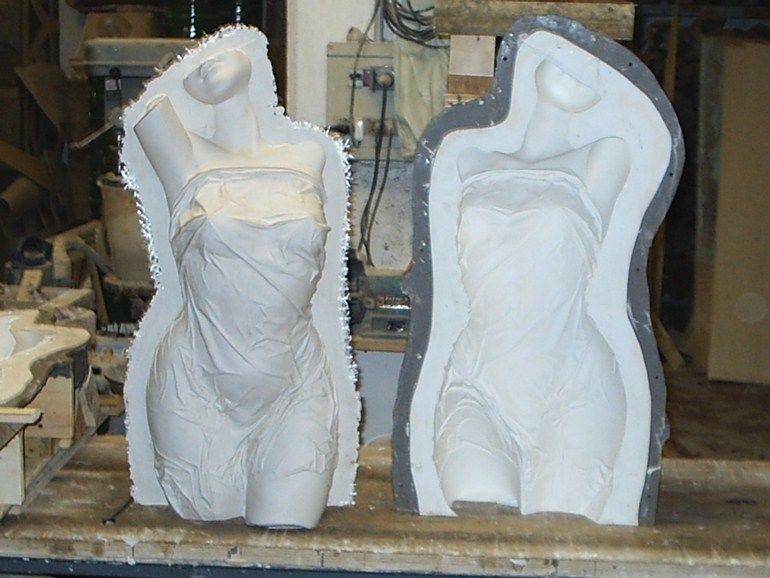
Silicone has high mechanical characteristics, and it is suited for the preparation of casts with considerable undercuts: reproduction of bronze statues (artistic foundries), serial reproduction of complex objects in resin (polyester, polyurethane and epoxy), in plaster, natural and synthetic wax, concrete (e.g. statues, decorative garden items, decorative candles, prototypes, decorative ceramics, rosettes, frames, faux wood decorations, etc.). Casts for technical products.
🌿Cruelty Free, Vegan Friendly🐹
Description
Description
CASTING LIQUID SILICONE RUBBER – for moulds, bi-component A + B.
Excellent for hot waxes used in candle making.
Casting liquid silicone rubber, able to penetrate everywhere and to reproduce any small detail.
It is suitable for making moulds for small objects, even with very fine details and noticeable undercuts. Before use, it is necessary to add of catalyst.
Liquid Silicone Rubber for Making Highly Detailed Moulds
Compatible with Resin, Soap and Polymer Pastes.
Ideal for multiple reproductions of models and complex shapes and jewels of any kind.
Silicone has high mechanical characteristics, and it is suited for the preparation of casts with considerable undercuts: reproduction of bronze statues (artistic foundries), serial reproduction of complex objects in resin (polyester, polyurethane and epoxy), in plaster, natural and synthetic wax, concrete (e.g. statues, decorative garden items, decorative candles, prototypes, decorative ceramics, rosettes, frames, faux wood decorations, etc.). Casts for technical products.
Technical data
Technical data
TECHNICAL DATA
“LIQUID MOULD” – Casting Liquid Silicone Rubber – 15/20 Shores
- Mix ratio: 100: 5 in weight (= 2%)
- Pot Life: 60-80 min
- Viscosity: 26000 mPas (15 shores) / 10000 mPas (20 shores)
- Pouring time: 60-80 min
- Demould time: 12 hours
- Hardness: 20 + -3 Shore A; 15 + -3 Shore A
Shores – Higher values indicate higher hardness, lower – softer mould you get.
“LIQUID MOULD” – Casting Liquid Silicone Rubber – 5 Shores
Type: Condensation-cure liquid silicone rubber (casting type)
Mixing Ratio: 100:5 (by weight)
Hardness: 5 Shore A (after 24 hours)
Appearance Before Curing: Viscous liquid
Appearance After Curing: Elastic rubber
Color:
Component A: White
Component B: Transparent
Specific Gravity: 1.200 Kg/l ± 0.020
Viscosity: 10,000 – 30,000 CpS
Pot Life: 30–60 minutes
Demolding Time: 24 hours
Shore A Hardness: 05 ± 2 (DIN 53505)
Tear Strength: 16 N/mm ± 0.5 (ASTM D 624 Type B)
Tensile Strength: 4.0 N/mm² ± 0.5 (DIN 53504 – Type S A 3)
Elongation at Break: 900% ± 30 (DIN 53504 – Type S A 3)
Linear Shrinkage: Max 0.5% after 5 days (ISO 4823)
Flame Resistance: Self-extinguishing (ASTM 1692)
“LIQUID MOULD” – Casting Liquid Silicone Rubber – 30 Shores
✔️ STRONG AND DURABLE
Shore A hardness of 30±2, ideal for supporting heavy materials such as concrete, resins, and plaster.
✔️ HIGH PRECISION
Optimized viscosity (Part A: 23,000±2,000 mPa·s) for uniform material distribution.
✔️ TECHNICAL TIMINGS
Working time (WT): 30–40 minutes
Curing time: 8–10 hours
Technical Parameters:
Color Part A: White
Color Part B: Transparent/light yellow
Shore A Hardness: 30±2
Working Time (WT): 30–40 minutes
Curing Time: 8–10 hours at 25°C
Tear Strength: 25 kN/m
Elongation: 350%
“LIQUID MOULD” – Casting Liquid Silicone Rubber – 40 Shores
SUPERIOR RESISTANCE
Shore A hardness of 38±2 ensures repeated use and resistance to aggressive materials.
✔️ ROBUST DESIGN
High viscosity (Part A: 24,000±2,000 mPa·s) ensures greater dimensional stability of the mold.
✔️ TECHNICAL TIMINGS
Working time (WT): 30–40 minutes
Curing time: 8–10 hours
Technical Parameters:
Color Part A: White
Color Part B: Transparent/light yellow
Shore A Hardness: 38±2
Working Time (WT): 30–40 minutes
Curing Time: 8–10 hours at 25°C
Tear Strength: 19 kN/m
Elongation: 300%
Instruction
Instruction
Mould making is a simple step-by-step process however please be aware that temperatures above 30C should be avoided, and all surfaces and mixing containers should be initially clean and dry.
Before applying silicone to the model, we recommend applying a separating compound on it and drying it.
1. IMPORTANT!!! Stir the base (component A) well before use, lifting all the filler that has fallen to the bottom of the container, due to the permissible precipitation of the filler.
2. Shake the container with the hardener (component B).
3. How to calculate, how much hardener do you need? Take your proportions –JUST AN EXAMPLE – 100:55.
4. Measure the required amount of base into a clean mixing container.
5. Measure the required amount of catalyst into the container.
6. Mix the base and the catalyst, stirring with a stick, until smooth for 5-10 minutes. Mix the mixture thoroughly along the sides and bottom of the container.
7. Slowly pour the mixed material in a uniform stream into one point of the mould so that the mixture spreads evenly over the drawing. This minimises the appearance of air bubbles in the material. First of all, it is recommended to pour the material on the drawing, which will reduce the possibility of bubbles in critical areas of the mould. To improve the separation, a separating agent for moulds can be applied to the product. After 20 minutes, it loses its fluidity and can be applied with a brush to inclined and vertical surfaces in layers.
8. Allow the material to harden for 24 hours at a temperature of 24 ° C before removing the product from the mould.
For best results, allow the mould to recover its physical and mechanical properties and harden in air for an additional 24 hours before using it in productio
WARNINGS:
During processing, use protective masks, gloves, and other protective clothing.
In case of contact with eyes, immediately rinse with cold water for 15 minutes and immediately consult a doctor.
Videos
Videos
Here is a new video from Steve who made some tests of our silicones –
Reviews
Reviews
COD:
A6-MTVM-6S5Q