 Free shipping on orders over £29,85
  Shipping Tracking!


 Google
 Facebook
How do you install permeable resin bound gravel?
A comprehensive guide for resilient, water-permeable outdoor surfaces

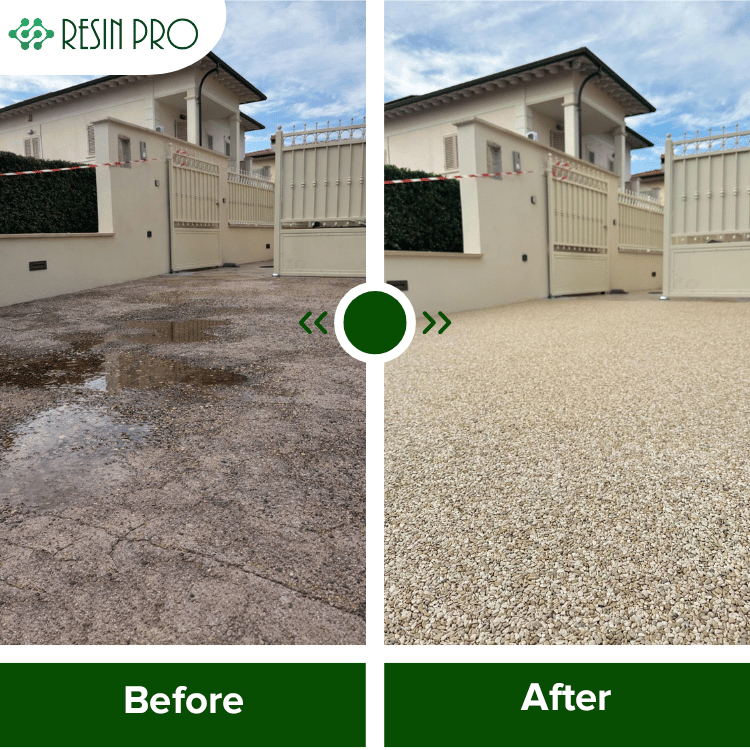
Creating a permeable resin bound gravel surface transforms your outdoor spaces by combining long-lasting durability with stylish design and effective water drainage. Whether it’s a driveway, footpath, or patio, achieving a seamless, SUDS-compliant surface is possible with the right products and a clear method.
This installation guide highlights the essential tools and materials for pebble floors, walking you through each stage. We also present product choices suited to different installation needs, such as the complete solutions and specialist binders available from ResinPro.
Comparison: Permeable Kits, Aggregates, and Epoxy Binders
ResinPro provides a range of products for installing permeable resin bound gravel. Here’s a quick overview of how each supports the process:
- “Flowstone” – Complete Permeable Floor Kit with Pebbles and Resin: Permeable solution tailored for driveways, patios, and footpaths, offering all-in-one convenience with step-by-step application guidance and the right resin selection for lasting customisable finish.
- Washed Pebbles for Permeable Floors 25kg – Outdoor Resin-Bound Surfaces: Eco-Friendly and Excellent Drainage, these pre-washed, dried aggregates are ready to combine with your resin binder for hassle-free application.
- “Trasparente” – Epoxy Binder for Coloured Pebbles and Grits: Provides a crystal-clear epoxy resin specifically designed for coloured aggregates, with a UV-resistant and non-yellowing formula and low viscosity for impregnation and stability.
Choosing the right combination depends on your preferences for kit simplicity, aggregate colour, and special requirements for UV stability and traffic resilience.
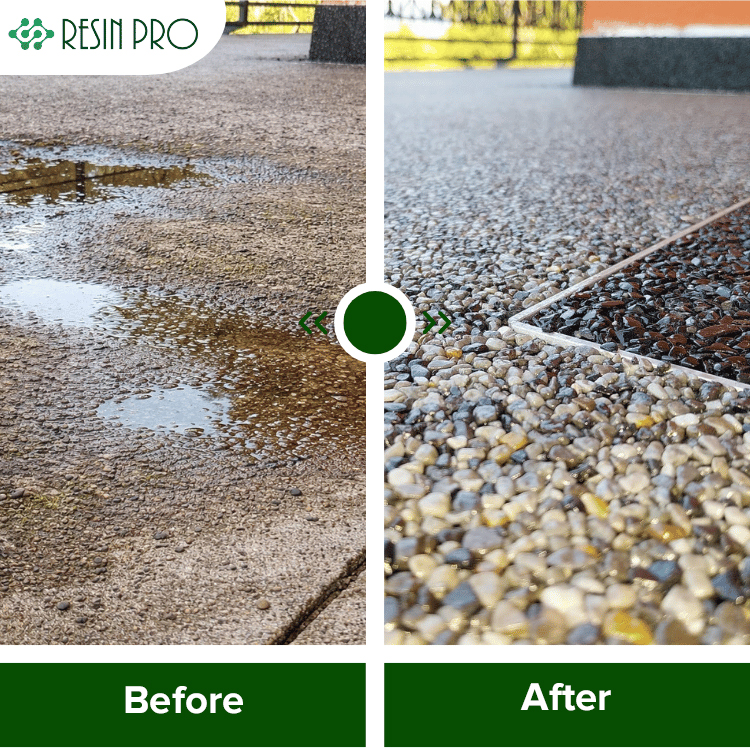
Visual Guide to Mixing and Installing Permeable Resin Pebble Surfaces
See step-by-step images showing the preparation of the base, mixing of pebbles with binder, and trowelling for a smooth, robust finish. Inspiration from real ResinPro projects demonstrates how products like the “Flowstone” – Complete Permeable Floor Kit with Pebbles and Resin, Washed Pebbles for Permeable Floors 25kg – Outdoor Resin-Bound Surfaces, and “Trasparente” – Epoxy Binder for Coloured Pebbles and Grits come together for professional or DIY results.
Step-by-Step Guide: Installing Permeable Resin Bound Gravel
Follow these general stages to achieve robust, attractive, and permeable outdoor flooring:
- Surface Preparation: Begin with a clean, dry, and stable base. Remove debris, loose materials, and weeds. Ideally, prepare a compacted MOT Type 3 sub-base, topped with a porous membrane to maximise drainage.
- Mixing Aggregates and Resin Binder: For ready-to-use solutions, consider the “Flowstone” – Complete Permeable Floor Kit with Pebbles and Resin, containing washed pebbles plus accurate resin amounts. For custom projects, use Washed Pebbles for Permeable Floors 25kg – Outdoor Resin-Bound Surfaces and mix with a binder like “Trasparente” – Epoxy Binder for Coloured Pebbles and Grits for coloured stones. Mix thoroughly in a forced action or paddle mixer until every aggregate piece is wet and evenly coated.
- Laying the Mixture: Pour the resin-bound aggregate mixture onto the prepared base. Spread evenly with a trowel to achieve the desired thickness, usually between 12mm and 18mm for footpaths and patios, up to 18–25mm for driveways.
- Compacting and Smoothing: Use a hand trowel or power float to compact and finish the surface. Smoothing ensures optimal durability and an even appearance. Work efficiently before the resin begins to set.
- Curing and Protection: Allow the surface to cure according to the resin binder’s instructions. Avoid using the area until full curing is complete—typically 24–48 hours.
Personalise your install by combining different pebbles or granule colours to create attractive, effective landscaping. All products in the Pebble Floors category are suitable for a range of designs and outdoor conditions.
Key Considerations for UK Resin Bound Installations
For reliable results, check weather conditions before application—ideally, dry days with moderate temperatures and low humidity. Choose the appropriate resin type for your aggregate: non-yellowing polyurethane is best for white pebbles, while “Trasparente” – Epoxy Binder for Coloured Pebbles and Grits is ideal for warm or dark tones. Each solution is suitable for both professionals and DIY installations and comes with clear instructions for achieving a cost-effective renewal of your outdoor surfaces.
Using Washed Pebbles for Permeable Floors 25kg – Outdoor Resin-Bound Surfaces allows custom blends with marble, granite, or porphyry for unique patterns. The resin ensures all stones bond, providing a resilient finish and reliable drainage—even in high-traffic settings.
If you need a complete starter pack with guidance for all skill levels, the “Flowstone” – Complete Permeable Floor Kit with Pebbles and Resin is an excellent choice for patios, driveways, and paths across the UK climate.
Why Permeable Resin Bound Gravel is Ideal for UK Gardens and Driveways
Permeable resin bound gravel systems excel in the UK thanks to their resistance to surface water, prevention of flooding, and customisable looks. Products like Washed Pebbles for Permeable Floors 25kg – Outdoor Resin-Bound Surfaces or the Flowstone Complete Permeable Floor Kit with Pebbles and Resin improve accessibility, resist wear in variable climates, and support sustainable landscaping choices.
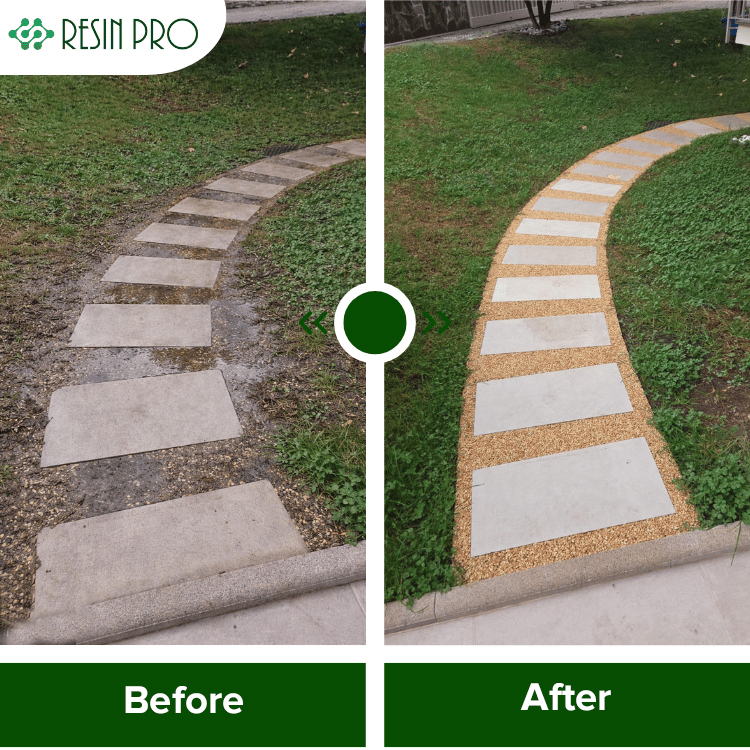
Why Choose ResinPro Products for Permeable Floors?
ResinPro provides solutions tailored for permeable outdoor flooring—combining drainage efficiency, visual enhancement, and practical application. Every resin and aggregate, such as those featured in our pebble floors selection, is produced with UK requirements in mind, ensuring enduring results that reduce flooding and surface water, while remaining customisable and simple to apply.
Plus, our range of products, from “Flowstone” – Complete Permeable Floor Kit with Pebbles and Resin to “Trasparente” – Epoxy Binder for Coloured Pebbles and Grits, delivers excellent results for both professionals and home improvers aiming to create attractive, environmentally friendly surfaces.
- "Flowstone" – Complete Permeable Floor Kit with Pebbles and ResinPrice range: £42.85 through £3,389.85"Flowstone" is a durable permeable pebble and resin kit designed for driveways and patios with detailed resin guidance relevant to installation of…
 Washed Pebbles for Permeable Floors 25kg – Outdoor Resin-Bound Surfaces£26.85Washed Pebbles for Permeable Floors 25kg provide pre-washed stone aggregates suitable for permeable outdoor surfaces in line with the theme on…
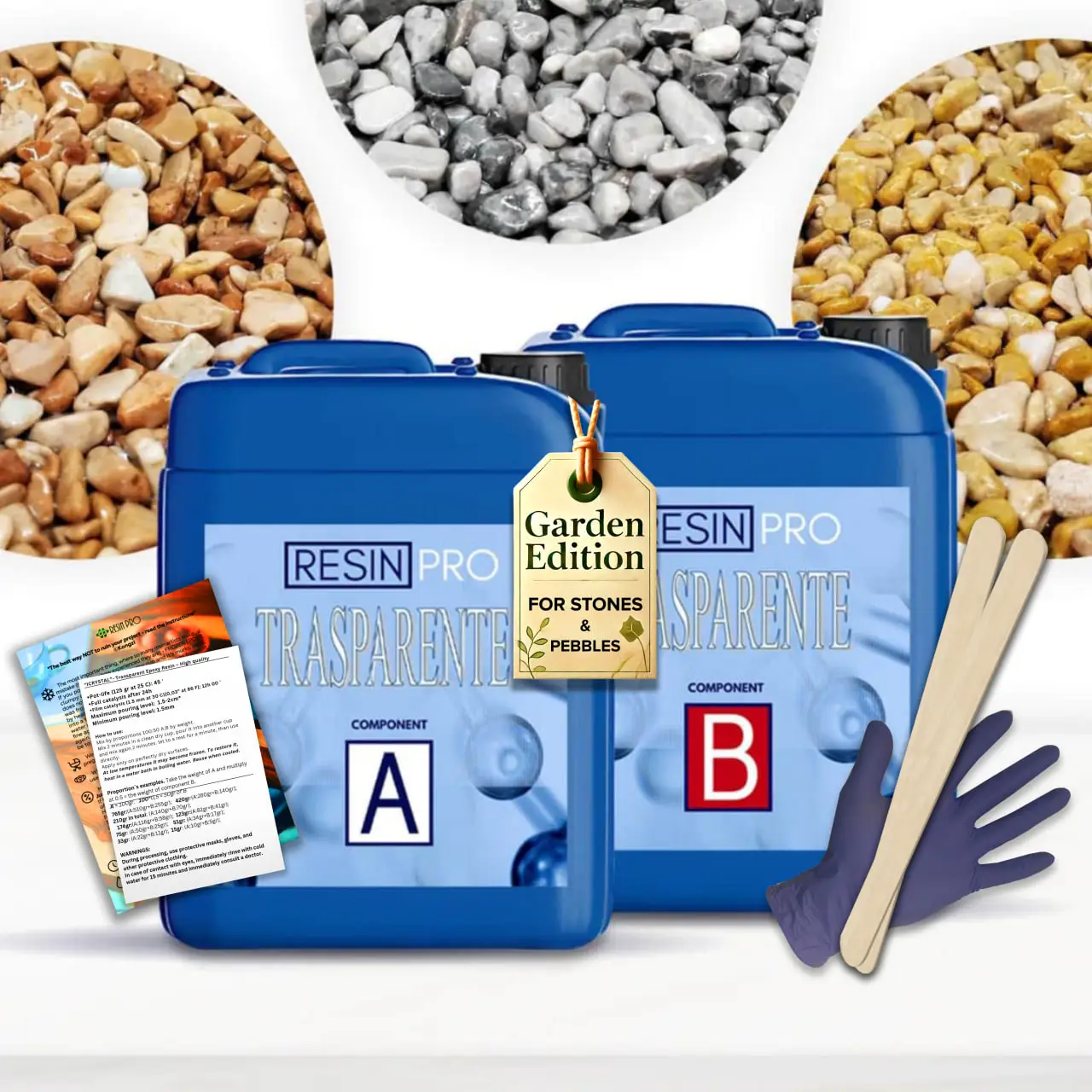 "Trasparente" – Epoxy Binder for Coloured Pebbles and GritsPrice range: £31.85 through £948.85"Trasparente" epoxy binder provides a clear, UV-stable finish suitable for coloured pebbles and grits in permeable flooring projects.
Frequently Asked Questions
How do I install permeable resin bound gravel in the UK?
Begin by preparing a stable, porous sub-base. Mix pre-washed pebbles with your chosen resin binder. Spread and compact evenly over the base, then allow it to cure properly before use.
Which resin is recommended for pebble floors?
Non-yellowing polyurethane is ideal for white aggregates, while a transparent, UV-stable epoxy like "Trasparente" – Epoxy Binder for Coloured Pebbles and Grits is best for coloured or dark stones.
Is weather important for resin application?
Yes. For best results, install in dry weather with moderate temperature and low humidity. Extreme temperatures or rain can affect curing and surface integrity.
Can I install permeable resin bound gravel myself?
Yes, most DIYers can complete the project with kits and simple tools. All necessary products and instructions are available through ResinPro for accessible, durable results.
How can I repair loose gravel on a permeable resin bound floor?
Lift loose gravel, mix with resin binder, and relay the aggregate. Compact and smooth before allowing the surface to cure.
What are the benefits of a permeable resin bound floor?
They offer efficient drainage, reduce surface water and flooding, require minimal maintenance, and can be tailored for a unique, attractive outdoor setting.