 Free shipping on orders over £29,85
  Shipping Tracking!


 Google
 Facebook
← Back to Which resin is most suitable for jewellery?
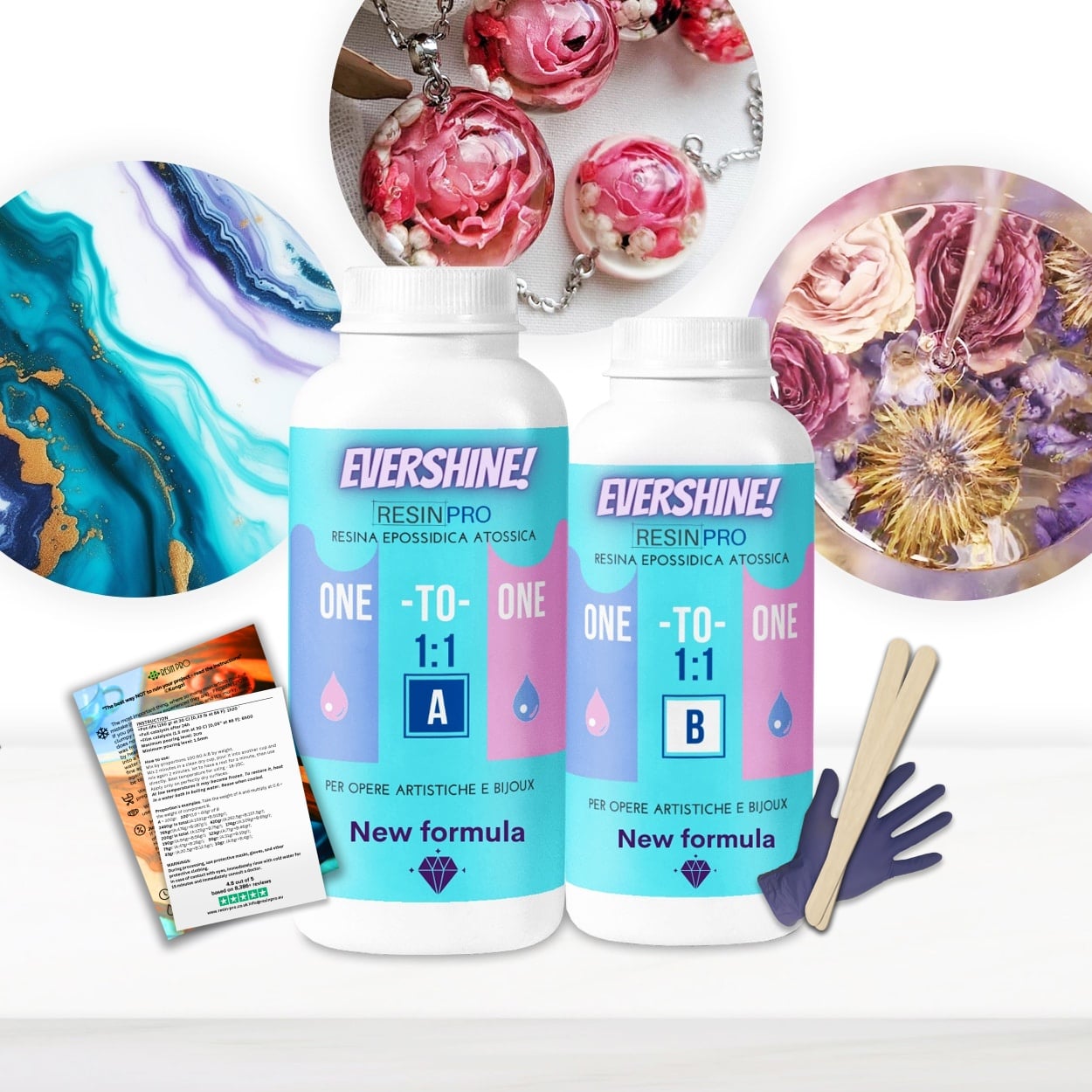
Choosing the right resin is important for achieving the desired finish and ease of use in jewellery making and crafts. Art Pro and One-2-One each have distinct features that set them apart. Here’s a comparison to help you decide which suits your next project best.
Mixing Ratios and Handling
One-2-One resin mixes at a simple 1:1 ratio by volume, making preparation particularly straightforward for both newcomers and experienced makers. This formulation helps minimise errors when measuring components, and its lower viscosity ensures easy pouring and fine detail capture for intricate jewellery work. In contrast, Art Pro requires a 3:2 ratio by weight, making precise measurement more crucial. Mixing by weight can be ideal for those needing utmost consistency and who already have a jeweller’s scale at hand.
Finish and Performance
After curing, One-2-One produces a glossier, highly transparent surface that enhances the shine of decorative pieces. Its cured surface is smooth, making it excellent for items such as pendants, cabochons, or resin coatings that showcase vibrant colours or embedded decorations. Art Pro, on the other hand, results in a harder finish with greater surface resistance. This makes it suitable for jewellery or accessories that may face frequent handling or require a sturdy, lasting finish.
Practical Guidance: Choosing What’s Best for You
- For effortless mixing, quick jobs, or those new to resin, One-2-One Epoxy Resin is ideal.
- If your pieces need extra hardness and durability, and you are comfortable weighing components, Art Pro could be a better fit.
- Always mix thoroughly according to manufacturer instructions, as incomplete mixing can impact cure and clarity in any resin.
When This Matters
The choice between these resins matters most when your project calls for a specific balance between ease of use and finished surface hardness—particularly in jewellery, where shine, feel, and durability are paramount.
Related products
Related guides
Understanding the main differences between these resin types helps ensure the best results in jewellery making and decorative crafts. For more advice and guidance, see our full guide on which resin is most suitable for jewellery.