 Free shipping on orders over £29,85
  Shipping Tracking!


 Google
 Facebook
What is the catalyst in resin used for?
Explore how catalysts transform resins for art, crafts and construction
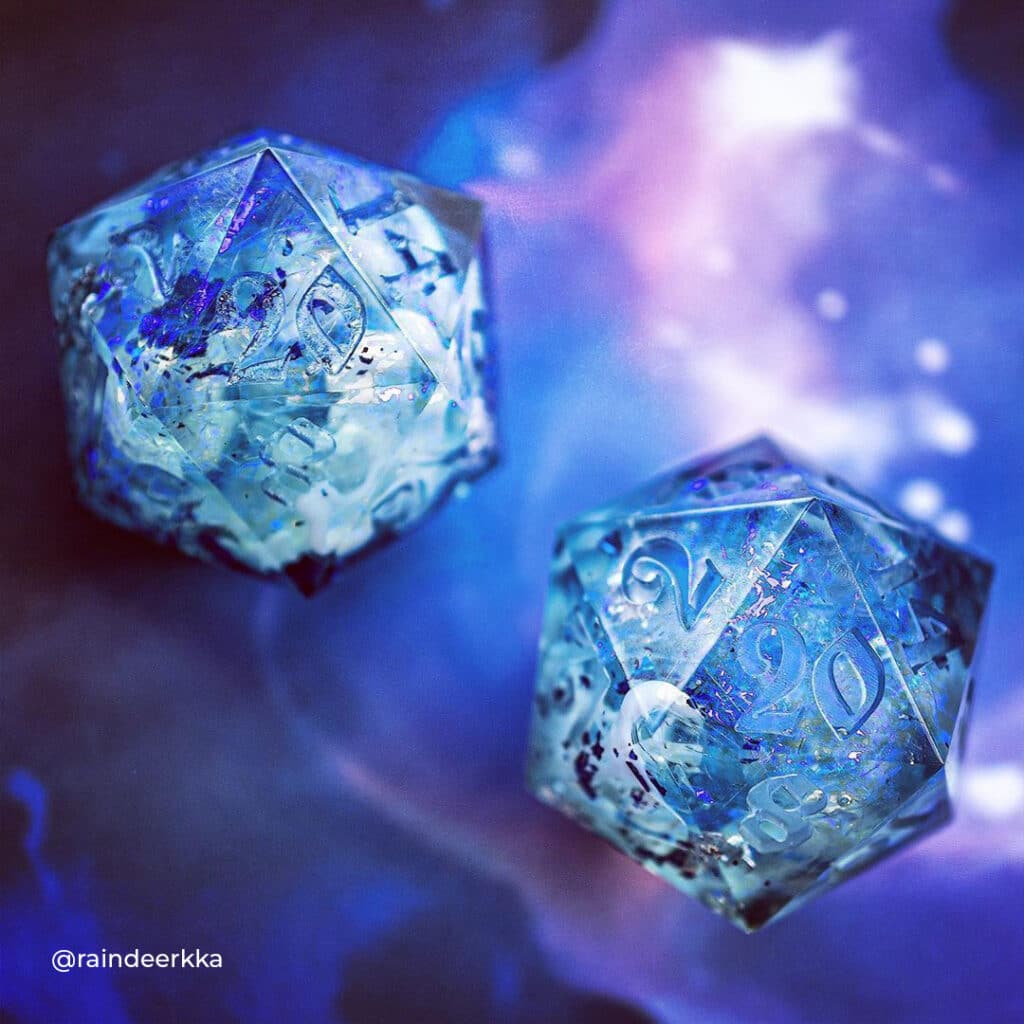
When working with synthetic resins, one term appears again and again: the catalyst. But what exactly is a catalyst in resin, and why is it crucial for achieving successful results in crafts, professional composites, or even furniture making?
The catalyst—commonly known as the hardener—initiates the essential chemical reaction that transforms liquid resin into a durable, solid material. Whether you are experimenting with epoxy for jewellery making or undertaking large-scale projects, understanding the catalyst’s role ensures each product cures accurately, with optimal clarity, strength, and reliability.
This guide explains how the catalyst functions in every major application, references best-in-class products including the “ICreation” – Fast Epoxy Resin, 6h Demoulding, Transparent Gloss Finish, “Carbon Resin” – Epoxy Resin for Carbon Fiber & Fiberglass Coating, “Epoxytable 10-Ten” – Deep Pour Epoxy Resin for Tables, Up to 10cm Casting, “Trasparente” – Multipurpose Clear Epoxy Resin for Casting – Up to 2cm, “EpoxyTable 5-Five” – Deep Pour Epoxy Resin for Tables and Large Projects – Up to 5cm, and “Icrystal” – Clear Epoxy Resin – Odourless Formula – Up to 1.5cm. Discover how catalysts underpin resin performance for all creative and structural needs.
What is a catalyst in resin?
In resin systems, the catalyst is a separate component—usually called “hardener”—that sparks and drives the chemical process otherwise known as curing or polymerisation. When you combine the resin part (A) and its catalyst or hardener (B), a molecular reaction occurs, changing the mixture from a runny liquid to a hard, durable solid. This is vital for any epoxy, whether you are casting jewellery charms, sealing a carbon fibre model, or pouring tabletops.
The precise function of a catalyst is to control:
- Reaction speed (working/open time and demoulding time)
- Structural integrity (final hardness and strength)
- Surface quality (clarity, self-levelling behaviour, bubble release, and more)
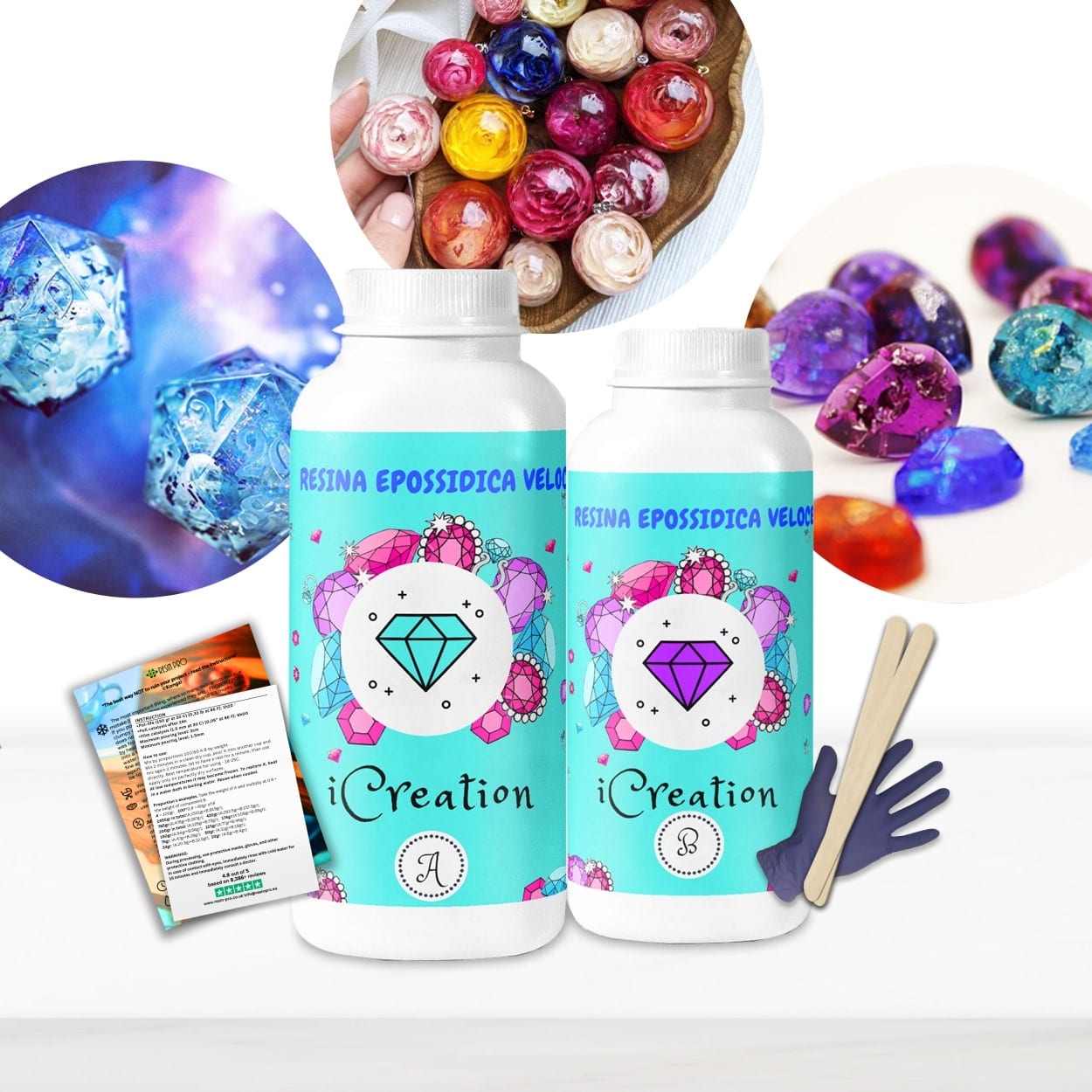
Each product utilises differently formulated catalysts to suit its intended use. For instance, “ICreation” – Fast Epoxy Resin, 6h Demoulding, Transparent Gloss Finish uses super-fast catalysis for a 6-hour demoulding time; ideal for rapid artistic turnarounds. On the other hand, the catalyst used in “EpoxyTable 5-Five” – Deep Pour Epoxy Resin for Tables and Large Projects – Up to 5cm regulates a low exothermic reaction, helping to safely cure thick pours of up to 5cm while preventing overheating.
Catalyst Action in Different Resin Applications
The demands placed on the catalyst differ between product types. Some resins, such as “Icrystal” – Clear Epoxy Resin – Odourless Formula – Up to 1.5cm, prioritise a crystal-clear finish, odourless curing, and suitability for beginners with a simple 2:1 mixing ratio. Others, like “Carbon Resin” – Epoxy Resin for Carbon Fiber & Fiberglass Coating, ensure high impact resistance and room temperature curing for robust, composite-strengthened pieces.
For memorial art and delicate keepsakes less than 2cm thick, “Trasparente” – Multipurpose Clear Epoxy Resin for Casting – Up to 2cm integrates a catalyst tailored for bubble-free self-levelling and 10-year anti-yellowing warranty. For super deep pours up to 10cm, “Epoxytable 10-Ten” – Deep Pour Epoxy Resin for Tables, Up to 10cm Casting offers a formulation with an ultra-low exothermic reaction to enable casting thick tables without structural distortion or yellowing.
The role of the catalyst is always central, but the specifics are tailored for precise project needs—speed, clarity, pour depth, mechanical strength, and safety.
Comparing Resins: How the Catalyst Makes Each Product Unique
Let’s compare the featured products to see how the catalyst’s formulation shapes each resin’s unique advantages:
- “ICreation” – Fast Epoxy Resin, 6h Demoulding, Transparent Gloss Finish: Super-fast catalysis for time-critical results. Perfect for rapid demoulding without sacrificing a crystal-clear finish.
- “Carbon Resin” – Epoxy Resin for Carbon Fiber & Fiberglass Coating: Special catalyst enables room temperature curing and sustained impact resistance across composite materials, minimising air bubbles for flawless laminate work.
- “Epoxytable 10-Ten” – Deep Pour Epoxy Resin for Tables, Up to 10cm Casting: Proprietary low-heat catalyst designed for super-deep pours up to 10cm—ideal for river tables and large art casts where avoiding overheating is critical.
- “Icrystal” – Clear Epoxy Resin – Odourless Formula – Up to 1.5cm: Gentle yet reliable catalyst supporting crystal clear, odourless curing, making it safe and easy for various creative projects including jewellery, DIY, and coatings.
- “EpoxyTable 5-Five” – Deep Pour Epoxy Resin for Tables and Large Projects – Up to 5cm: Manages exothermic reaction for 5cm layer depths—balancing clarity, strength, scratch resistance, and controlled working times.
- “Trasparente” – Multipurpose Clear Epoxy Resin for Casting – Up to 2cm: Focuses on ultra-clear, bubble-free casting in single pours up to 2cm, with long-term UV stability and user-friendly mix ratios.

Behind the Scenes: How Catalysts Drive Professional Results
A resin’s transformation from liquid to cured solid relies on its catalyst. The precise chemistry behind catalysts allows products like ICreation Fast Epoxy Resin and Epoxytable 10-Ten to deliver swift or controlled demoulding and exceptional clarity—reflecting the science that underpins every creative success.
Why the Catalyst Matters: Real-World Benefits for Every Project
Whether you’re creating functional tables, encapsulating keepsakes, or engineering strong composite structures, understanding the catalyst’s function transforms your making experience. For the professional tinkerer, the fast-curing “ICreation” – Fast Epoxy Resin, 6h Demoulding, Transparent Gloss Finish delivers speed and clarity. Artists and model-makers rely on “Icrystal” – Clear Epoxy Resin – Odourless Formula – Up to 1.5cm for smooth finishes every time.
Large-scale projects and deep pours demand careful catalyst chemistry. “Epoxytable 10-Ten” – Deep Pour Epoxy Resin for Tables, Up to 10cm Casting and “EpoxyTable 5-Five” – Deep Pour Epoxy Resin for Tables and Large Projects – Up to 5cm are formulated for stability, safe demoulding, and minimal risk of yellowing, even years after pouring.
For composite work, “Carbon Resin” – Epoxy Resin for Carbon Fiber & Fiberglass Coating ensures your catalyst selection results in tough, bubble-free finishes designed for enduring mechanical stresses.
By choosing the correct catalyst system—matched to your project and desired features—you guarantee professional, reliable, and visually stunning outcomes every time.
How to Choose the Right Catalyst-Driven Resin
Selecting the best resin for your application means comparing:
- Required pour depth (art castings, tables, or large furniture pieces)
- Need for fast or slow cure (artwork, craft, time constraints)
- Desired surface properties (clarity, bubble-free casting, UV resistance)
If you are a beginner or after thin, ultra-clear layers, “Trasparente” – Multipurpose Clear Epoxy Resin for Casting – Up to 2cm and “Icrystal” – Clear Epoxy Resin – Odourless Formula – Up to 1.5cm are ideal. For medium to deep pours, consider “EpoxyTable 5-Five” – Deep Pour Epoxy Resin for Tables and Large Projects – Up to 5cm, and for extreme depth, “Epoxytable 10-Ten” – Deep Pour Epoxy Resin for Tables, Up to 10cm Casting. For composite work, “Carbon Resin” – Epoxy Resin for Carbon Fiber & Fiberglass Coating covers your bases when working with reinforcing fabrics.
Each product page provides full technical details and user guides, making selection easy and error-free.
Expert Tips: Maximising the Catalyst’s Benefits
Always follow the resin’s specified mixing ratios—such as 2:1 or 100:55 resin to hardener—for optimal results. Using too little or too much catalyst can affect curing time, clarity, and even structural reliability. Read instructions carefully and allow for recommended working and curing times to ensure your resin reaches its full potential.

FAQ: All About Catalysts and Resin Curing
- "ICreation" – Fast Epoxy Resin, 6h Demoulding, Transparent Gloss FinishPrice range: £19.40 through £52.85ICREATION Fast Epoxy Resin offers a transparent, glossy finish with a 6-hour demoulding time, suitable for jewellery making and crafts.
 "Carbon Resin" – Epoxy Resin for Carbon Fiber & Fiberglass CoatingPrice range: £18.85 through £35.85This epoxy resin is designed for carbon fibre and fibreglass work, providing reliable impregnation and a durable, glossy finish.
 “Epoxytable 10-Ten” – Deep Pour Epoxy Resin for Tables, Up to 10cm CastingPrice range: £33.85 through £334.85“Epoxytable 10-Ten” is designed for deep pour projects up to 10cm thickness, suitable for tables and large artistic castings.
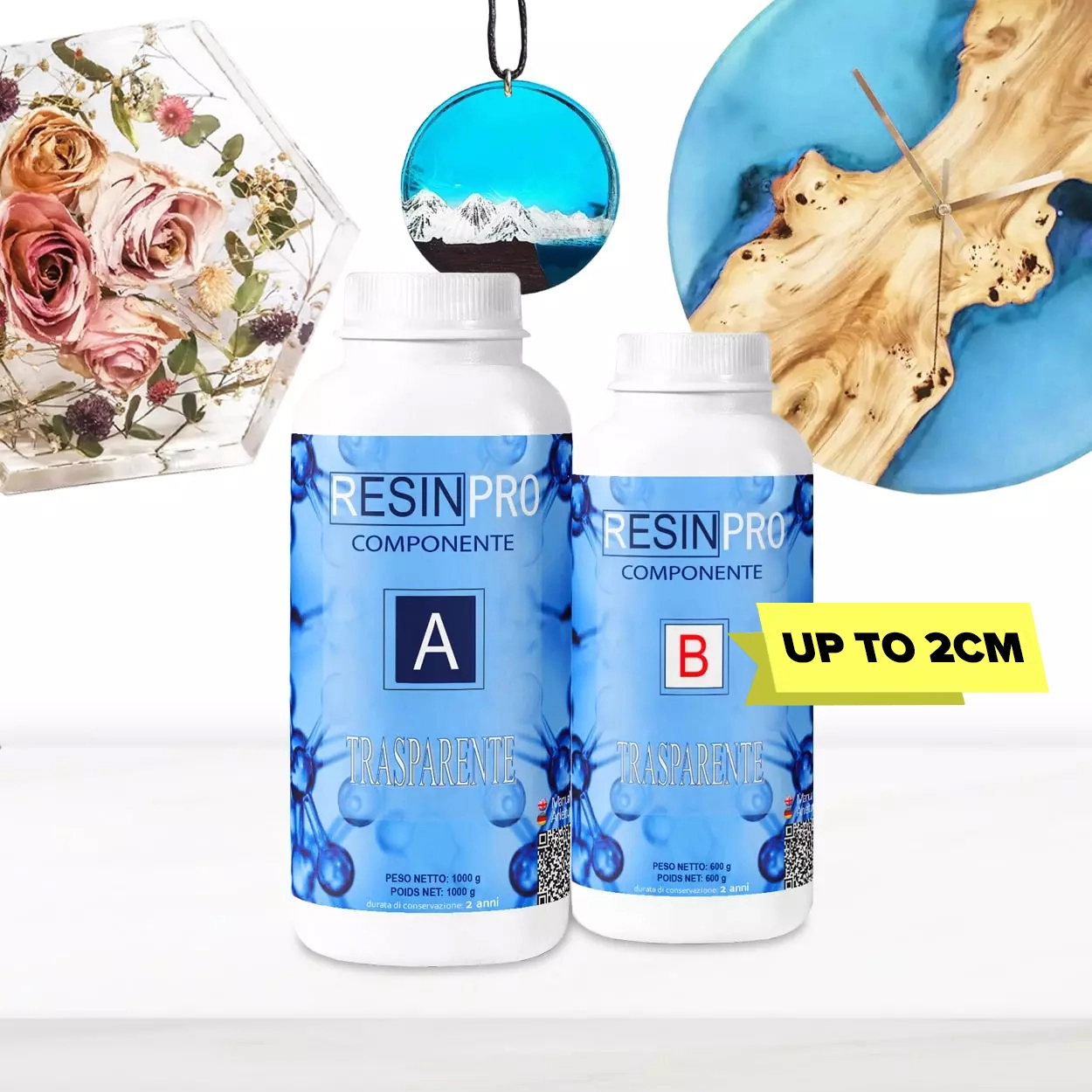 "Trasparente" – Multipurpose Clear Epoxy Resin for Casting – Up to 2cmPrice range: £8.45 through £948.85"Trasparente" resin offers a clear, glossy finish with up to 2cm layer depth, suitable for detailed casting and various DIY projects.
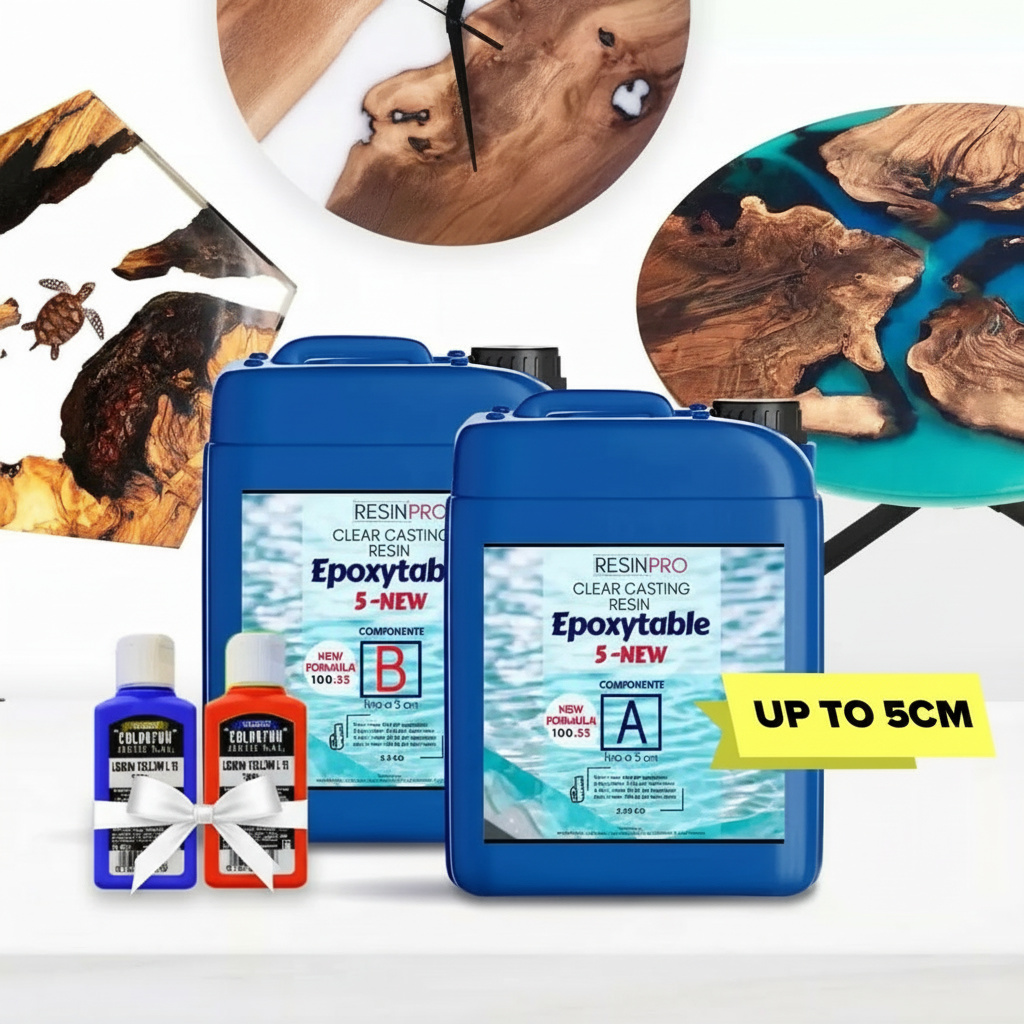 "EpoxyTable 5-Five" – Deep Pour Epoxy Resin for Tables and Large Projects – Up to 5cmPrice range: £16.85 through £1,099.85"EpoxyTable 5-Five" is a deep pour epoxy resin designed for tables and large projects with up to 5cm thickness.
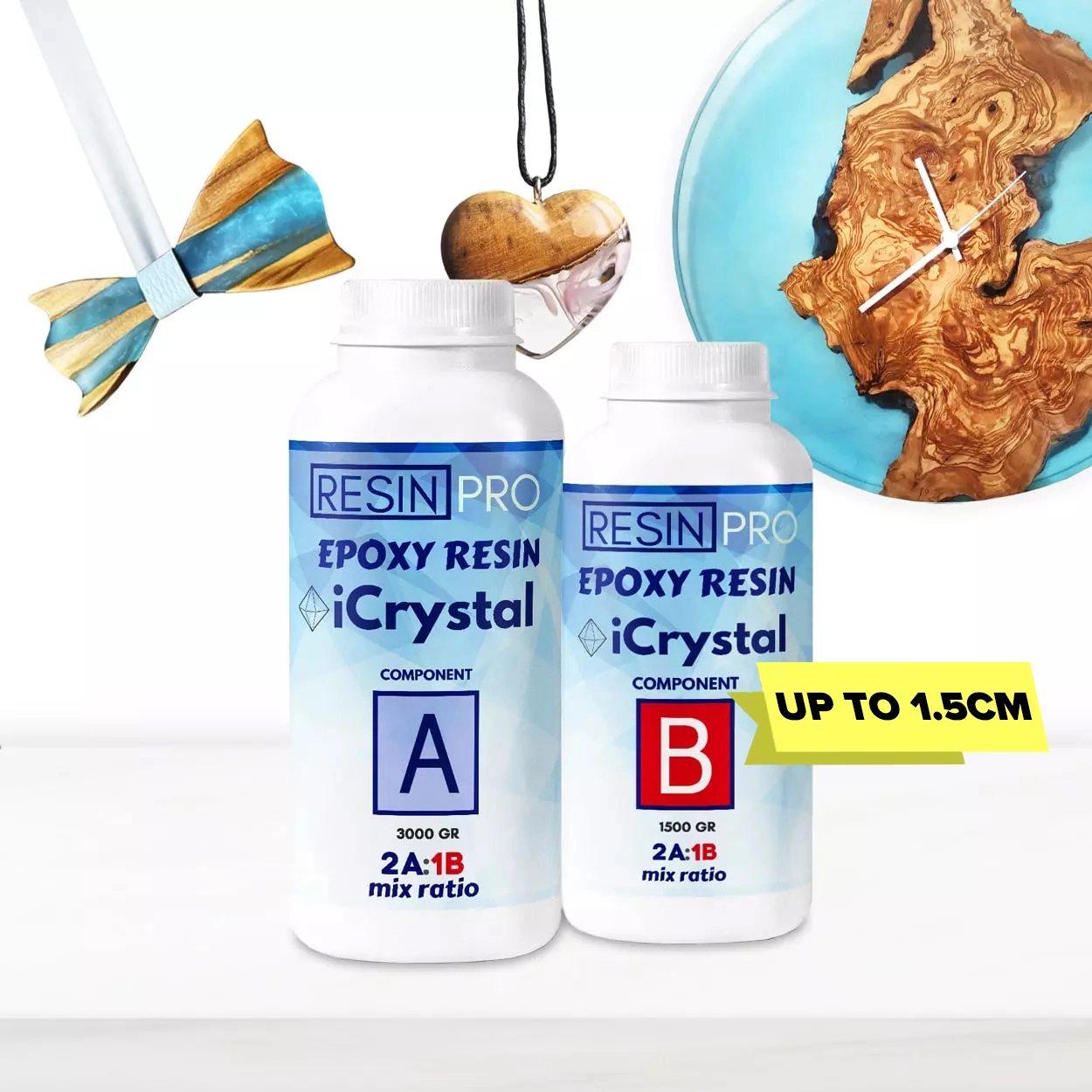 "Icrystal" – Clear Epoxy Resin – Odourless Formula – Up to 1.5cmPrice range: £11.65 through £954.85"Icrystal" is a clear epoxy resin designed for art, diy and surface coatings with an odourless formula and easy 2:1 mixing.
Which epoxy resin cures fastest?
ICREATION Fast Epoxy Resin offers a demoulding time of 5–6 hours and a full cure generally within 12 to 24 hours.
What resin type is better for carbon fibre or fibreglass impregnation?
Epoxy resins like this one are commonly chosen for carbon fibre and fibreglass due to their ability to wet fibres thoroughly and maintain structural integrity.
Why is impact resistance important in a resin for composites?
Resins designed with high impact resistance help maintain the durability and mechanical strength of composite structures under stress.
How to choose the right epoxy resin thickness for my project?
For pours thicker than 5 cm or when side length exceeds 100 cm, a deep casting resin like EpoxyTable 10-Ten is more suitable. For thicknesses between 2 and 5 cm, consider medium casting resins like EpoxyTable Five.
Which resin should I use for a memorial jewellery piece with ashes?
For pieces less than 2cm thick, “Trasparente” resin is appropriate; for thicker pieces, consider other products like Epoxytable-Five.
Can EpoxyTable 5-Five be used for projects thicker than 5 cm?
Casting thicker than 5 cm is not recommended in a single application; it is advised to layer pours with waiting times in between.
How does the catalyst affect the curing time of the resin?
This epoxy resin uses a 2:1 mixing ratio of resin to hardener which allows for a curing time around 24 hours and demould time after 10 hours.
Frequently Asked Questions
Which epoxy resin cures fastest?
ICREATION Fast Epoxy Resin offers a demoulding time of 5–6 hours and a full cure generally within 12 to 24 hours.
What resin type is better for carbon fibre or fibreglass impregnation?
Epoxy resins like this one are commonly chosen for carbon fibre and fibreglass due to their ability to wet fibres thoroughly and maintain structural integrity.
Why is impact resistance important in a resin for composites?
Resins designed with high impact resistance help maintain the durability and mechanical strength of composite structures under stress.
How to choose the right epoxy resin thickness for my project?
For pours thicker than 5 cm or when side length exceeds 100 cm, a deep casting resin like EpoxyTable 10-Ten is more suitable. For thicknesses between 2 and 5 cm, consider medium casting resins like EpoxyTable Five.
Which resin should I use for a memorial jewellery piece with ashes?
For pieces less than 2cm thick, "Trasparente" resin is appropriate; for thicker pieces, consider other products like Epoxytable-Five.
Can EpoxyTable 5-Five be used for projects thicker than 5 cm?
Casting thicker than 5 cm is not recommended in a single application; it is advised to layer pours with waiting times in between.
How does the catalyst affect the curing time of the resin?
This epoxy resin uses a 2:1 mixing ratio of resin to hardener which allows for a curing time around 24 hours and demould time after 10 hours.