 Free shipping on orders over £29,85
  Shipping Tracking!


 Google
 Facebook
Which resin should be used for photovoltaic modules?
Choosing the right resin for photovoltaic modules is essential for ensuring long-term protection, clarity, and UV resistance. This page is designed for engineers, manufacturers, and hobbyists researching which resin type best suits solar panel encapsulation, technical composites, or clear coating applications exposed to sunlight and outdoor elements. Here, you’ll find a comparison of leading resins – from deep pour epoxies to specialist fibre coatings – making it easier to select the optimal solution for the unique requirements of photovoltaic modules.
Understand the best resin choices for encapsulating and protecting solar modules.

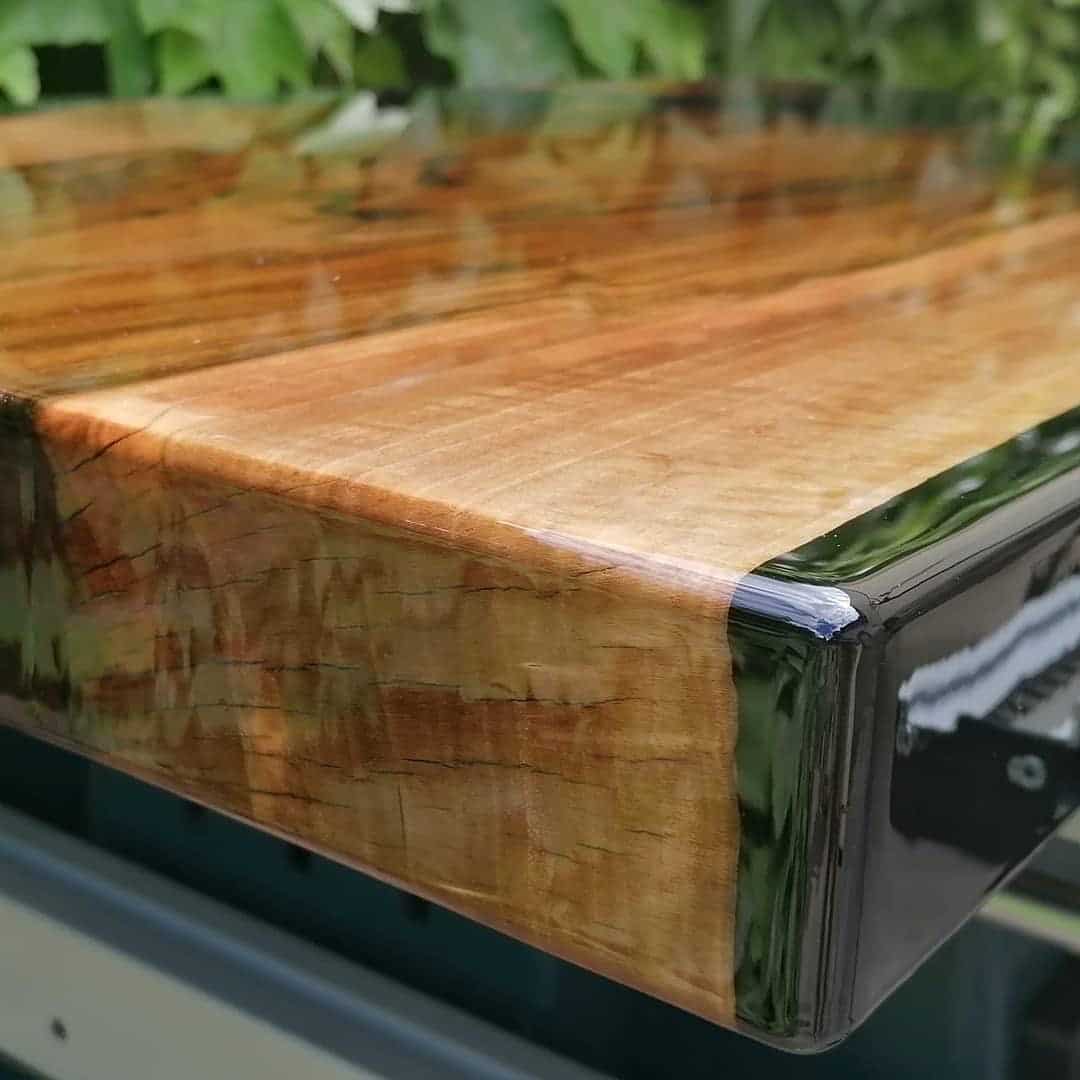
Overview of Resin Choices for Photovoltaic Modules
When selecting a resin for photovoltaic modules, key criteria include UV stability, mechanical strength, clarity, and depth capabilities. Different projects require different attributes: some call for super-clear, UV-resistant casting resins for deep or thick encapsulation; others benefit from resins formulated specifically for fibre-reinforced composites or ultra-thin surface coatings. Understanding the trade-offs between deep pour ability, scratch resistance, impact resistance, and application style is crucial for durable, long-lasting modules.

Photovoltaic Module Resin Encapsulation
Selecting a resin for solar modules requires balancing clarity, UV resistance, and structural durability. Deep pour epoxies offer high transparency and strength for heavy-duty encapsulation, while specialist fibre resins add impact resilience where needed. Choose the formula that matches your project depth and operating environment.
“Epoxytable 10-Ten” – Deep Pour Epoxy Resin for Modules With Thick Encapsulation
“Epoxytable 10-Ten” – Deep Pour Epoxy Resin for Tables, Up to 10cm Casting is engineered for deep pours up to 10cm, making it suitable for encapsulating components requiring exceptional clarity and a robust, protective layer. Its low exothermic reaction reduces the risk of overheating during casting, while strong UV filters guarantee non-yellowing clarity for up to five years. With super-low viscosity, it ensures bubble-free results, ideal for both large-scale and highly visible applications in the solar industry.
The best choice for super-deep pouring up to 10cm:
– Resistant to overheating and exclusive for thick, clear layers.
– Strong UV filters –> Non-yellowing guaranteed for 5 years
– Super low viscosity –> Bubbles free
– Long working time –> No rush in the process
– Heat resistance –> Up to 70°C [158 F]
“EpoxyTable 5-Five” – Deep Pour Resin for Medium-Thickness Solar Encapsulation
For applications requiring slightly thinner encapsulation (up to 5cm), EpoxyTable 5-Five – Deep Pour Epoxy Resin for Tables and Large Projects – Up to 5cm provides many benefits of “Epoxytable 10-Ten” at a medium thickness. It maintains a very low exothermic reaction, high UV resistance, and a scratchproof finish, making it suitable for medium-depth photovoltaic module manufacture and surface encapsulation. Mechanical durability and bubble-free curing offer further long-term performance advantages.
The best choice for deep pouring:
– Up to 5cm thick castings with exceptional clarity.
– Strong UV filters –> Non-yellowing guaranteed for 5 years
– Highly mechanical resistant surface, for maximum scratchproof properties
– Low viscosity –> Bubbles free
– Long working time –> No rush in the process
– Heat resistance –> Up to 70°C [158 F]
Trusted quality –> We have already sold more than 26000 kits of this product, since we started in 2015
“Carbon Resin” – High Impact Epoxy for Fibre-Reinforced Photovoltaic Modules
“Carbon Resin” – Epoxy Resin for Carbon Fiber & Fiberglass Coating is optimised for applications involving composite structures in photovoltaic modules. It delivers outstanding impregnation for carbon fibre or fibreglass, delivering high impact resistance, structural integrity, and a professional, glossy finish. With easy room-temperature curing and effective bubble prevention, it is well suited to advanced module designs requiring both strength and weatherproof performance.
High impact resistance for long-lasting results
Easy application with smooth fabric impregnation
Glossy, professional finish
Room temperature curing for hassle-free module production
“Art Pro” – Clear, Thin Coating Resin for Surface Protection
When an ultra-clear, thin surface layer is necessary, Art Pro – Clear Epoxy Resin for Artists and Surface Coating offers high-gloss protection with a scratch-resistant, UV-protected finish. Its non-toxic, medium-viscosity formula is ideal for final coatings, surface protection, or light encapsulation layers (1–10mm), frequently used for anti-scratch top coats or additional clarity in photovoltaic panels and solar accessories.
Exceptional clarity suitable for exposed surfaces
Durable, scratch-resistant surface with UV protection
Easy 3:2 mixing ratio for consistent preparation
Dense, non-drip formula for even, high-gloss layers
How to Choose the Right Resin for Your Photovoltaic Project
Selecting the most suitable resin starts with understanding your module’s technical requirements. Consider the desired encapsulation thickness: deep pour resins like Epoxytable 10-Ten and EpoxyTable 5-Five are suitable for thick, protective layers; for fibre-reinforced modules or composite structures, Carbon Resin ensures maximum impact resistance and bond strength. For surface-only protection and clarity, Art Pro delivers both easy handling and a weather-resistant, glossy finish. Always match the resin properties to your environmental, structural, and visual priorities for the module.
Tips for Photovoltaic Resin Applications
Work in a dust-free, stable-temperature environment for best curing results. Always mix resins according to instructions to avoid bubbles and uneven curing. Choose high UV-resistance when modules are exposed to sunlight. For composite modules, prioritise mechanical strength and fibre impregnation properties.

- “Epoxytable 10-Ten” – Deep Pour Epoxy Resin for Tables, Up to 10cm CastingPrice range: £33.85 through £334.85“Epoxytable 10-Ten” is an epoxy resin designed for deep pouring up to 10cm, suitable for tables and artistic applications with clear, bubble-free…
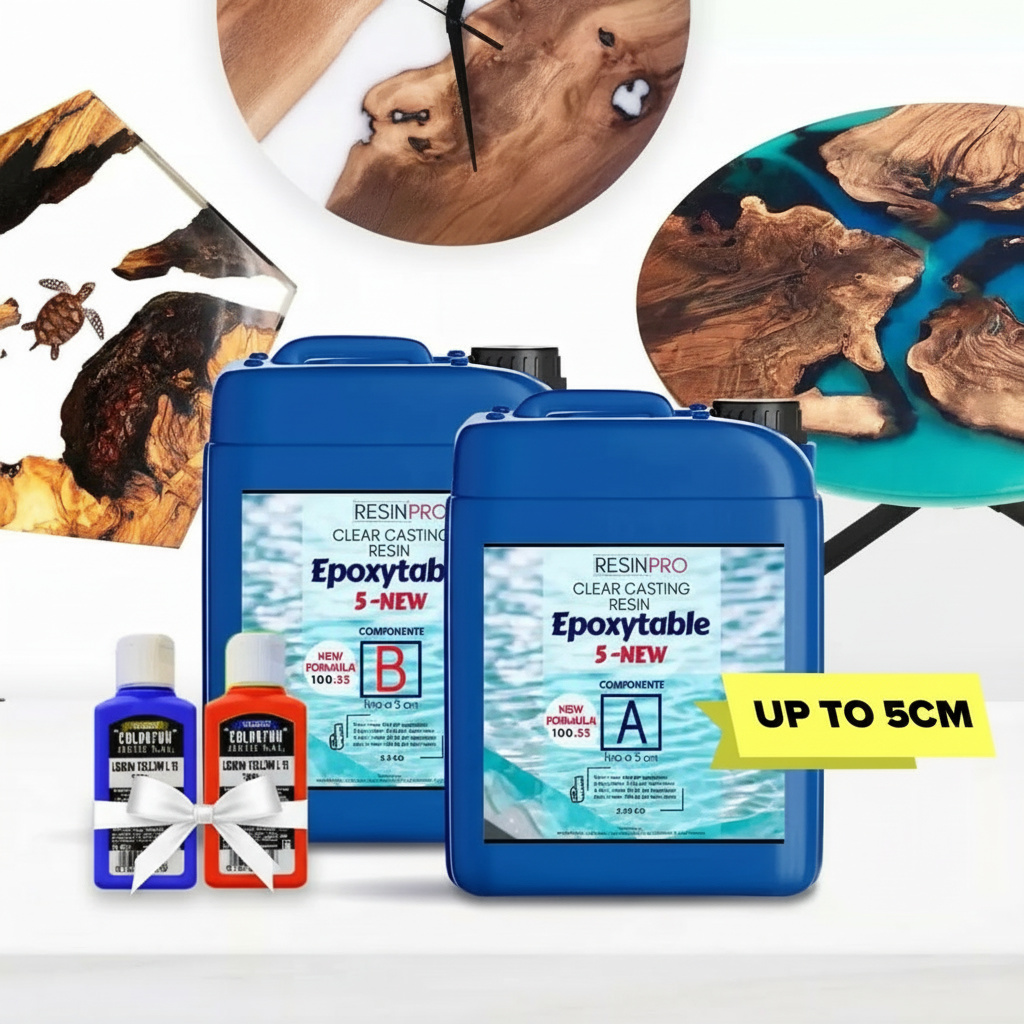 "EpoxyTable 5-Five" – Deep Pour Epoxy Resin for Tables and Large Projects – Up to 5cmPrice range: £16.85 through £1,099.85EpoxyTable 5-Five is suitable for deep pour projects, offering clear, UV-resistant, scratch-resistant epoxy for medium-thickness tables and surfaces.
 "Carbon Resin" – Epoxy Resin for Carbon Fiber & Fiberglass CoatingPrice range: £18.85 through £35.85Epoxy resin designed for carbon fibre and fibreglass composites offers good impregnation and a durable, glossy finish suitable for technical fabric…
 "Art Pro" – Clear Epoxy Resin for Artists and Surface CoatingPrice range: £31.15 through £388.85Art Pro clear epoxy resin offers exceptional clarity and durability for artistic surface coatings, suitable for trays and coasters.
Frequently Asked Questions About Resins for Photovoltaic Modules
Which resin is best for deep encapsulation of solar components?
For deep or thick encapsulation, Epoxytable 10-Ten is recommended due to its low exotherm and reliable UV stability, delivering clarity and impact protection in thick applications.
What if my encapsulation layer is between 2 to 5cm thick?
EpoxyTable 5-Five is ideal for medium-thickness resin layers, combining high clarity, UV filters, and scratch resistance in pours up to 5cm.
Can I use Carbon Resin for structural reinforcement in solar modules?
Yes, Carbon Resin is specifically formulated for optimal fibre impregnation and is suited for composite-backed photovoltaic panels.
Is a surface-only resin appropriate for photovoltaic panels?
For final surface coatings up to 10mm thick, Art Pro delivers a clear, UV-protected, and scratch-resistant finish suitable for top layers or anti-scratch protection.
Can I pour Epoxytable-10 in one thick layer?
Yes, Epoxytable-10 allows single-layer casts up to 10cm, minimising risk of overheating and air entrapment. Ensure correct mixing and slow pouring for best results.
How long does it take for these resins to cure?
Dependant on thickness and ambient temperature, most deep pour resins need 24–72 hours for initial set and full strength achieved after 7–10 days. Surface resins may be touch-dry in 12–24 hours.
What is the UV resistance of these products?
All recommended resins feature robust UV filters; both EpoxyTable and Art Pro guarantee non-yellowing clarity for at least five years in exposed applications.
Are these resins safe for outdoor, long-term use?
Yes, when applied correctly, these resins are engineered to withstand outdoor conditions – including weather, sunlight, and mechanical impact – making them ideal for photovoltaic applications.
Frequently Asked Questions
Which resin is best for deep encapsulation of solar components?
For deep or thick encapsulation, Epoxytable 10-Ten is recommended due to its low exotherm and reliable UV stability, delivering clarity and impact protection in thick applications.
What if my encapsulation layer is between 2 to 5cm thick?
EpoxyTable 5-Five is ideal for medium-thickness resin layers, combining high clarity, UV filters, and scratch resistance in pours up to 5cm.
Can I use Carbon Resin for structural reinforcement in solar modules?
Yes, Carbon Resin is specifically formulated for optimal fibre impregnation and is suited for composite-backed photovoltaic panels.
Is a surface-only resin appropriate for photovoltaic panels?
For final surface coatings up to 10mm thick, Art Pro delivers a clear, UV-protected, and scratch-resistant finish suitable for top layers or anti-scratch protection.
Can I pour Epoxytable-10 in one thick layer?
Yes, Epoxytable-10 allows single-layer casts up to 10cm, minimising risk of overheating and air entrapment. Ensure correct mixing and slow pouring for best results.
How long does it take for these resins to cure?
Dependant on thickness and ambient temperature, most deep pour resins need 24–72 hours for initial set and full strength achieved after 7–10 days. Surface resins may be touch-dry in 12–24 hours.
What is the UV resistance of these products?
All recommended resins feature robust UV filters; both EpoxyTable and Art Pro guarantee non-yellowing clarity for at least five years in exposed applications.
Are these resins safe for outdoor, long-term use?
Yes, when applied correctly, these resins are engineered to withstand outdoor conditions – including weather, sunlight, and mechanical impact – making them ideal for photovoltaic applications.