 Free shipping on orders over £29,85
  Shipping Tracking!


 Google
 Facebook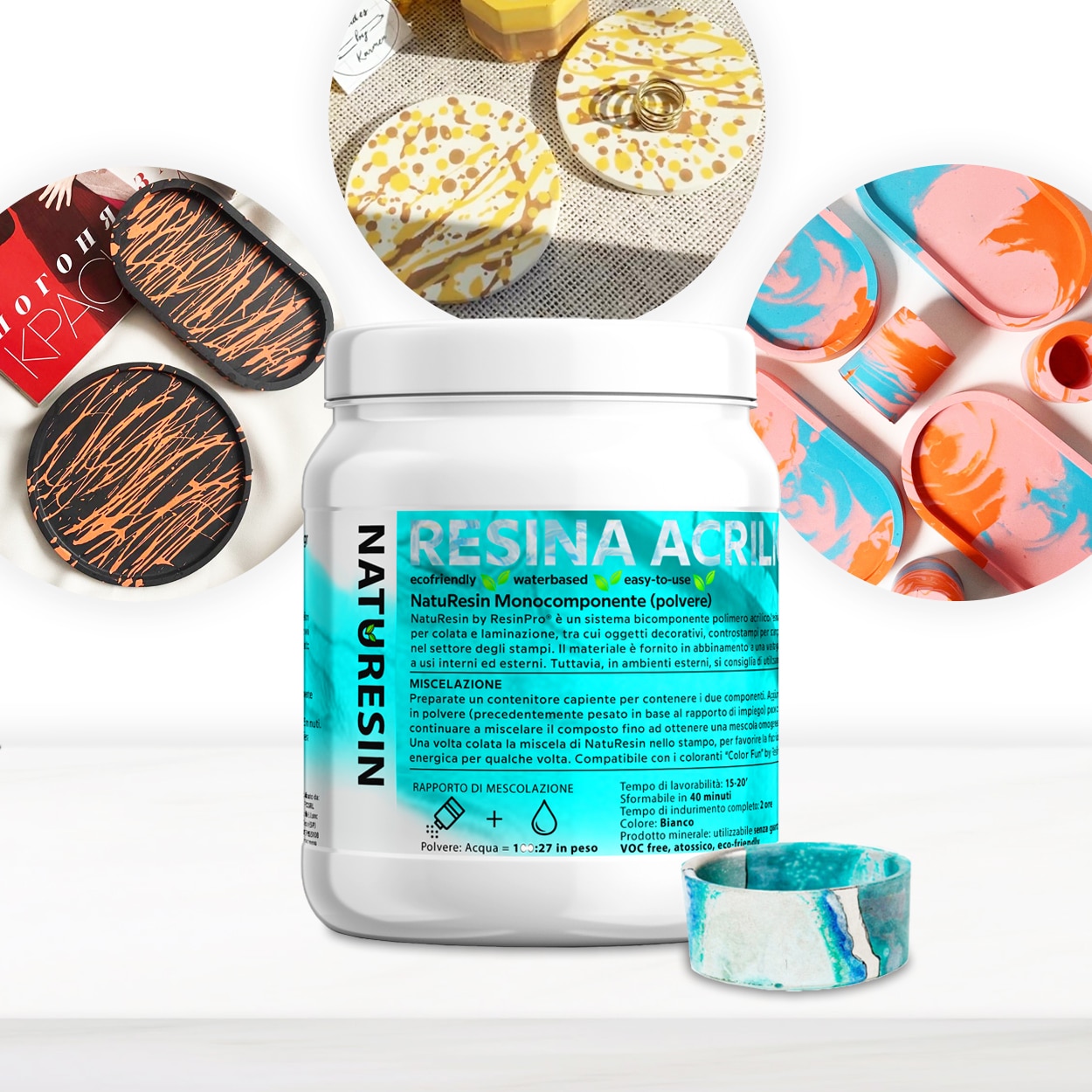
Choosing the right resin for your project is essential, especially when deciding between mineral and epoxy resin. Both have unique characteristics that make them suitable for different uses, from décor to art and crafts.
What is mineral resin?
Mineral resin, such as NatuResin, is a water-mixable material that sets hard with a ceramic-like finish. Unlike synthetic resins, it is eco-friendly, free from VOCs, and contains no solvents, making it suitable for indoor crafting without strong odours. Mineral resin is handled with basic tools and can often be coloured or painted after curing. It is ideal for casting items like trays, coasters, or decorative pots.
What is epoxy resin?
Epoxy resin consists of two components: a resin and a hardener. When precisely mixed, this system offers excellent clarity, flexibility, and a glossy, durable finish. Epoxy resins are widely chosen for casting, coating, and artistic surfaces due to these properties. However, correct mixing and careful curing are vital to achieve the desired results. Products like “Trasparente” epoxy resin offer a crystal-clear, non-yellowing finish for intricate pours up to 2cm thick, while “Art Pro” is popular among artists for coating artworks and decorative surfaces.
When does the difference matter?
- For safety and indoor use: Mineral resins are preferred when VOCs and solvents are a concern, or if you want to avoid wearing gloves and specialist protective gear. They are especially suitable for educational or children’s activities.
- For clarity and durability: Epoxy resins are key if your project needs a transparent, glass-like finish, such as in casting jewellery, tabletops, or protective coatings.
Related products
Related guides
Whether you choose mineral or epoxy resin depends on your project and personal requirements. To learn more about resin types and their applications, visit the main guide: What is resin?