 Free shipping on orders over £29,85
  Shipping Tracking!


 Google
 Facebook
← Back to How do you calculate epoxy resin?
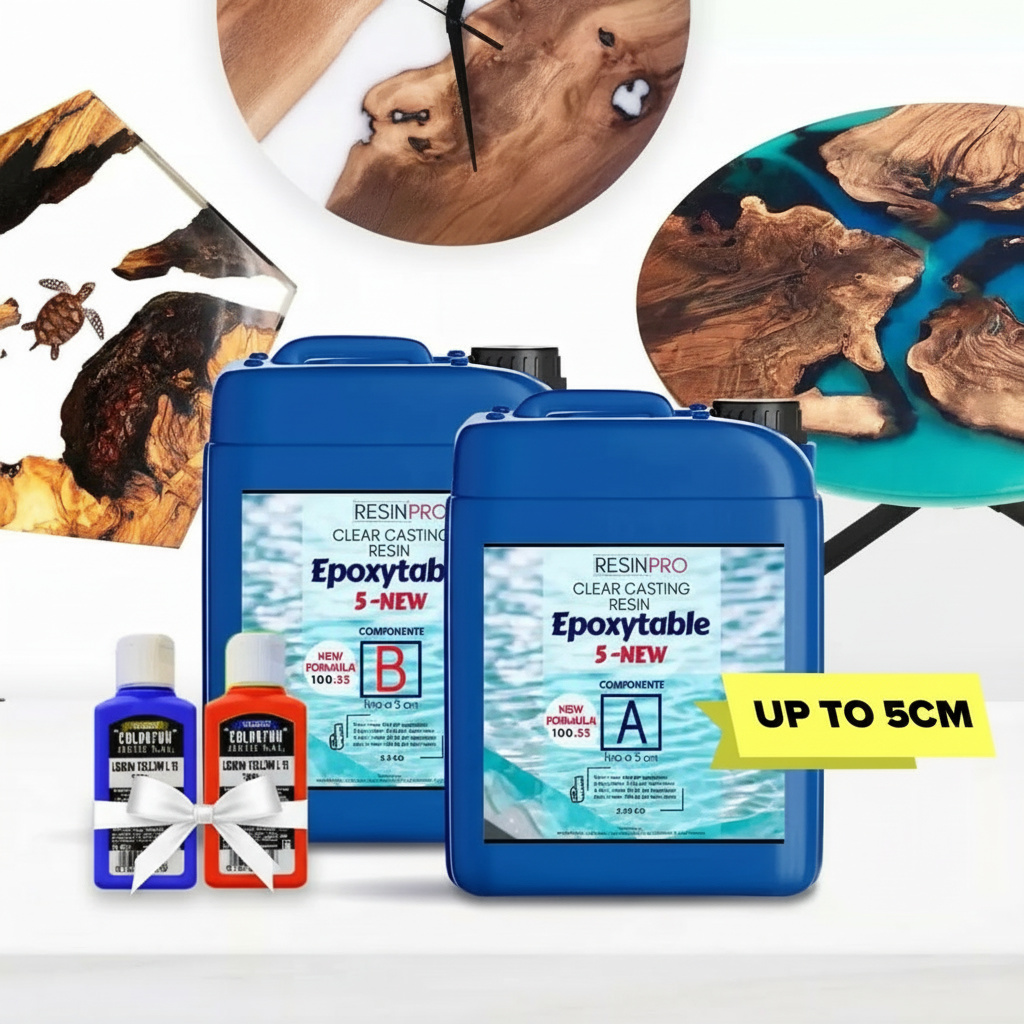
Pouring epoxy resin for deep castings can create dramatic results, but managing heat buildup is crucial. Overheating can cause cracks, cloudiness, or even unsafe curing – but with the right approach, these risks are easy to avoid.
Why Does Epoxy Resin Overheat in Deep Pours?
Resin warms up as it cures due to an exothermic reaction. The thicker the pour, the more heat is generated and trapped, especially if you exceed the resin’s maximum recommended depth. This is why deep pours over a single layer, particularly above 2-5cm depending on the formulation, are more prone to overheating issues.
Best Practices for Safe Deep Pours
- Respect maximum thickness guidelines: Always follow the product’s specified maximum pour depth. For instance, EpoxyTable 5-Five is formulated for single pours up to 5cm, while Epoxytable 10-Ten handles up to 10cm in one go.
- Layer when necessary: If your project is deeper than your resin’s maximum, pour in stages. Allow each layer to cool and cure properly before pouring the next. This step-by-step method greatly reduces heat build-up and warping.
- Keep your workspace cool: Pour resin in cooler ambient temperatures (ideally below 20°C) to help dissipate excess heat more efficiently.
- Avoid confined moulds: Wide, shallow moulds disperse heat better than deep, narrow ones.
Choosing the Right Resin for Deep Pours
It’s vital to select a resin engineered for thicker pours, featuring a low exothermic reaction. Products like EpoxyTable 5-Five and Epoxytable 10-Ten are specifically designed for deep castings. For pours below 2cm, multi-purpose options like Trasparente offer clarity and safety. Always check manufacturer recommendations for pour depth and allow for proper curing between layers if you are exceeding a single pour limit.
When This Matters Most
Heat control is especially important for projects such as river tables, thick tabletops, or large decorative blocks where pour depths often exceed standard clear coatings. Improper temperature management here can spoil a high-value project.
Related products
Related guides
Careful planning and using suitable resins make deep pour projects safer and more successful. For precise calculation and more epoxy advice, see our main guide on how to calculate epoxy resin.