 Free shipping on orders over £29,85
  Shipping Tracking!


 Google
 Facebook
How do you calculate epoxy resin?
A practical guide to resin volume, ratios and product selection


Calculating exactly how much epoxy resin you need is essential for successful resin-based projects, whether you are creating a river table, deep casting, or jewellery. This page is designed to help hobbyists, artists and professionals alike understand resin calculation, select the correct product and ensure accurate measuring for flawless results, whatever the project scale.
Overview: Comparing Epoxy Resin Types and Mixing Ratios
Before you start, it’s vital to know that different epoxy resins have defined maximum pour depths, recommended mixing ratios, and are suited to specific applications. For example, EpoxyTable 5-Five is formulated for deep pours up to 5cm, while Epoxytable 10-Ten is designed for super-deep casts up to 10cm in a single lift. If you’re working on decorative crafts, One-2-One offers a simple 1:1 mixing ratio for quick calculation and beginner-proof application, while Trasparente is ideal for layers up to 2cm and offers high clarity. The key differences between these resins revolve around their maximum casting thickness, mixing ratios (by weight or by volume), working times, and UV resistance. Always match your project size and thickness to the right resin system for the best accuracy and performance.

Resin Volume Measurement Demo
See practical setups for calculating resin amounts using simple measuring tools. Watch how graduated containers or digital scales help ensure you mix the right batch every time for your river table, jewellery, or casting project. 1:1 by volume for simplified preparation makes small craft work easy, while weight-based calculations give precision for deep pours.
EpoxyTable 5-Five – Deep Pour Epoxy Resin up to 5cm
EpoxyTable 5-Five – Deep Pour Epoxy Resin for Tables and Large Projects – Up to 5cm is purpose-built for table tops, countertops and artistic pieces needing a thick, clear layer. Its low exothermic reaction enables pours up to 5cm thick in one go, minimising bubbles and heat-related issues. Calculation is carried out by weight, using a 100:55 ratio of resin to hardener (e.g., 100g resin + 55g hardener). Always measure by weight and use precise scales for perfect curing.
Epoxytable 10-Ten – For Super-Deep Casting up to 10cm
For monumental river tables, sculptures or large-format furniture requiring a single, clear pour up to 10cm, Epoxytable 10-Ten – Deep Pour Epoxy Resin for Tables, Up to 10cm Casting is the specialist solution. It’s designed for low exothermic heat, and calculations use product-specific ratios (double-check the technical data for accuracy). For ultra-thick or oversized projects, it’s often recommended to pour in stages to avoid over-heating. When estimating volume, use length × width × depth (in cm), then convert cubic centimetres directly to millilitres for a 1:1 translation with resin volume in ml.
One-2-One – Effortless Mixing for Craft, Jewellery and Small Castings
If you’re creating jewellery, keyrings, or detailing on art pieces, One-2-One – Epoxy Resin for Handcraft, 1:1 Mixing Ratio streamlines resin calculation thanks to its 1:1 by volume for simplified preparation. Just measure equal parts of resin and hardener in a clean, graduated mixing cup for stress-free, accurate results. Its medium viscosity allows you to estimate the total required volume simply by measuring the area or mould shape in cubic centimetres or millilitres.
Trasparente – High Clarity Multipurpose Resin for Castings up to 2cm
For small tables, artistic woodworking or embedding objects up to a 2cm pour depth, Trasparente – Multipurpose Clear Epoxy Resin for Casting – Up to 2cm ensures maximum transparency and strong UV defence. The recommended method for calculating required resin is to multiply your casting area (length × width) by the desired thickness (max 2cm). For complex shapes, fill your mould with water, then measure that volume to estimate your resin need. Trasparente uses a 100:60 mixing ratio by weight, so accuracy on your scales is essential for the perfect result.
Tips for Estimating Epoxy Resin Volume and Mixing Like a Pro
Ultra-clear formula for a crystal-clear, liquid finish is only possible if you calculate precisely and measure carefully. Use an online epoxy calculator or the formula: Volume (ml) = Length (cm) × Width (cm) × Depth (cm). For irregular moulds, fill with water then measure that quantity. Always use the manufacturer’s mixing ratios (by volume or by weight), never improvise. Do not exceed maximum recommended pour thicknesses—deep pours generate heat, and excessive thickness can cause yellowing, bubbles or even cracks.
Troubleshooting Resin Calculation
If you are unsure, always mix a small test batch before your main pour. For deep tables, pouring in layers protects against exothermic reactions. Choose products with a 5-year non-yellowing guarantee for lasting clarity, and follow mixing ratios closely for trouble-free results on your chosen epoxy type.
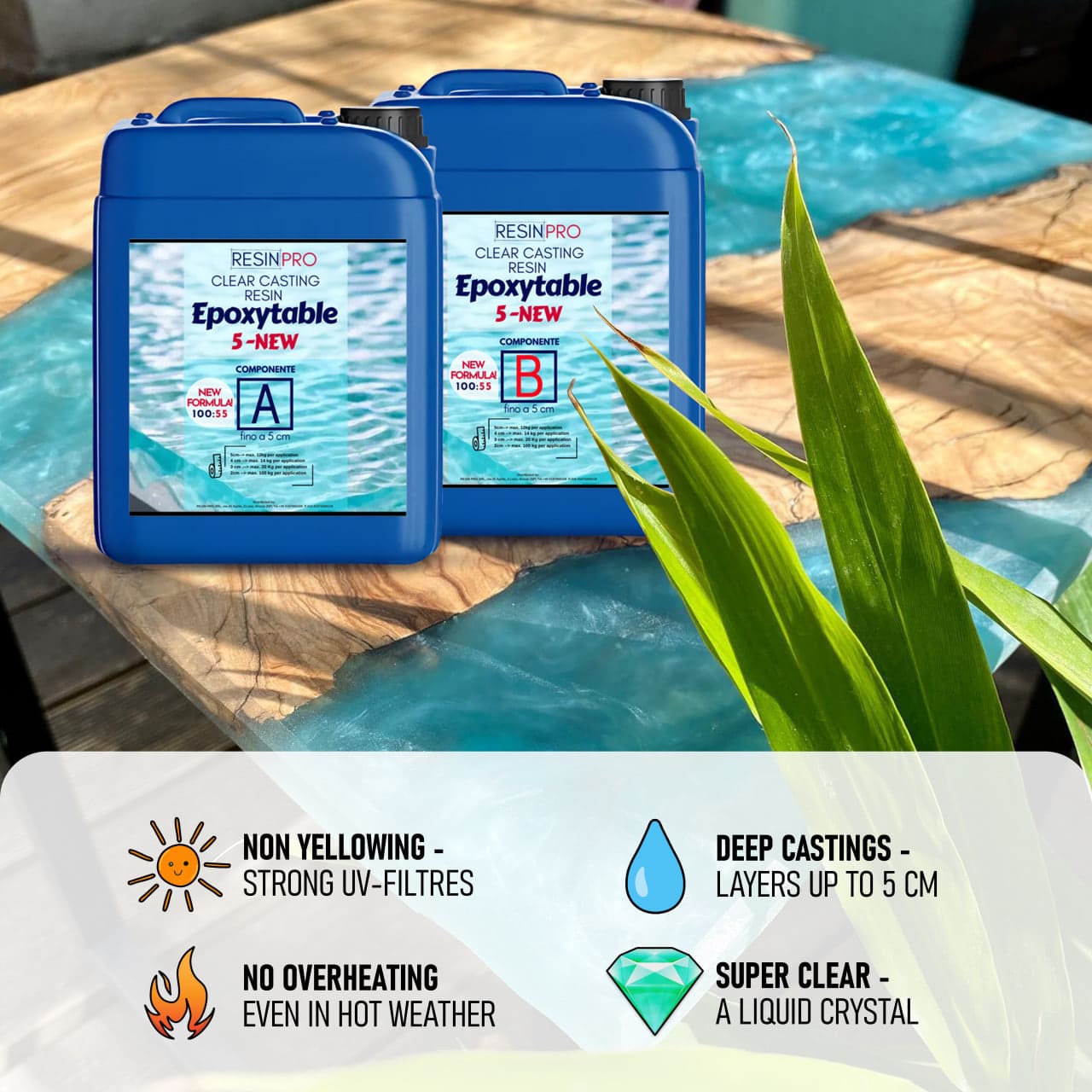
- "EpoxyTable 5-Five" – Deep Pour Epoxy Resin for Tables and Large Projects – Up to 5cmPrice range: £16.85 through £1,099.85"EpoxyTable 5-Five" is a deep pour epoxy resin designed for tables and large projects up to 5cm thickness suitable for artistic and furniture uses.
 “Epoxytable 10-Ten” – Deep Pour Epoxy Resin for Tables, Up to 10cm CastingPrice range: £33.85 through £334.85“Epoxytable 10-Ten” is a resin designed for deep casting projects up to 10cm, suitable for tables and artistic creations.
 "One-2-One" – Epoxy Resin for Handcraft, 1:1 Mixing RatioPrice range: £14.85 through £56.85"One-2-One" epoxy resin is a medium viscosity resin with an easy 1:1 mixing ratio, suitable for decorative crafts and jewellery making.
 "Trasparente" – Multipurpose Clear Epoxy Resin for Casting – Up to 2cmPrice range: £8.45 through £948.85The "Trasparente" clear epoxy resin offers an ultra-clear, glossy finish suitable for castings up to 2cm thick under the theme How do you calculate…
Frequently Asked Questions
How do I calculate how much epoxy resin I need for a tabletop?
Multiply the table’s length by width by desired thickness (all in cm) to get the required volume in ml or grams. Always check the resin’s maximum recommended pour thickness.
What is the difference between weight and volume mixing?
Weight mixing uses digital scales for accuracy, while volume mixing uses graduated measuring cups. Always follow the resin manufacturer’s ratio instructions.
How can I avoid overheating my resin during a deep pour?
Do not exceed the maximum single-pour thickness, pour in cooler conditions, and work in layers when needed. Overheating occurs if too much resin is poured at once.
How do I calculate epoxy resin for jewellery?
Determine the volume of your mould in millilitres (ml), then pour equal parts resin and hardener for 1:1 systems like One-2-One. Use measuring cups for smaller projects.
What are the most common epoxy resin mixing ratios?
Common ratios include 1:1 by volume, 100:55 or 100:60 by weight. Always use the ratio specific to your product.
Should I layer epoxy casts for very thick projects?
Yes, for large or thick castings exceeding product guidelines, pouring in multiple layers ensures safety and reduces the risk of yellowing or heat damage.
Is it recommended to do a test cast before final pours?
Yes, a test batch helps confirm calculation, workability and curing. It reduces mistakes before starting a large or expensive project.
What’s the best way to avoid mistakes in epoxy measurement?
Always use accurate tools: digital scales for weight or precise cups for volume. Triple-check your required volume before mixing.