 Free shipping on orders over £29,85
  Shipping Tracking!


 Google
 Facebook
← Back to How to calculate how much epoxy resin is needed for a table?
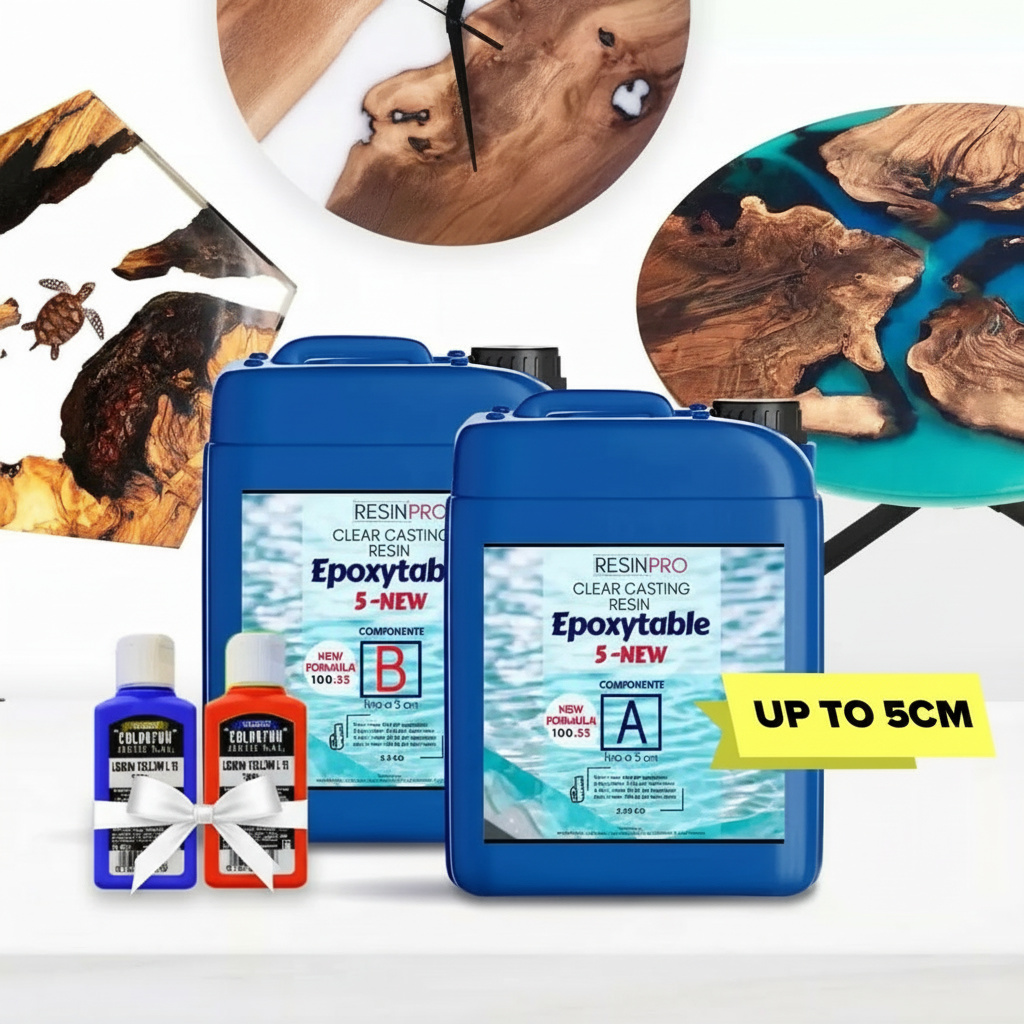
Following the recommended maximum pour thickness is crucial when working with epoxy resin on table projects. Adhering to these limits helps you achieve the best clarity and finish while avoiding common pitfalls.
Why Maximum Pour Depth Matters
Each epoxy resin product is formulated to be poured at specific depths per application. Exceeding the recommended thickness can trigger excess heat during curing, possibly causing cloudiness, yellowing, or even permanently damaging your project. Even for clear resins, too-thick layers can result in overheated or warped castings. For example, EpoxyTable 5-Five is formulated for pours up to 5cm per layer, supporting deeper projects while maintaining stability.
Safe Pouring Tips for Table Projects
- Choose the Right Resin: Select a product matched to the desired thickness. Use a dedicated deep-pour resin for thicker projects, and multipurpose or clear resin for layers under 2cm.
- Layer for Greater Thickness: For tables needing pours beyond the maximum single-layer depth (such as more than 5cm), cast in several layers, allowing each to partially cure before pouring the next.
- Check Temperature and Cure Times: Work in a well-ventilated, temperature-stable space and follow the manufacturer’s curing guidelines for each layer to minimise heat build-up and ensure a strong, clear finish.
When This Matters Most
Respecting pour limits is especially important for large slabs, river tables, or any custom table project where achieving a flawless, glassy surface is key. Following the correct process helps you avoid costly and time-consuming mistakes.
Related products
Related guides
Staying within the advised pour thickness helps you achieve professional-looking, durable resin tables. For more on calculating quantities and planning your resin project, see our main guide: How to calculate how much epoxy resin is needed for a table?