 Free shipping on orders over £29,85
  Shipping Tracking!


 Google
 Facebook
How do you mix resin and calcium carbonate for spotlights?
Step-by-step guide for flawless resin blends in lighting projects


Mixing resin and calcium carbonate is a fundamental technique for creating resilient, opaque infills or diffusing elements in spotlights. Achieving the correct blend ensures even light distribution, structural stability, and a professional finish, making this guide essential for DIYers, artists, or designers involved in bespoke lighting projects.
What You’ll Need
- “Art Pro Deluxe” – Ultra-High Viscosity Epoxy Resin for Artists – for shallow layers and precise detail
- “Epoxytable 10-Ten” – Deep Pour Epoxy Resin for Tables, Up to 10cm Casting – for very deep infills
- “EpoxyTable 5-Five” – Deep Pour Epoxy Resin for Tables and Large Projects – Up to 5cm – for medium pours
- “Trasparente” – Multipurpose Clear Epoxy Resin for Casting – Up to 2cm – for smaller or multipurpose casting
- High-quality calcium carbonate powder
- Mixing sticks or spatulas
- Accurate digital scales
- Protective gloves and safety glasses
- Reusable silicone or disposable mixing containers

Visual Reference: Resin and Calcium Carbonate Blends
Explore a range of finishes and opacities achieved by blending resin with calcium carbonate. Notice variations in translucency, texture, and bubble distribution at different mix ratios to get inspired for your own lighting projects.

Step 1: Prepare Your Materials and Workspace
Begin by ensuring all components—including resin, hardener, and calcium carbonate—are at room temperature. Work in a well-ventilated, dust-free area. Protect surfaces with a silicone mat or plastic sheeting and wear appropriate protective equipment. Having everything set out before mixing prevents rushed mistakes and improves control over proportioning.
Choose your resin based on the required depth and clarity. For a pour under 2cm, “Trasparente” – Multipurpose Clear Epoxy Resin for Casting – Up to 2cm works well, while larger or deeper infills benefit from a deep-pour product.
Step 2: Measure and Mix the Epoxy Resin
Always measure resin and hardener precisely by weight using digital scales, following the ratio specified by the manufacturer. This ensures a full and safe cure, which is essential for pieces integrated into lighting.
Pour both resin and hardener into a clean mixing container. Stir slowly and thoroughly for 2–4 minutes, scraping the sides and base often. Vigorous mixing can introduce air bubbles, which may affect the clarity and structural integrity of your spotlight.
Step 3: Incorporate the Calcium Carbonate
Gradually add calcium carbonate powder into the mixed resin, stirring gently but thoroughly after each addition to achieve a homogenous blend. Add calcium carbonate gradually for even distribution and to avoid clumping. The typical mix ratio is up to 30% calcium carbonate by weight of the total resin mixture, but always test with small batches if unsure.
For thicker castings or deep pours (over 2cm), opt for “EpoxyTable 5-Five” – Deep Pour Epoxy Resin for Tables and Large Projects or “Epoxytable 10-Ten” – Deep Pour Epoxy Resin for Tables, Up to 10cm Casting for best performance and fewer bubbles when mixed with fillers like calcium carbonate.

Step 4: Pour and Cure for a Professional Finish
Once a uniform texture is achieved, pour the blend immediately into your prepared mould or housing, ensuring it is free of dust and grease. Work steadily so that the mixture does not begin to set in the container, which can lead to uneven pours or defects in the final product.
Allow full curing before installing near electrical fittings. Curing times vary with resin type and thickness; refer to the product guidelines to ensure the composite is completely set, avoiding any soft spots which could compromise safety in use.

Expert Tips, Mistakes to Avoid, and Troubleshooting
Use the correct resin type for your casting thickness. Attempting deep pours with shallow-cure resin can lead to overheating, uneven curing, or cracks. Equally, do not attempt to speed up curing by adding more hardener—it can prevent a full set.
Mix thoroughly but slowly to avoid unwanted bubbles, and keep addition of calcium carbonate gradual. Always test a small batch if working with a new combination. If you spot surface bubbles, a light pass with a heat gun can help, but avoid overheating, especially when fillers are used.
Photo Tips: Curing, Pour Depths, and Surface Quality
See side-by-side images that illustrate perfect versus common flawed pours—such as trapped bubbles, uneven mixes, or surface defects—so you can visually check your work as you progress.

- "Art Pro Deluxe" – Ultra-High Viscosity Epoxy Resin for ArtistsPrice range: £33.85 through £287.85Art Pro Deluxe is an ultra-high viscosity epoxy resin suitable for artists seeking precise control and clear finish layers.
- “Epoxytable 10-Ten” – Deep Pour Epoxy Resin for Tables, Up to 10cm CastingPrice range: £33.85 through £334.85“Epoxytable 10-Ten” is designed for creating deep pour tables and artistic projects up to 10cm thickness following the page theme.
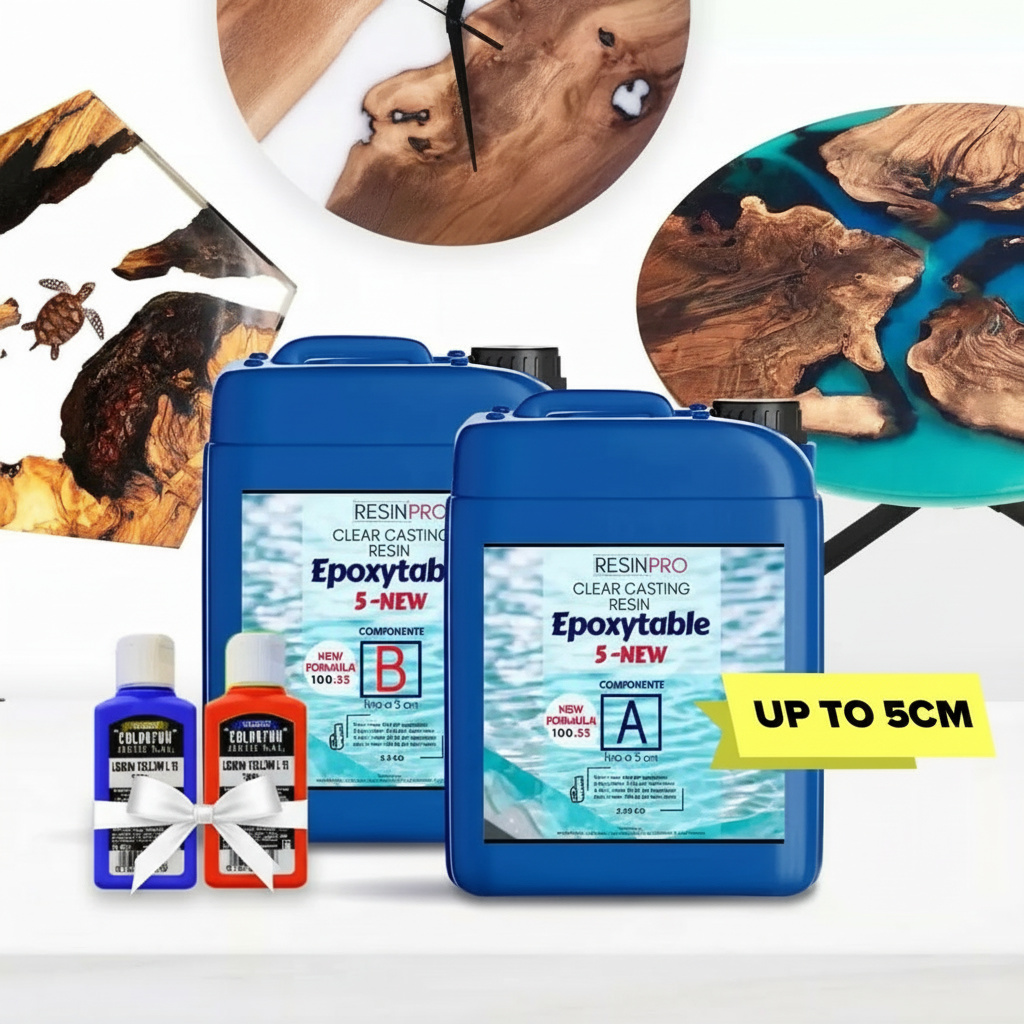 "EpoxyTable 5-Five" – Deep Pour Epoxy Resin for Tables and Large Projects – Up to 5cmPrice range: £16.85 through £1,099.85EpoxyTable 5-Five is a deep pour epoxy resin designed for tables and large projects up to 5cm thick. It offers low exothermic reaction and UV…
 "Trasparente" – Multipurpose Clear Epoxy Resin for Casting – Up to 2cmPrice range: £8.45 through £948.85"Trasparente" is a clear epoxy resin designed for detailed casting and DIY, offering a glossy finish suitable for woodworking and restoration…
Frequently Asked Questions
Which resin is best for spotlights when mixing with calcium carbonate?
Select your resin based on the casting depth. Use 'Trasparente' for up to 2cm, 'EpoxyTable 5-Five' for up to 5cm, and 'Epoxytable 10-Ten' for deep fills up to 10cm.
How much calcium carbonate should I add when mixing with resin?
Add up to 30% calcium carbonate by weight of your mixed resin. Always test small batches first for compatibility and finish.
How can I prevent bubbles when mixing resin and calcium carbonate?
Mix both slowly and allow the blend to settle before pouring. Use a heat gun briefly if needed, but don’t overheat.
Are there safety considerations when mixing resin and calcium carbonate?
Always wear gloves and safety glasses, and work in a ventilated space to avoid inhalation or skin contact.
How long should I wait before installing my mixed resin in a lighting fixture?
Curing times vary by resin and thickness, but most require at least 24–72 hours for a safe, full cure.
What’s the best pouring technique for resin mixed with calcium carbonate?
Pour slowly into the mould immediately after blending for even distribution and minimal bubbles.