 Free shipping on orders over £29,85
  Shipping Tracking!


 Google
 Facebook
How to repair a resin floor?
Restore damage and achieve a seamless, durable finish
Resin floors are valued for their durability and sleek appearance, but over time, damage such as chips, cracks, or surface wear can occur. With the right approach, you can achieve long-lasting repairs that restore both the look and structural integrity of your resin flooring—whether it’s an epoxy, pebble, or polyurethane-coated system. This guide is designed for both DIY enthusiasts and professionals looking to ensure high-quality, professional results.
What You’ll Need
- “Epoxyprimer” – Universal Water-Based Two-Component Epoxy Floor Primer – for preparing and priming the repair site
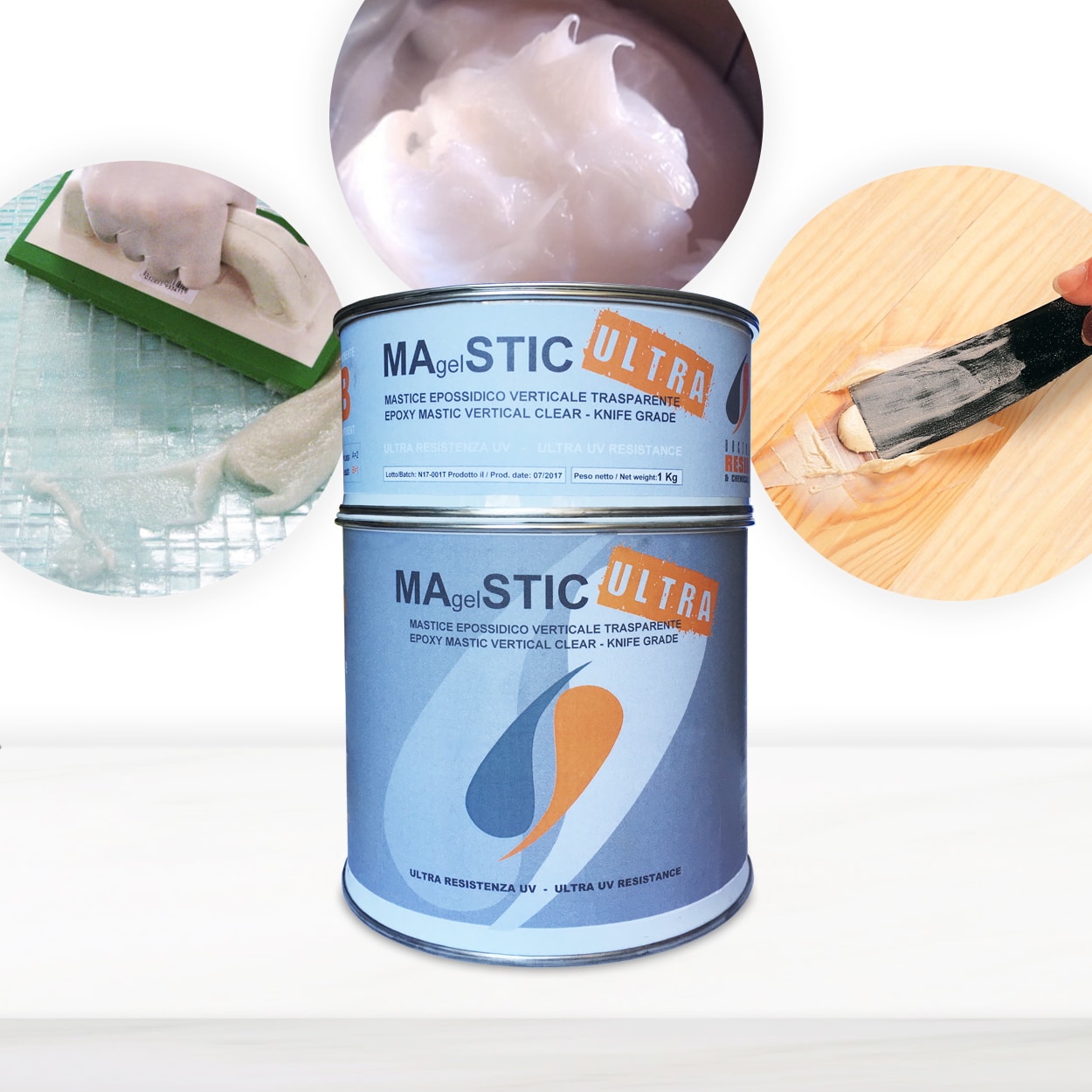
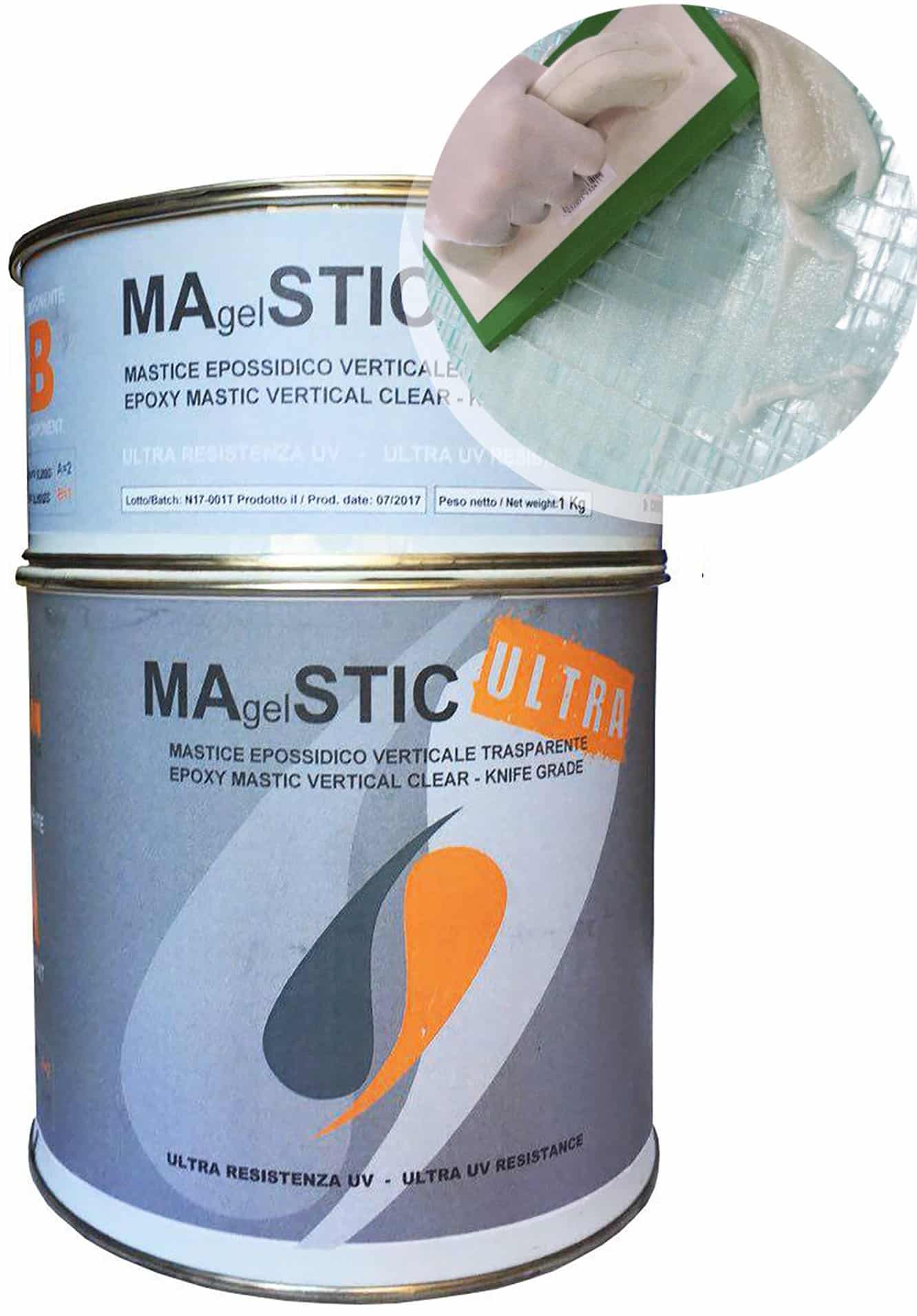
- “Magelstick” – Epoxy Mastic for Stone, Metal, and Cement Bonding and Grouting – for filling cracks, chips, or holes
- “Trasparente” – Epoxy Binder for Coloured Pebbles and Grits – for repairing or re-bonding pebble or aggregate-bound floors
- “Prolux” – PU coating for tiles, concrete, plastic and metal – suitable for driveable surfaces – for resealing with a durable finish
- Protective gloves and mask
- Mixing tools, rollers, and spatulas
- Fine sandpaper or mechanical sander
- Vacuum cleaner or broom

Close-up visuals of resin floor repairs
See the difference between professionally patched resin repairs and unaddressed floor damage. Visuals demonstrate cleaning, filling cracks, and seamless blending of repaired surfaces for residential and commercial floors.
Step 1: Clean and assess the damaged area
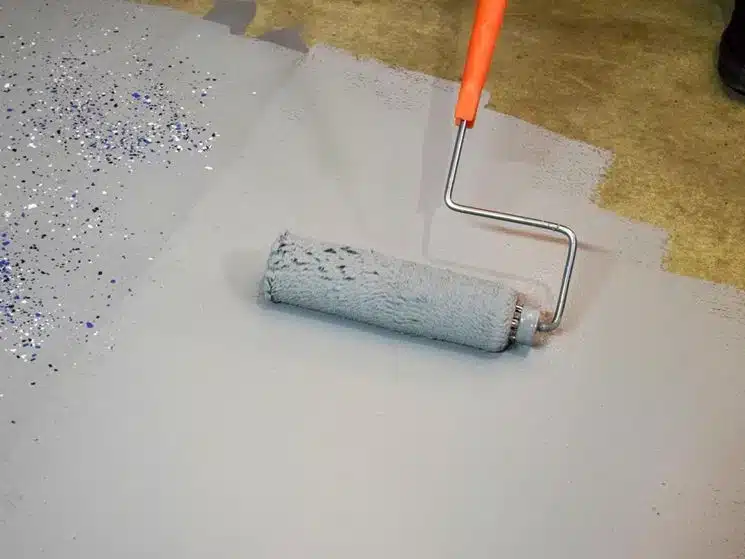
Begin by thoroughly clearing the repair zone of dust, debris, grease, and any loose resin. For stubborn contaminants, use a suitable degreaser and rinse clean with water. Allow the floor to dry completely. Inspect for cracks, holes, bubbling, or delamination. Any uncured, crumbling, or hollow-sounding resin should be removed mechanically with a chisel or grinder. This ensures you only repair stable, well-bonded sections of the floor.
Step 2: Fill cracks or holes with appropriate resin compound
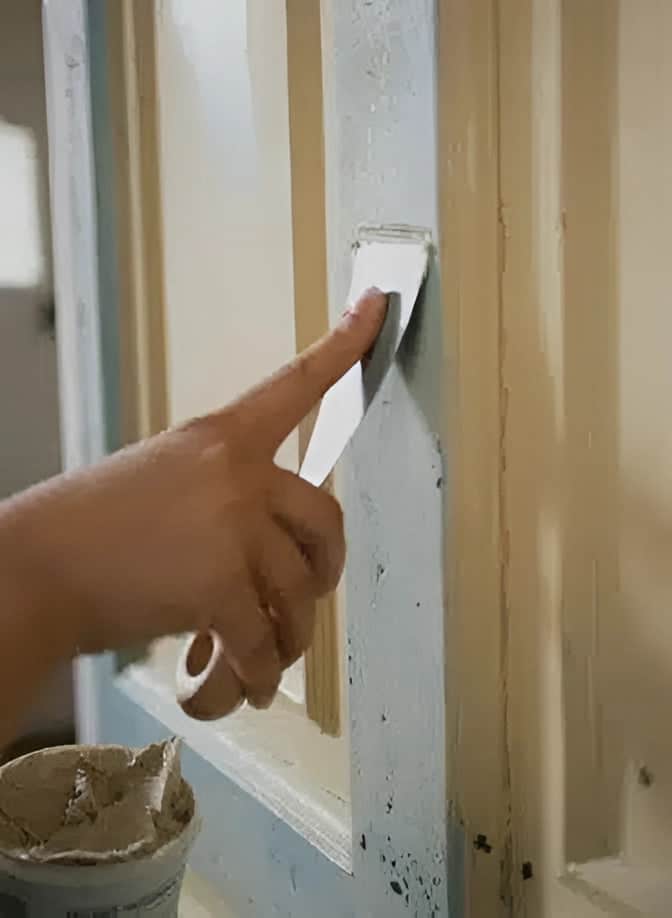
Using a two-part resin repair compound, fill in gaps, cracks, chips, or depressions. For repairing stone, cement, or metal edges adjoining the resin, “Magelstick” – Epoxy Mastic for Stone, Metal, and Cement Bonding and Grouting is ideal, thanks to its thixotropic, non-sag formula that works on horizontal or vertical surfaces. Mix accurately according to instructions and apply using a spatula or putty knife, pressing firmly into all gaps. For aggregate pebble floors, mix affected pebbles or grit with a clear binder such as “Trasparente” – Epoxy Binder for Coloured Pebbles and Grits before filling and levelling.
Let the patch cure according to the compound’s recommended time. Once set, sand flush with the surrounding surface for a seamless appearance.
Step 3: Prime the repaired surface for optimal adhesion
After sanding, remove all dust and debris to ensure a clean surface. Priming is crucial for promoting strong adhesion of the new resin or topcoat. Apply a dedicated primer, such as “Epoxyprimer” – Universal Water-Based Two-Component Epoxy Floor Primer, evenly over the repair zone. Roll or brush the primer for full, uniform coverage, avoiding puddles. Allow the appropriate curing interval (e.g., 24–48 hours) before continuing.
Step 4: Seal and finish the resin floor repair
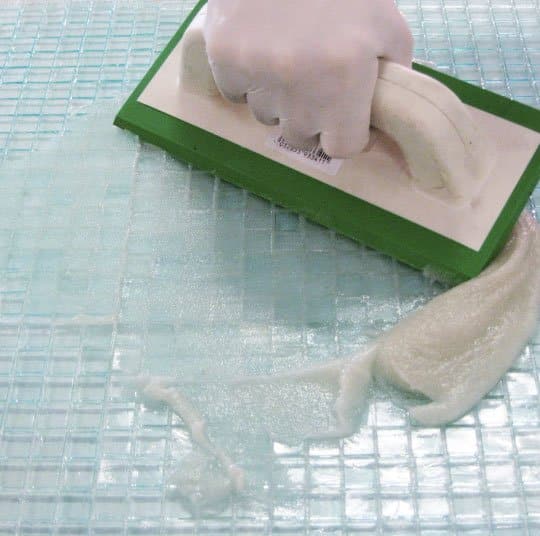
Once the primer is fully cured, reseal the repaired area with a compatible topcoat or sealer. For general resin, concrete, or tiled floors—especially in driveable or high-traffic zones—apply a protective coating like “Prolux” – PU coating for tiles, concrete, plastic and metal – suitable for driveable surfaces. Prepare the two components as instructed, mixing thoroughly before rolling or brushing on a uniform finish. For pebble or decorative aggregate flooring, a final coat of clear epoxy binder over the surface will restore gloss and binding strength. Allow all finishes to cure fully before using the floor as normal.
Tips and common mistakes to avoid
Work in a well-ventilated area and wear proper PPE (gloves, mask, goggles). Follow all product instructions precisely for mixing and curing times to prevent problems such as weak bonding or uneven surfaces. Avoid applying resin compounds to damp or unclean surfaces, as this can lead to delamination or poor adhesion. Always test repair materials on a hidden portion of the floor for colour compatibility, especially on decorative pebble floors. For high-traffic or outdoor surfaces, ensure your coating offers sufficient abrasion, UV, and weather resistance.
Before-and-after resin floor restoration examples
Compare results from proper surface priming and protective sealing. These images highlight smooth transitions, colour matching, and glossy finishes achieved using epoxy primers, mastic, and polyurethane coatings.

- "Epoxyprimer" – Universal Water-Based Two-Component Epoxy Floor PrimerPrice range: £156.45 through £286.45Epoxyprimer offers reliable adhesion and easy application for epoxy flooring on various stable surfaces.
- "Magelstick" – Epoxy Mastic for Stone, Metal, and Cement Bonding and Grouting"Magelstick" Epoxy Mastic is designed for professional bonding and repair of stone, metal, and cement surfaces with a focus on restoration.
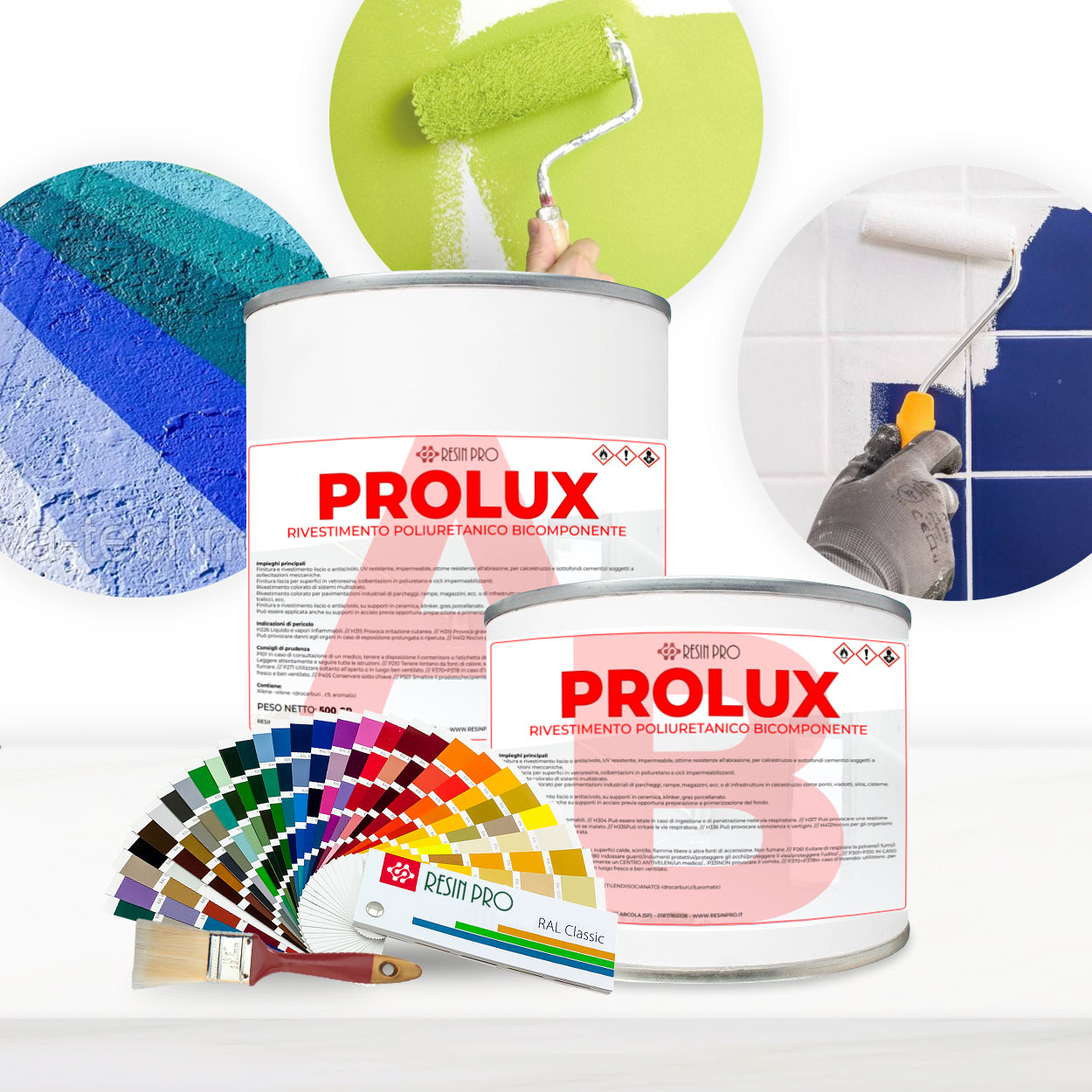 "Prolux" – PU coating for tiles, concrete, plastic and metal – suitable for driveable surfacesPrice range: £44.85 through £494.85"Prolux" is a polyurethane coating suitable for tiles, concrete, plastic and metal surfaces with a durable, versatile finish.
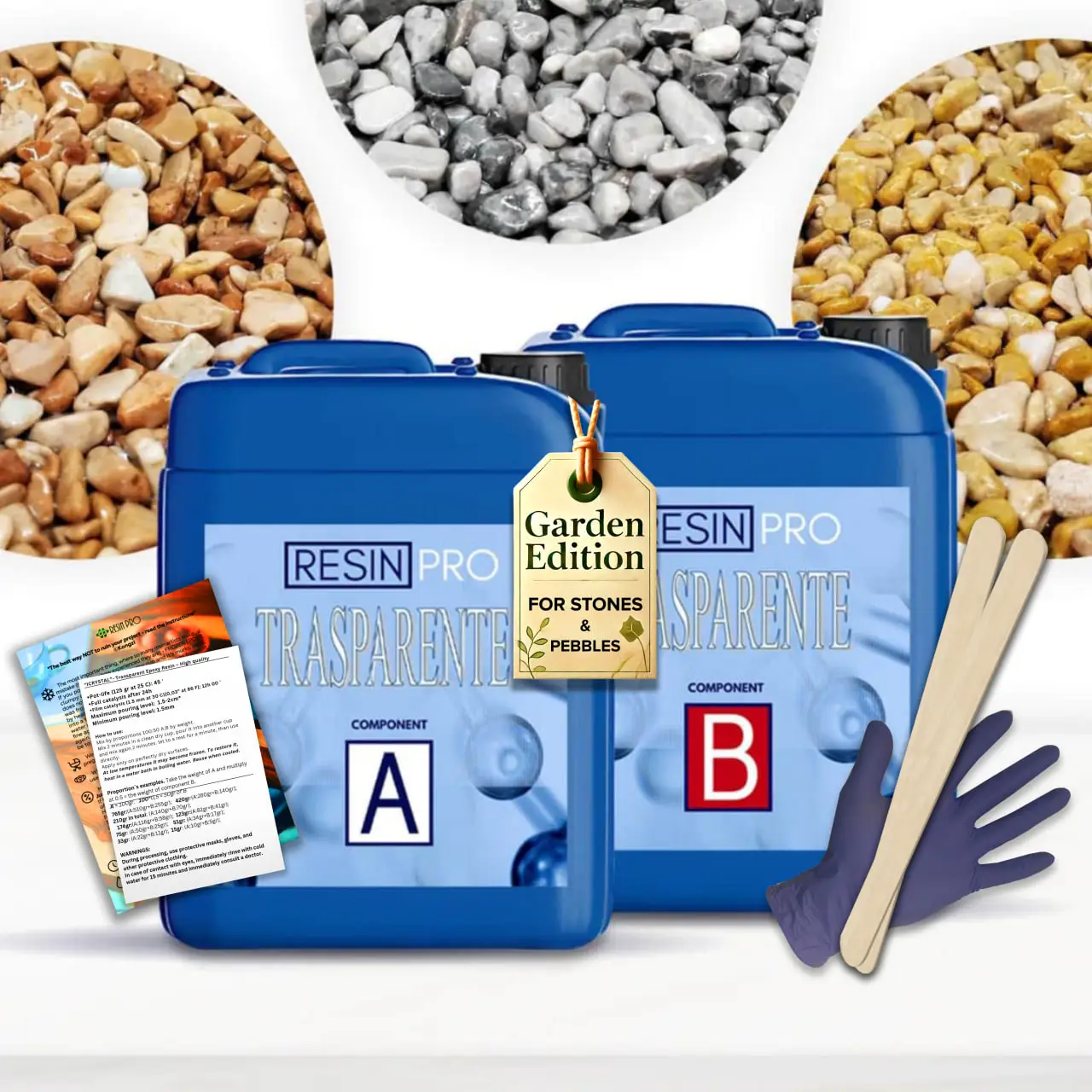 "Trasparente" – Epoxy Binder for Coloured Pebbles and GritsPrice range: £33.45 through £397.95Transparent epoxy binder designed for coloured pebbles and grits, with UV resistance and a clear, bubble-free finish.
Frequently Asked Questions
How do I repair small cracks or holes in a resin floor?
Clean the area, then fill with a suitable epoxy mastic compound and sand smooth after curing for best results.
What surface preparation is needed for resin floor repair?
Thoroughly clean and sand the area, remove loose or damaged resin, and ensure the surface is fully dry before applying any products.
Is priming necessary after repairing a resin floor?
Yes, priming ensures strong adhesion of the repair compound and final coating, helping prevent future peeling or delamination.
What if the resin floor is damaged due to moisture?
Fully dry and assess the substrate before beginning repair to prevent recurring issues. Moisture must be eliminated for durable results.
What’s the best product to repair an aggregate or pebble resin floor?
Use a clear epoxy binder designed for pebbles or grits to recreate a strong, unified surface that matches the original finish.
Can you repair only part of a resin floor or does the whole surface need replacing?
You can perform partial repairs if the surrounding resin is in sound condition. Isolate the damaged zone for targeted fixes.